


Immune checkpoint inhibition-related colitis: symptoms, endoscopic features, histology and response to management
- PMID: 29387476
- PMCID: PMC5786923
- DOI: 10.1136/esmoopen-2017-000278
Immune checkpoint inhibition-related colitis: symptoms, endoscopic features, histology and response to management
Abstract
Background: Immune checkpoint inhibitors are successfully introduced as anticancer treatment. However, they may induce severe immune-related adverse events (irAEs). One of the most frequent irAEs is diarrhoea. The main objective of this study was to analyse symptoms (ie, grade of diarrhoea), endoscopic and histological features and response to management in immune checkpoint inhibition-related colitis (IRC).
Patients and methods: We retrospectively analysed patients who developed diarrhoea on checkpoint inhibition and therefore underwent an endoscopy and/or were treated with corticosteroids. Patients were treated between August 2010 and March 2016 for metastatic melanoma or non-small cell lung cancer. Severity of IRC was scored using the endoscopic Mayo score and the van der Heide score.
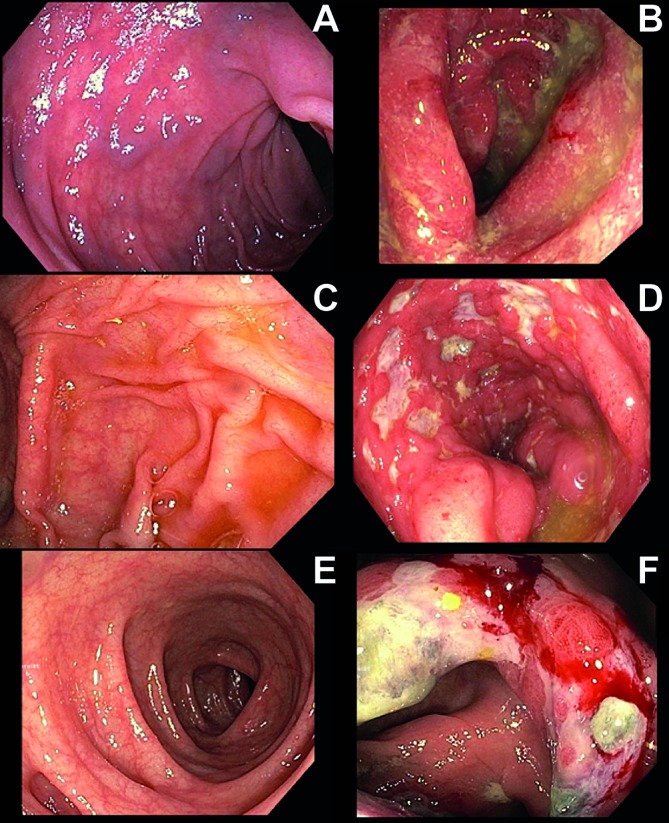
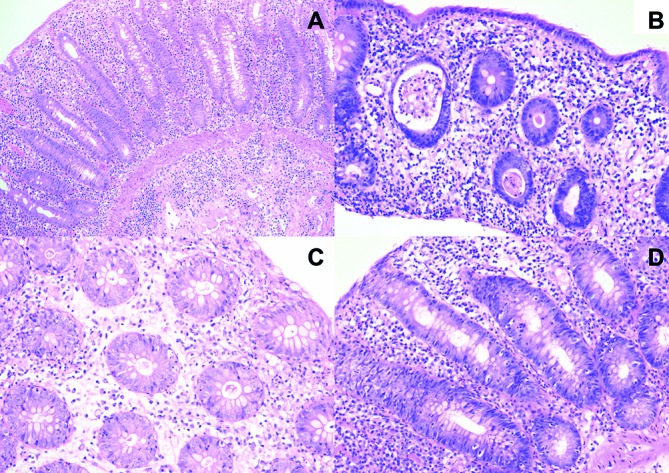
Results: Out of a cohort of 781 patients, 92 patients were identified who developed diarrhoea and therefore underwent an endoscopy and/or were treated with corticosteroids. Patients were treated with monotherapy anticytotoxic T-lymphocyte antigen-4, antiprogrammed death receptor-1 or a combination of both. All patients had symptoms of diarrhoea (grade 1: 16%; grade 2: 39% and grade 3: 44%). A complete colonoscopy was performed in 62 (67%) patients, of whom 42 (68%) had a pancolitis (≥3 affected segments). Ulcers were seen in 32% of endoscopies. There was no significant correlation between the grade of diarrhoea at presentation and endoscopic severity scores, the presence of ulcers or histological features. In 54 episodes of diarrhoea (56%), patients received one or more cycles infliximab for steroid-refractory colitis. Patients with higher endoscopic severity scores, ulcers and/or a pancolitis needed infliximab more often.
Conclusions: The correlation between grade of diarrhoea and endoscopic or histological features for severity of colitis is poor. Patients with higher endoscopic severity scores, ulcers or a pancolitis needed the addition of infliximab more often. Therefore, endoscopy may have value in the evaluation of the severity of IRC and may help in decision making for optimal management.
Keywords: colitis; endoscopy; immunotherapy; infliximab.
Conflict of interest statement
Competing interests: None declared.
Figures
References
Publication types
LinkOut - more resources
Full Text Sources
Other Literature Sources
