


Inadvertent placement of a urinary catheter into the ureter: A report of 3 cases and review of the literature
- PMID: 29387559
- PMCID: PMC5773021
- DOI: 10.1016/j.ajur.2016.08.011
Inadvertent placement of a urinary catheter into the ureter: A report of 3 cases and review of the literature
Abstract
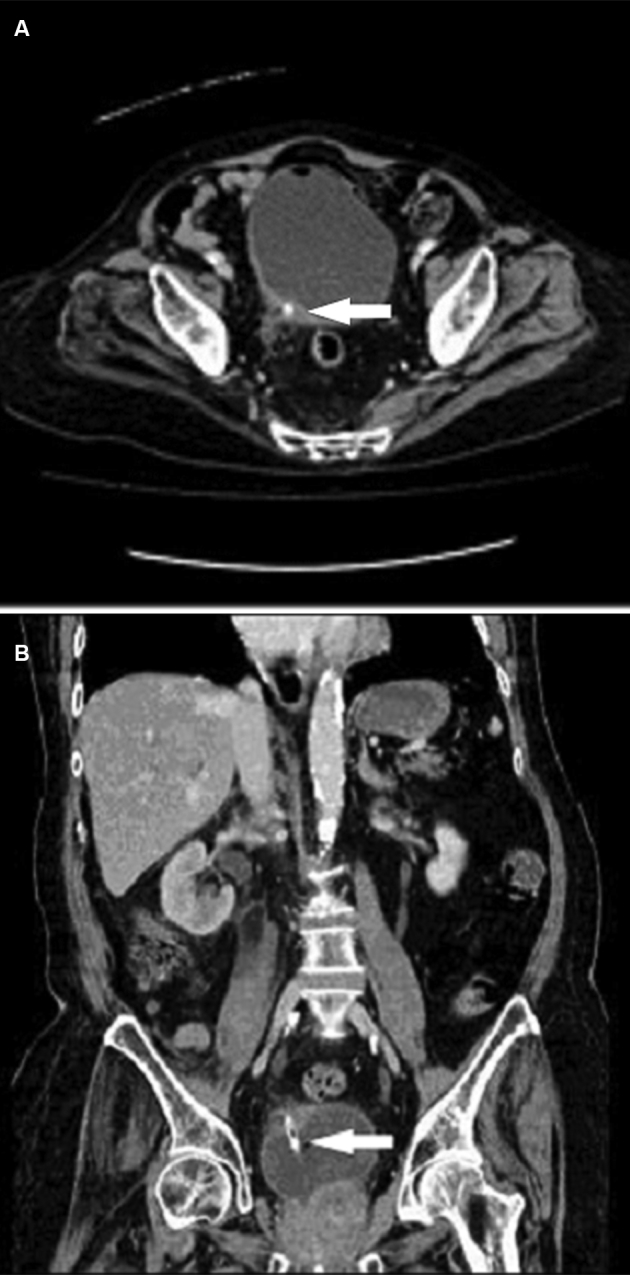
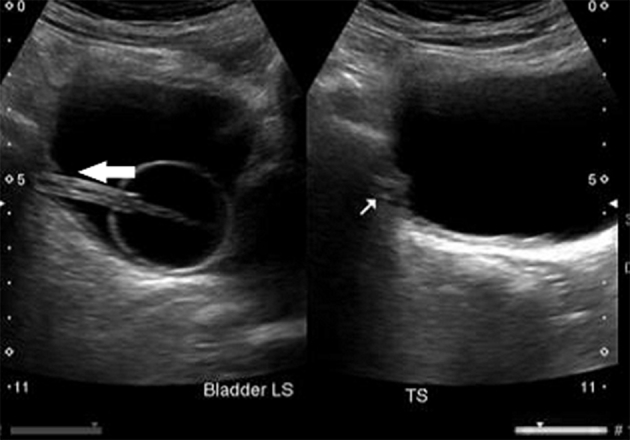
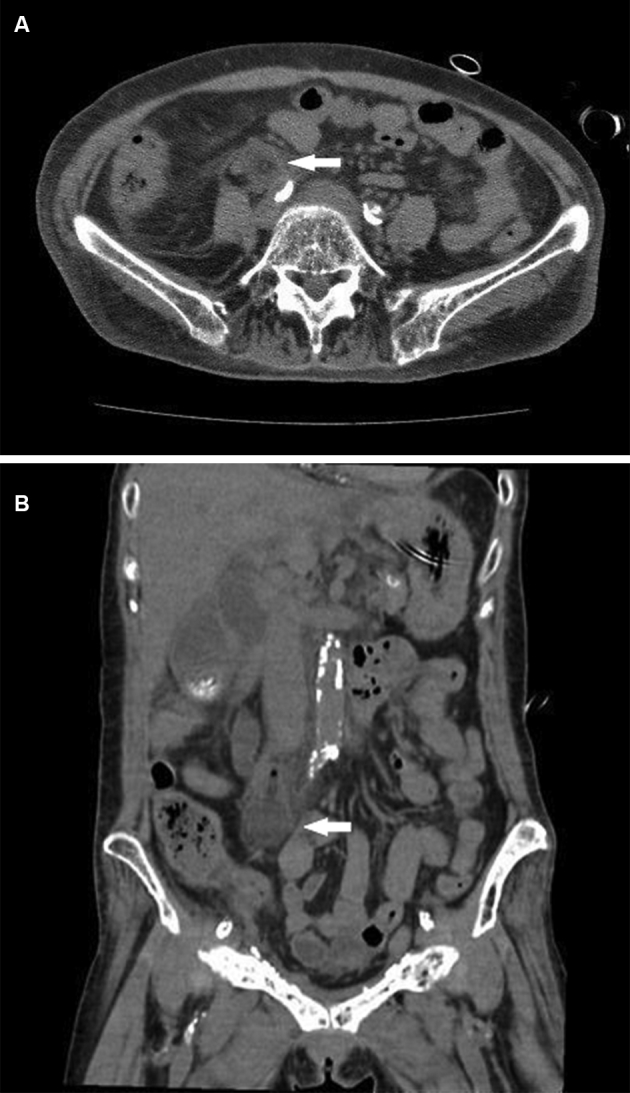
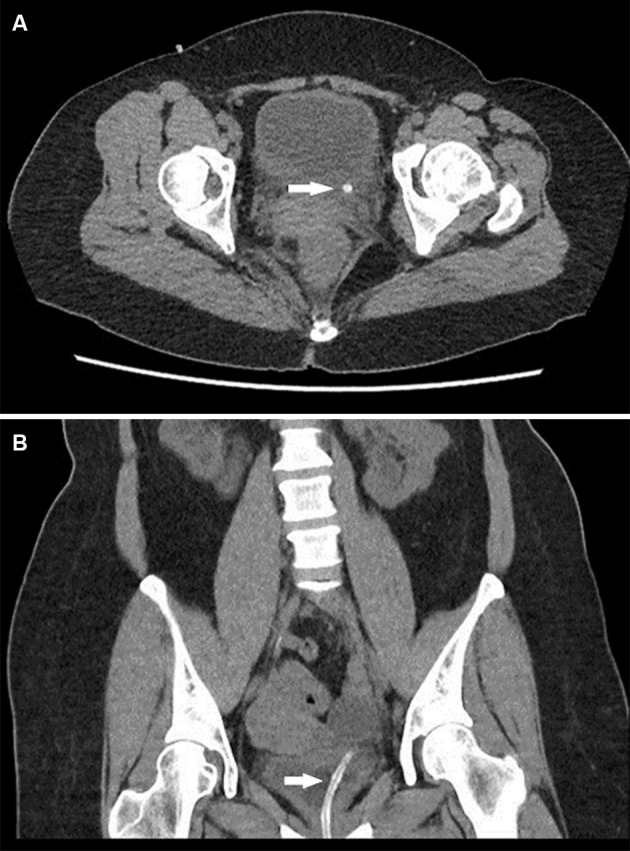
We describe three cases of inadvertent placement of the urinary catheter into the ureter. An 85-year-old gentleman on long-term indwelling catheter (IDC) for neurogenic bladder presented with fever and right flank pain. CT of abdomen and pelvis demonstrated the tip of the IDC to be located within the right vesicoureteric junction with acute right hydronephrosis and acute pyelonephritis. A 74-year-old woman, on long-term IDC for neurogenic bladder was found to have hydronephrosis on ultrasound imaging. Contrast-enhanced CT intravenous pyelography done subsequently showed the IDC was in the right distal ureter. A 47-year-old lady, on IDC for urinary retention and voiding dysfunction likely secondary to schizophrenia and anti-psychotic medications, presented with raised creatinine. A non-enhanced CT of her abdomen and pelvis was done and showed that the tip of the urethral IDC was located up to the left vesicoureteric junction. In all patients, the hydronephrosis resolved after changing the catheter and they were well on discharge. We also review the literature to identify the incidence, outcomes and possible risk factors. To our knowledge, only 20 cases have been reported thus far in the English literature. Although serious complications can occur, the incidence is very low. One risk factor that has been identified is long-term catheterization in patients with neurogenic bladder. We do not recommend routine imaging after catheterization in this group of patients. However, we should still be mindful of the possibility of this occurrence and evaluate and treat as necessary when clinical suspicion arises.
Keywords: Complication; Indwelling catheter; Ureter.
Figures
References
-
- Borrero G.O., Miller P.R., Vora K., Nepjuk C.A. Acute ureteral obstruction as a complication of suprapubic catheterization. Urol Radiol. 1987;9:171–173. - PubMed
-
- Singh N.P., Eardley I. An uncommon complication of urethral catheterization. Br J Urol. 1996;77:316–317. - PubMed
-
- Kato H. Incorrect positioning of an indwelling urethral catheter in the ureter. Int J Urol. 1997;4:417–418. - PubMed
-
- Ogan K., Berger R.M. Aberrant Foley catheter placement into the proximal right ureter. BJU Int. 2001;88:124.
-
- Muneer A., Minhas S., Harrison S.C. Aberrant Foley catheter placement into the proximal right ureter. BJU Int. 2002;89:795. - PubMed
Publication types
LinkOut - more resources
Full Text Sources
Other Literature Sources
