


Effects of aqueous extracts of dried calyx of sour tea (Hibiscus sabdariffa L.) on polygenic dyslipidemia: A randomized clinical trial
- PMID: 29387571
- PMCID: PMC5787994
Effects of aqueous extracts of dried calyx of sour tea (Hibiscus sabdariffa L.) on polygenic dyslipidemia: A randomized clinical trial
Abstract
Objective: Dyslipidemia has been considered as a major risk factor for coronary heart disease. Alternative medicine has a significant role in treatment of dyslipidemia. There are controversial findings regarding the effects of sour tea on dyslipidemia. The aim of this study was to evaluate the impact of aqueous extract of dried calyx of sour tea on polygenic dyslipidemia.
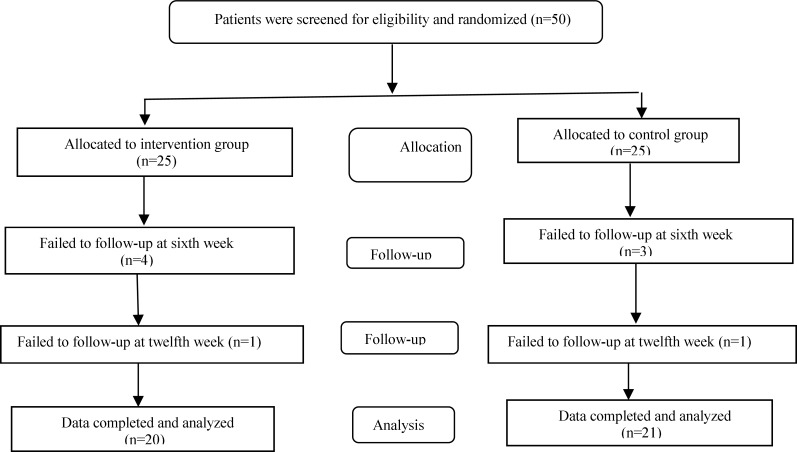
Materials and methods: This clinical trial was done on 43 adults (30-60 years old) with polygenic dyslipidemia that were randomly assigned to the intervention and control groups. The control group was trained in lifestyle modifications at baseline. The intervention group was trained for lifestyle modifications at baseline and received two cups of sour tea daily, and both groups were followed up for 12 weeks. Lipid profile was evaluated at baseline, and six and 12 weeks following the intervention. In addition, dietary and physical activity assessed at baseline for twelve weeks.
Results: Mean concentration of total cholesterol, HDL-C and LDL-C significantly decreased by up to 9.46%, 8.33%, and 9.80%, respectively, after 12 weeks in the intervention group in comparison to their baseline values. However, LDL-C/HDL-C ratio significantly increased by up to 3.15%, following 12 weeks in the control group in comparison to their baseline values. This study showed no difference in lipid profiles between the two groups, except for HDL-C concentrations.
Conclusion: sour tea may have significant positive effects on lipid profile of polygenic dyslipidemia subjects and these effect might be attributed to its anthocyanins and inflation factor content. Therefore, sour tea intake with recommended dietary patterns and physical activity can be useful in regulation of lipid profile in patients with polygenic dyslipidemia.
Keywords: Hibiscus sabdariffa L.; Lipid profile; Polygenic dyslipidemia; Sour tea.
Conflict of interest statement
The authors declare that they have no conflict of interest.
Figures
References
-
- Azizi F, Rahmani M, Emami H, Mirmiran P, Hajipour R, Madjid M. Cardiovascular risk factors in an Iranian urban population: Tehran lipid and glucose study (phase 1) Soz Praventivmed. 2002;47:408–426. - PubMed
-
- Ali B, Al Wabel N, Blunden G. Phytochemical, pharmacological and toxicological aspects of Hibiscus sabdariffa L: a review. Phytother RES. 2005;19:369–375. - PubMed
-
- Ajay M, Chai HJ, Mustafa AM, Gilani AH, Mustafa MR. Mechanisms of the anti-hypertensive effect of Hibiscus sabdariffa L calyces. J Ethnopharmacol. 2007;109:388–393. - PubMed
-
- Asghari G, Rezazadeh A, Hosseini-Esfahani F, Mehrabi Y, Mirmiran P, Azizi F. Reliability, comparative validity and stability of dietary patterns derived from an FFQ in the Tehran Lipid and Glucose Study. BJN. 2012;08:1109–1117. - PubMed
LinkOut - more resources
Full Text Sources