


Dendritic cell immunotherapy followed by cART interruption during HIV-1 infection induces plasma protein markers of cellular immunity and neutrophil recruitment
- PMID: 29389978
- PMCID: PMC5794189
- DOI: 10.1371/journal.pone.0192278
Dendritic cell immunotherapy followed by cART interruption during HIV-1 infection induces plasma protein markers of cellular immunity and neutrophil recruitment
Abstract
Objectives: To characterize the host response to dendritic cell-based immunotherapy and subsequent combined antiretroviral therapy (cART) interruption in HIV-1-infected individuals at the plasma protein level.
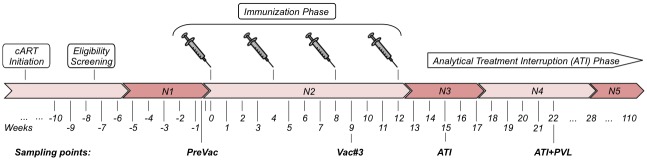
Design: An autologous dendritic cell (DC) therapeutic vaccine was administered to HIV-infected individuals, stable on cART. The effect of vaccination was evaluated at the plasma protein level during the period preceding cART interruption, during analytical therapy interruption and at viral reactivation. Healthy controls and post-exposure prophylactically treated healthy individuals were included as controls.
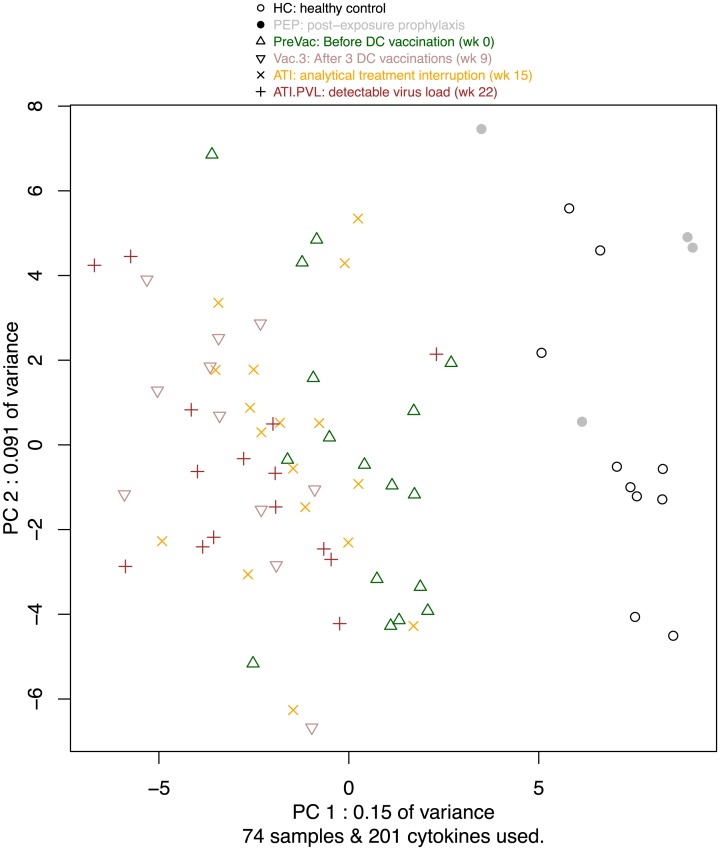
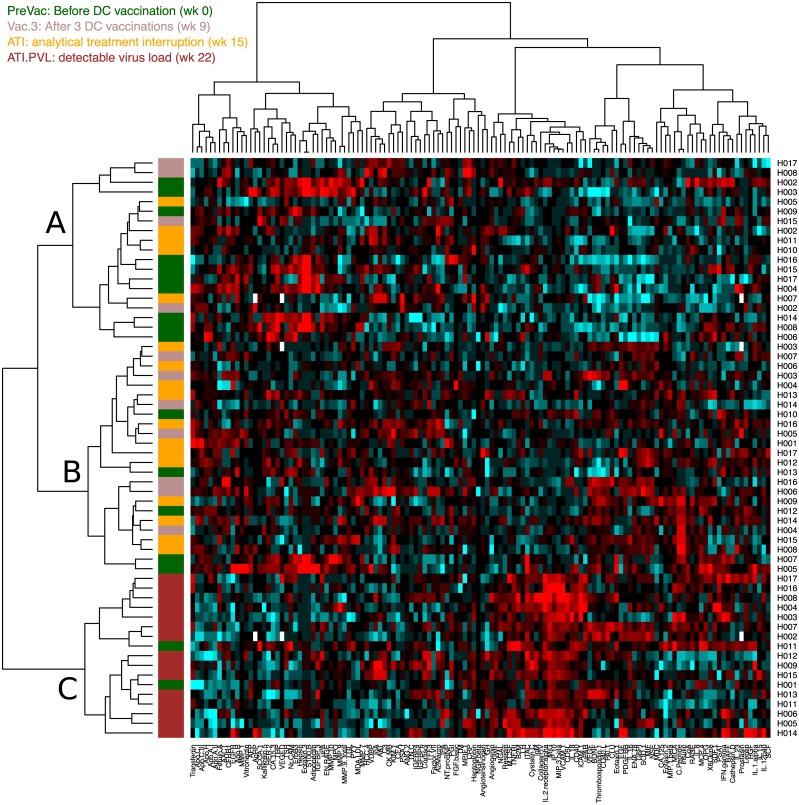
Methods: Plasma marker ('analyte') levels including cytokines, chemokines, growth factors, and hormones were measured in trial participants and control plasma samples using a multiplex immunoassay. Analyte levels were analysed using principle component analysis, cluster analysis and limma. Blood neutrophil counts were analysed using linear regression.
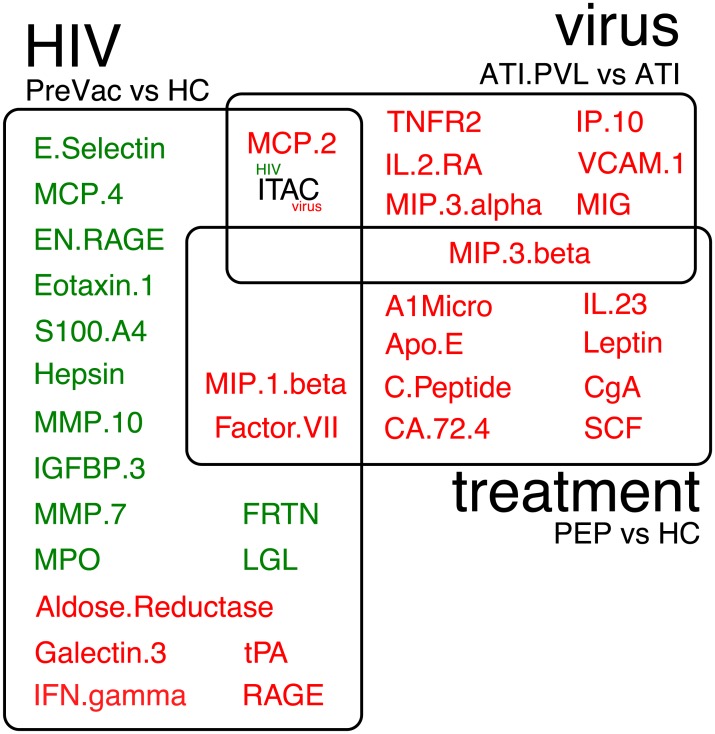
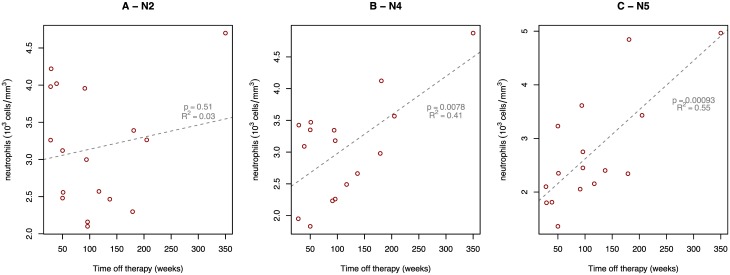
Results: Plasma analyte levels of HIV-infected individuals are markedly different from those of healthy controls and HIV-negative individuals receiving post-exposure prophylaxis. Viral reactivation following cART interruption also affects multiple analytes, but cART interruption itself only has only a minor effect. We find that Thyroxine-Binding Globulin (TBG) levels and late-stage neutrophil numbers correlate with the time off cART after DC vaccination. Furthermore, analysis shows that cART alters several regulators of blood glucose levels, including C-peptide, chromogranin-A and leptin. HIV reactivation is associated with the upregulation of CXCR3 ligands.
Conclusions: Chronic HIV infection leads to a change in multiple plasma analyte levels, as does virus reactivation after cART interruption. Furthermore, we find evidence for the involvement of TBG and neutrophils in the response to DC-vaccination in the setting of HIV-infection.
Conflict of interest statement
Figures
References
-
- Haas A, Zimmermann K, Oxenius A. Antigen-Dependent and -Independent Mechanisms of T and B Cell Hyperactivation during Chronic HIV-1 Infection. J Virol. 2011;85: 12102–12113. doi: 10.1128/JVI.05607-11 - DOI - PMC - PubMed
-
- Vrisekoop N, Drylewicz J, Van Gent R, Mugwagwa T, Van Lelyveld SFL, Veel E, et al. Quantification of naive and memory T-cell turnover during HIV-1 infection. AIDS. 2015;29: 2071–2080. doi: 10.1097/QAD.0000000000000822 - DOI - PubMed
-
- Hazenberg MD, Otto S a, Cohen Stuart JW, Verschuren MC, Borleffs JC, Boucher C a, et al. Increased cell division but not thymic dysfunction rapidly affects the T-cell receptor excision circle content of the naive T cell population in HIV-1 infection. Nat Med. 2000;6: 1036–1042. doi: 10.1038/79549 - DOI - PubMed
-
- Brenchley JM, Price DA, Schacker TW, Asher TE, Silvestri G, Rao S, et al. Microbial translocation is a cause of systemic immune activation in chronic HIV infection. Nat Med. 2006;12: 1365–1371. doi: 10.1038/nm1511 - DOI - PubMed
-
- Paiardini M, Müller-Trutwin M. HIV-associated chronic immune activation. Immunol Rev. 2013;254: 78–101. doi: 10.1111/imr.12079 - DOI - PMC - PubMed
Publication types
MeSH terms
Substances
LinkOut - more resources
Full Text Sources
Other Literature Sources
Medical
Research Materials
Miscellaneous
