


Burden of Ischaemic heart disease and attributable risk factors in China from 1990 to 2015: findings from the global burden of disease 2015 study
- PMID: 29390974
- PMCID: PMC6389214
- DOI: 10.1186/s12872-018-0761-0
Burden of Ischaemic heart disease and attributable risk factors in China from 1990 to 2015: findings from the global burden of disease 2015 study
Abstract
Background: Ischaemic heart disease (IHD) is a major barrier to sustainable human development, but its health burden and geographic distribution among provinces of China remain unclear. This study aimed to estimate IHD burden in provinces of China, and attributable to risk factors from 1990 to 2015.
Methods: Data were collected from the Global Burden of Disease 2015 Study, which evaluated IHD burden and attributable risk factors using deaths and disability-adjusted life years (DALYs). Statistical models including cause of death ensemble modelling, Bayesian meta-regression analysis, and comparative risk assessment approaches were applied to reduce bias and produce comprehensive results of IHD deaths, DALYs and attributable risks. The 95% uncertainty intervals (UIs) were calculated and reported for mortality and DALYs.
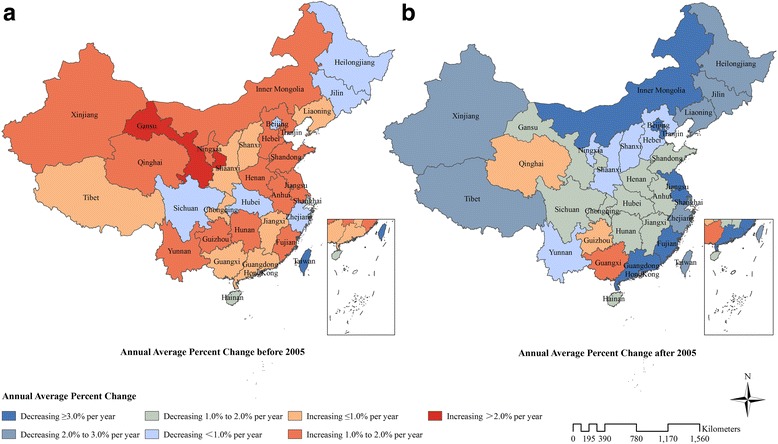
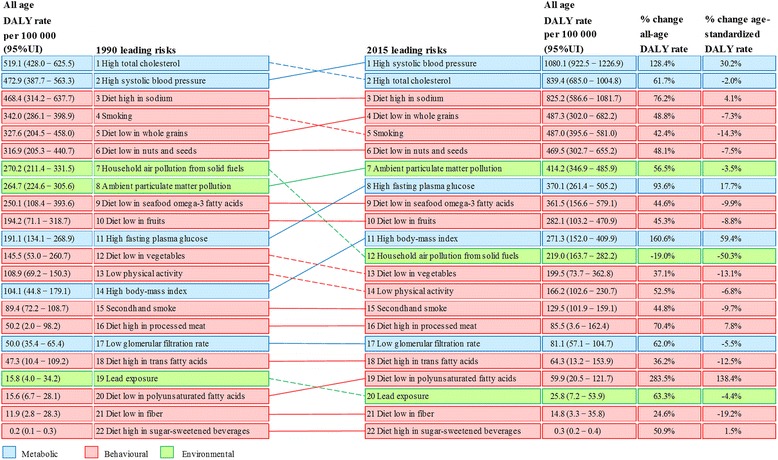
Results: The age-standardised death rate per 100,000 people increased by 13.3% from 101.3 (95%UI: 95.3-107.5) to 114.8 (95%UI: 109.8-120.1) from 1990 to 2015 in China, whereas the age-standardised DALY rate declined 3.9% to 1760.2 per 100,000 people (95%UI: 1671.6-1864.3). In 2015, the age-standardised death rate per 100,000 people was the highest in Heilongjiang (187.4, 95%UI: 161.6-217.5) and the lowest in Shanghai (44.2, 95%UI: 37.0-53.1), and the age-standardised DALY rate per 100,000 people was the highest in Xinjiang (3040.8, 95%UI: 2488.8-3735.4) and the lowest in Shanghai (524.4, 95%UI: 434.7-638.4). Geographically, the age-standardised death and DALY rates for southern provinces were lower than northern provinces, especially in southeastern coastal provinces. 95.3% of the IHD burden in China was attributable to environmental, behavioural and metabolic risk factors. The five leading IHD risks in 2015 were high systolic blood pressure, high total cholesterol, diet high in sodium, diet low in whole grains, and smoking.
Conclusions: Population growth and ageing has led to a steady increase in the IHD burden. Regional disparities in IHD burden were observed in provinces of China. The distribution characteristics of IHD burden provide guidance for decision makers to formulate targeted preventive policies and interventions.
Keywords: Disability-adjusted life years; Ischaemic heart disease; Mortality; Risk factors.
Conflict of interest statement
Ethics approval and consent to participate
Not applicable
Consent for publication
Not applicable
Competing interest
The authors declare that they have no competing interest.
Publisher’s Note
Springer Nature remains neutral with regard to jurisdictional claims in published maps and institutional affiliations.
Figures


References
-
- Wang H, Naghavi M, Allen C, Barber RM, Bhutta ZA, Carter A, Casey DC, Charlson FJ, Chen AZ, Coates MM, et al. Global, regional, and national life expectancy, all-cause mortality, and cause-specific mortality for 249 causes of death, 1980-2015: a systematic analysis for the global burden of disease study 2015. Lancet. 2016;388(10053):1459–1544. doi: 10.1016/S0140-6736(16)31012-1. - DOI - PMC - PubMed
-
- Kassebaum NJ, Arora M, Barber RM, Bhutta ZA, Brown J, Carter A, Casey DC, Charlson FJ, Coates MM, Coggeshall M, et al. Global, regional, and national disability-adjusted life-years (DALYs) for 315 diseases and injuries and healthy life expectancy (HALE), 1990-2015: a systematic analysis for the global burden of disease study 2015. Lancet. 2016;388(10053):1603–1658. doi: 10.1016/S0140-6736(16)31460-X. - DOI - PMC - PubMed
Publication types
MeSH terms
Grants and funding
LinkOut - more resources
Full Text Sources
Other Literature Sources
Medical
