


Interventions to reduce post-acute consequences of diarrheal disease in children: a systematic review
- PMID: 29391004
- PMCID: PMC5796301
- DOI: 10.1186/s12889-018-5092-7
Interventions to reduce post-acute consequences of diarrheal disease in children: a systematic review
Abstract
Background: Although acute diarrhea often leads to acute dehydration and electrolyte imbalance, children with diarrhea also suffer long term morbidity, including recurrent or prolonged diarrhea, loss of weight, and linear growth faltering. They are also at increased risk of post-acute mortality. The objective of this systematic review was to identify interventions that address these longer term consequences of diarrhea.
Methods: We searched Medline for randomized controlled trials (RCTs) of interventions conducted in low- and middle-income countries, published between 1980 and 2016 that included children under 15 years of age with diarrhea and follow-up of at least 7 days. Effect measures were summarized by intervention. PRISMA guidelines were followed.
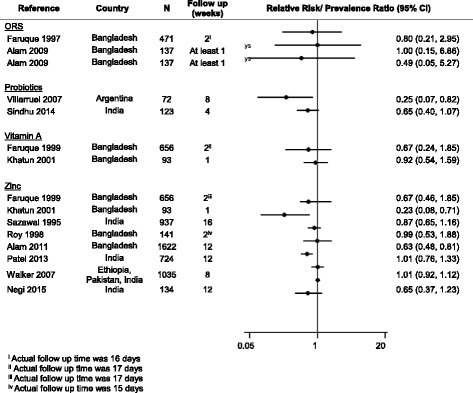
Results: Among 314 otherwise eligible RCTs, 65% were excluded because follow-up did not extend beyond 7 days. Forty-six trials were included, the majority of which (59%) were conducted in Southeast Asia (41% in Bangladesh alone). Most studies were small, 76% included less than 200 participants. Interventions included: therapeutic zinc alone (28.3%) or in combination with vitamin A (4.3%), high protein diets (19.6%), probiotics (10.9%), lactose free diets (10.9%), oral rehydration solution (ORS) formulations (8.7%), dietary supplements (6.5%), other dietary interventions (6.5%), and antimicrobials (4.3%). Prolonged or recurrent diarrhea was the most commonly reported outcome, and was assessed in ORS, probiotic, vitamin A, and zinc trials with no consistent benefit observed. Seven trials evaluated mortality, with follow-up times ranging from 8 days to 2 years. Only a single trial found a mortality benefit (therapeutic zinc). There were mixed results for dietary interventions affecting growth and diarrhea outcomes in the post-acute period.
Conclusion: Despite the significant post-acute mortality and morbidity associated with diarrheal episodes, there is sparse evidence evaluating the effects of interventions to decrease these sequelae. Adequately powered trials with extended follow-up are needed to identify effective interventions to prevent post-acute diarrhea outcomes.
Keywords: Child growth; Child mortality; Diarrhea interventions; Long-term sequelae of diarrhea; Pediatric diarrhea management.
Conflict of interest statement
Ethics approval and consent to participate
Not applicable
Consent for publication
Not applicable
Competing interests
The authors declare that they have no competing interests.
Publisher’s Note
Springer Nature remains neutral with regard to jurisdictional claims in published maps and institutional affiliations.
Figures


References
-
- Liu L, Oza S, Hogan D, Chu Y, Perin J, Zhu J, Lawn JE, Cousens S, Mathers C, Black RE. Global, regional, and national causes of under-5 mortality in 2000-15: an updated systematic analysis with implications for the sustainable development goals. Lancet. 2016;388(10063):3027–3035. doi: 10.1016/S0140-6736(16)31593-8. - DOI - PMC - PubMed
-
- Kotloff KL, Nataro JP, Blackwelder WC, Nasrin D, Farag TH, Panchalingam S, Wu Y, Sow SO, Sur D, Breiman RF, et al. Burden and aetiology of diarrhoeal disease in infants and young children in developing countries (the global enteric multicenter study, GEMS): a prospective, case-control study. Lancet. 2013;382:209–222. doi: 10.1016/S0140-6736(13)60844-2. - DOI - PubMed
Publication types
MeSH terms
Grants and funding
LinkOut - more resources
Full Text Sources
Other Literature Sources
Medical
