


Patient and Family Advisory Councils (PFACs): Identifying Challenges and Solutions to Support Engagement in Research
- PMID: 29392529
- PMCID: PMC11034744
- DOI: 10.1007/s40271-018-0298-4
Patient and Family Advisory Councils (PFACs): Identifying Challenges and Solutions to Support Engagement in Research
Abstract
Objective: The aim was to describe barriers to patient and family advisory council (PFAC) member engagement in research and strategies to support engagement in this context.
Methods: We formed a study team comprising patient advisors, researchers, physicians, and nurses. We then undertook a qualitative study using focus groups and interviews. We invited PFAC members, PFAC leaders, hospital leaders, and researchers from nine academic medical centers that are part of a hospital medicine research network to participate. All participants were asked a standard set of questions exploring the study question. We used content analysis to analyze data.
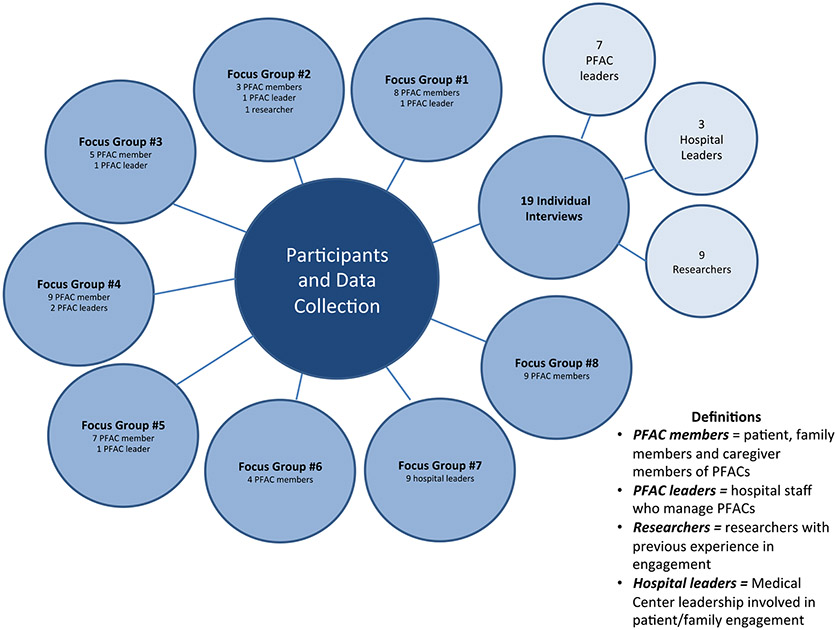
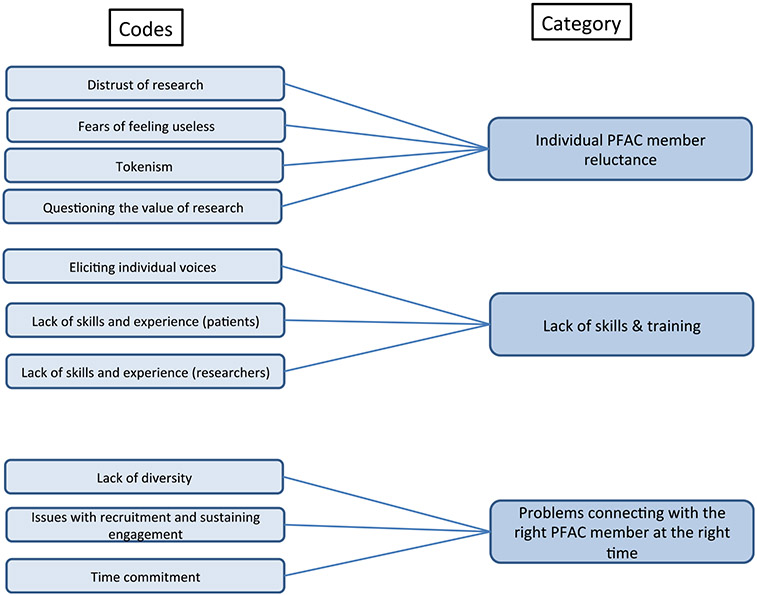
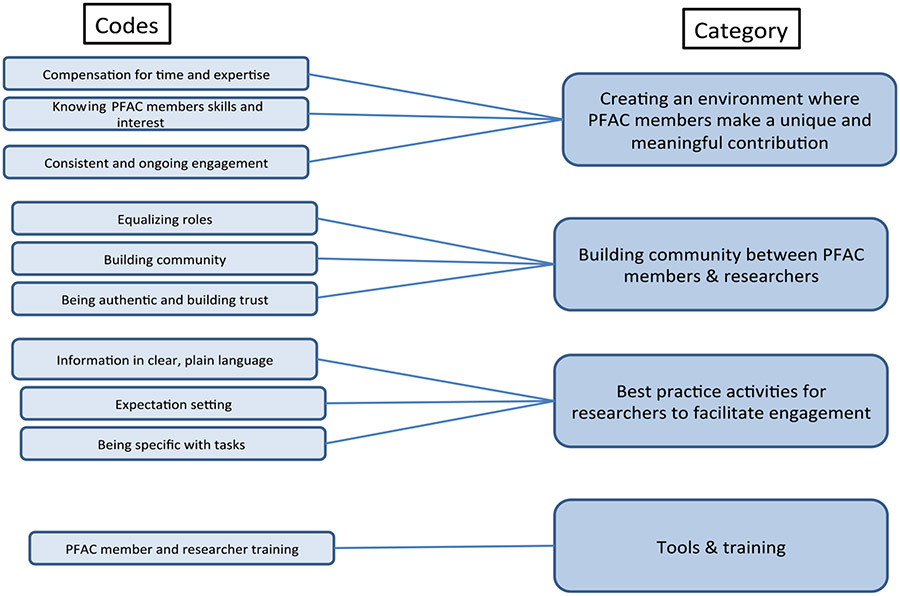
Results: Eighty PFAC members and other stakeholders (45 patient/caregiver members of PFACs, 12 PFAC leaders, 12 hospital leaders, 11 researchers) participated in eight focus and 19 individual interviews. We identified ten barriers to PFAC member engagement in research. Codes were organized into three categories: (1) individual PFAC member reluctance; (2) lack of skills and training; and (3) problems connecting with the right person at the right time. We identified ten strategies to support engagement. These were organized into four categories: (1) creating an environment where the PFAC members are making a genuine and unique contribution; (2) building community between PFAC members and researchers; (3) best practice activities for researchers to facilitate engagement; and (4) tools and training.
Conclusion: Barriers to engaging PFAC members in research include patients' negative perceptions of research and researchers' lack of training. Building community between PFAC members and researchers is a foundation for partnerships. There are shared training opportunities for PFAC members and researchers to build skills about research and research engagement.
Conflict of interest statement
Figures
References
-
- Duffett L. Patient engagement: what partnering with patient in research is all about. Thromb Res. 2017;150:113–20. - PubMed
-
- Fagan MB, Wong C, Morrison CRC, Lewis-O’Connor A, Carnie MB. Patients, persistence and partnership: creating and sustaining patient and family advisory councils in a Hospital Setting. JCOM. 2016;23:219–25.
-
- Pomey M, Hihat H, Khalifa M, Lebel P, Neron A. Patient partnerships in quality improvement of healthcare services: patients’ input and challenges faced. Patient Exp J. 2015;2:29–42.
-
- Wolf JA. A report of the Beryl Institute benchmarking study state of patient experience 2015. Southlake Texas: Beryl Institute; 2017.
Publication types
MeSH terms
Grants and funding
LinkOut - more resources
Full Text Sources
Other Literature Sources
Medical
