Threats to global antimicrobial resistance control: Centrally approved and unapproved antibiotic formulations sold in India
- PMID: 29397576
- PMCID: PMC6303201
- DOI: 10.1111/bcp.13503
Threats to global antimicrobial resistance control: Centrally approved and unapproved antibiotic formulations sold in India
Abstract
Aims: Rising antimicrobial resistance (AMR) is a global health crisis. India has among the highest resistance rates and antibiotic consumption internationally. Extensive use of fixed-dose combination (FDC) antibiotics and of unapproved formulations are claimed contributory factors but there has been no systematic examination of formulations or volumes sold. The aim of the present study was to investigate the regulatory approval status and sales volumes of systemic antibiotics marketed in India.
Methods: This was an ecological study using regulatory records in India, the UK and the US to determine the approval status in each country of systemic antibiotic FDCs and single-drug formulations (SDFs) sold in India. Pharmatrac® sales data were used to determine the formulations and volumes sold (2007-2012), branded-product numbers and manufacturers.
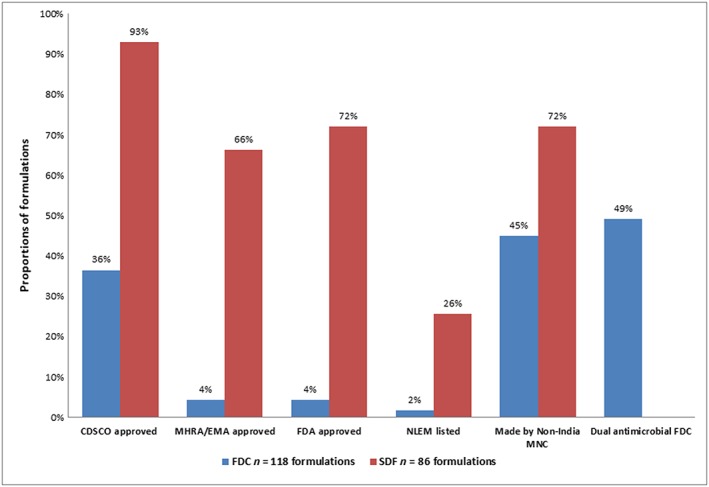
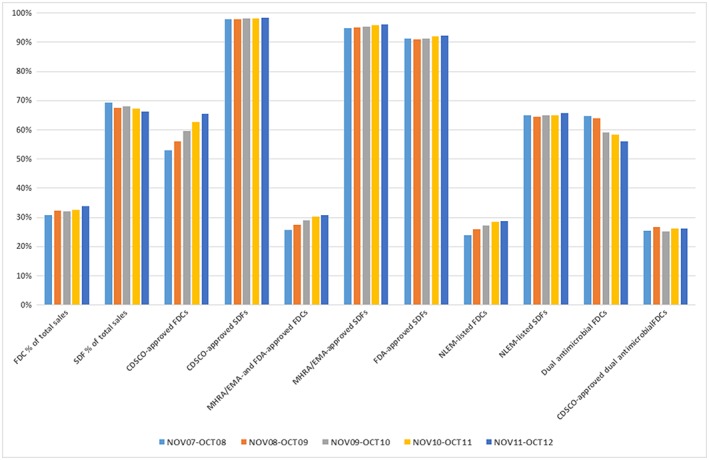
Results: Of 118 systemic antibiotic FDC formulations sold in India, 43 (36%) were approved but 75 (64%) had no record of regulatory approval; four (3%) formulations were approved in the UK and/or US. Almost half of formulations (58/118; 49%) comprised dual antimicrobials, most unapproved in India (43/58; 74%), and many were pharmacologically problematic. In contrast, 80/86 (93%) SDFs were approved in India and over two-thirds in the UK and/or US. Total antibiotic sales increased by 26%, from 2056 million units (2007-08) to 2583 million units (2011-12). FDC sales rose by 38% vs. 20% for SDFs. By 2011-12, FDCs comprised one-third of sales (872 million units). Over one-third of FDCs sold (300.26 million units; 34.5%) were of unapproved formulations. Multinational companies manufactured unapproved formulations and accounted for 19% of all FDC and SDF sales annually.
Conclusions: Sales in India of antibiotic FDCs, including unapproved formulations, are rising. In the context of increasing AMR rates nationally and globally, unapproved antibiotic FDCs undermine India's national AMR strategy and should be banned from sale.
Keywords: antibiotics; antimicrobial resistance; fixed-dose combination (FDC) formulations; regulatory approval; unapproved formulations.
© 2018 The British Pharmacological Society.
Figures
References
-
- O'Neill J. The review on antimicrobial resistance. Tackling drug‐resistant infections globally: final report and recommendations. 19 May 2016. Available at http://amr‐review.org/sites/default/files/160525_Final%20paper_with%20co... (last accessed 21 November 2017).
-
- Laxminarayan R, Matsosp P, Pant S, Brower C, Rottigen J‐A, Klugman K, et al Antimicrobials: access and sustainable effectiveness 1. Access to effective antimicrobials: a worldwide challenge. Lancet 2016; 387: 168–175. - PubMed
-
- Holmes A, Moore LSP, Sundsfjord A, Stienbakk M, Regmi S, Karkey A, et al Understanding the mechanisms and drivers of antimicrobial resistance. Lancet: 2016. ; 387: 176–187. - PubMed
-
- Mendelsom M, Rottingen JA, Gopinathan U, Hamer D, Wertheim H, Basnyat B, et al Maximising access to achieve appropriate human antimicrobial use in low‐income and middle‐income countries. Lancet 2016; 387: 188–198. - PubMed
-
- World Health Organization . Global action plan on antimicrobial resistance. Available at http://www.who.int/drugresistance/global_action_plan/en/ (last accessed 31 January 2018).
MeSH terms
Substances
LinkOut - more resources
Full Text Sources
Other Literature Sources
Medical