


Prognostic relevance of tumor-infiltrating lymphocytes and immune checkpoints in pediatric medulloblastoma
- PMID: 29399402
- PMCID: PMC5790383
- DOI: 10.1080/2162402X.2017.1398877
Prognostic relevance of tumor-infiltrating lymphocytes and immune checkpoints in pediatric medulloblastoma
Abstract
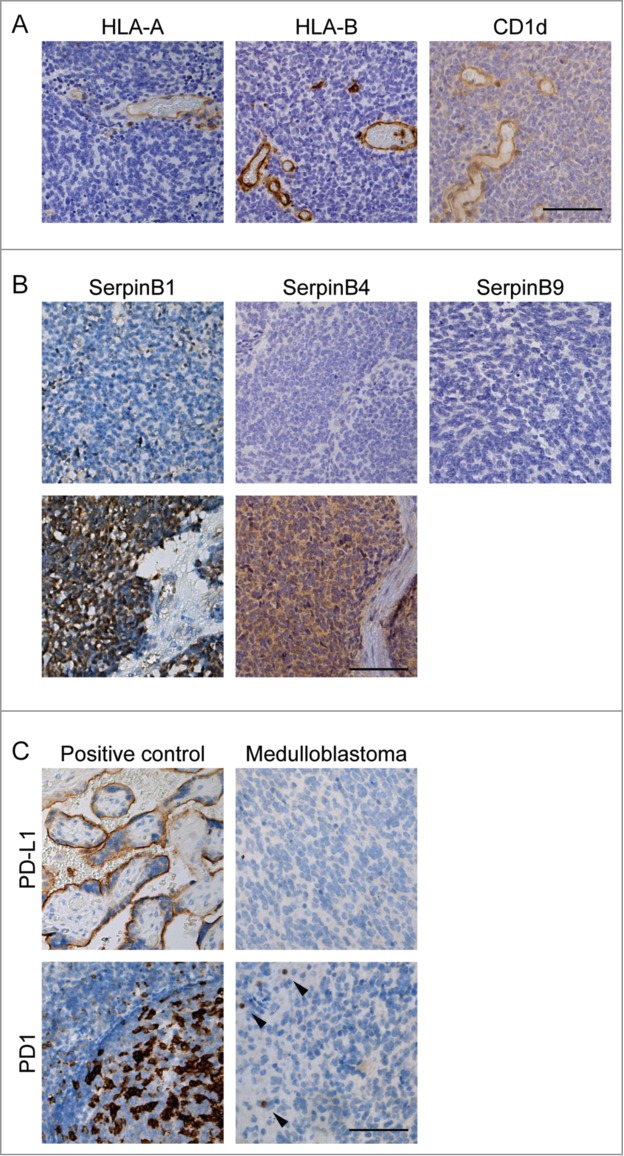
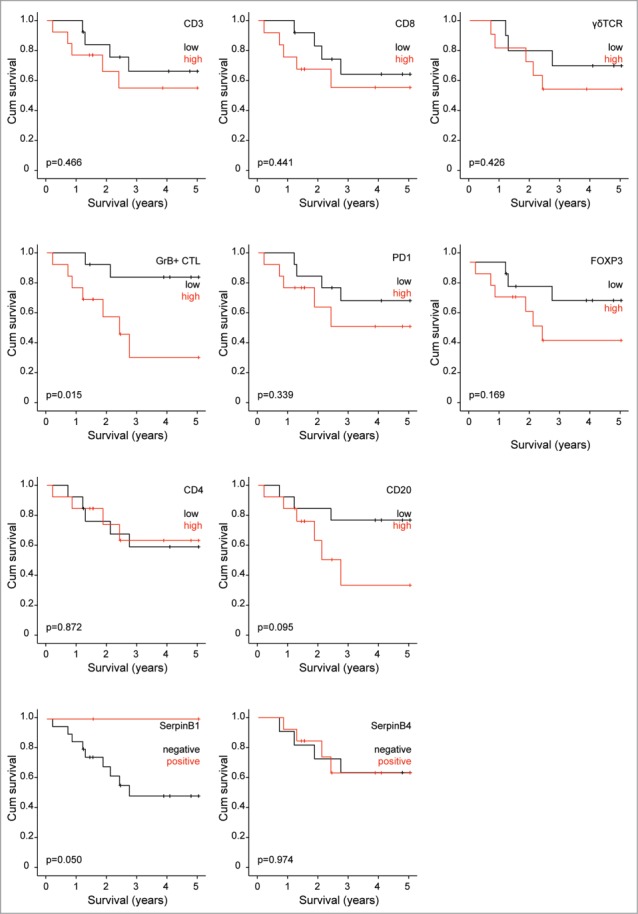
Pediatric medulloblastomas are the most frequently diagnosed embryonal tumors of the central nervous system. Current therapies cause severe neurological and cognitive side effects including secondary malignancies. Cellular immunotherapy might be key to improve survival and to avoid morbidity. Efficient killing of tumor cells using immunotherapy requires to overcome cancer-associated strategies to evade cytotoxic immune responses. Here, we examined the immune response and immune evasion strategies in pediatric medulloblastomas. Cytotoxic T-cells, infiltrating medulloblastomas with variable activation status, showed no correlation with overall survival of the patients. We found limited numbers of PD1+ T-cells and complete absence of PD-L1 on medulloblastomas. Medulloblastomas downregulated immune recognition molecules MHC-I and CD1 d. Intriguingly, expression of granzyme inhibitors SERPINB1 and SERPINB4 was acquired in 23% and 50% of the tumors, respectively. Concluding, pediatric medulloblastomas exploit multiple immune evasion strategies to overcome immune surveillance. Absence of PD-L1 expression in medulloblastoma suggest limited or no added value for immunotherapy with PD1/PD-L1 blockers.
Keywords: PD-1; PD-L1; Serpin; brain cancer; immune evasion; medulloblastoma; pediatric; tumor-infiltrating lymphocytes.
Figures

References
-
- Nederlandse Kankerregistratie beheerd door IKNL © Cijfers over kanker (text in Dutch) http://www.cijfersoverkanker.nl/kinderen-en-kanker-55.html [accessed April26, 2016].
-
- Ramaswamy V, Remke M, Bouffet E, Bailey S, Clifford SC, Doz F, Kool M, Dufour C, Vassal G, Milde T, et al.. Risk stratification of childhood medulloblastoma in the molecular era: the current consensus. Acta Neuropathol. 2016;131:821–31. doi:10.1007/s00401-016-1569-6. PMID:27040285. - DOI - PMC - PubMed
-
- Packer RJ, Zhou T, Holmes E, Vezina G, Gajjar A. Survival and secondary tumors in children with medulloblastoma receiving radiotherapy and adjuvant chemotherapy: results of Children's Oncology Group trial A9961. Neuro Oncol. 2013;15:97–103. doi:10.1093/neuonc/nos267. PMID:23099653. - DOI - PMC - PubMed
-
- Diller L, Chow EJ, Gurney JG, Hudson MM, Kadin-Lottick NS, Kawashima TI, Leisenring WM, Meacham LR, Mertens AC, Mulrooney DA, et al.. Chronic disease in the Childhood Cancer Survivor Study cohort: a review of published findings. J Clin Oncol. 2009;27:2339–55. doi:10.1200/JCO.2008.21.1953. PMID:19364955. - DOI - PMC - PubMed
Publication types
LinkOut - more resources
Full Text Sources
Other Literature Sources
Research Materials
Miscellaneous
