Review
. 2017 Dec;7(Suppl 3):S186-S196.
doi: 10.21037/cdt.2017.11.05.

Can thrombus age guide thrombolytic therapy?

Affiliations
Review

Can thrombus age guide thrombolytic therapy?

Christopher Czaplicki et al. Cardiovasc Diagn Ther. 2017 Dec.

Abstract

Venous thrombosis (VT) is a common yet complex clinical condition that has shown minimal alteration in clinical management for decades. It is well known that thrombus evolves structurally over time, with complex changes resulting from the interplay between coagulation factors, cytokines, leukocytes and a myriad of other factors. Our current treatment options are most effective in the acute thrombus, which is composed predominantly of a loose mesh of fibrin and red blood cells (RBCs), making current anticoagulation therapies and thrombolytics quite effective in treatment. Later stages of thrombus are more cellular containing leukocytes, and develop a fibrotic collagenous framework that is more resistant to our current treatments. Understanding the biology of an evolving thrombus will allow us to tailor our treatment and optimize outcomes, as well as focus on novel therapies for the treatment of chronic thrombus. Given the morbidity and mortality of both post thrombotic syndrome (PTS) in patients with deep VT, as well as chronic thromboembolic pulmonary hypertension (CTEPH) in patients with pulmonary embolism (PE), new and innovative therapies must continue to be explored to help prevent these potentially devastating conditions.

Keywords: Anticoagulants; pulmonary embolism (PE); venous thromboembolism; venous thrombosis (VT).


Conflict of interest statement

Conflicts of Interest: The authors have no conflicts of interest to declare.

Figures
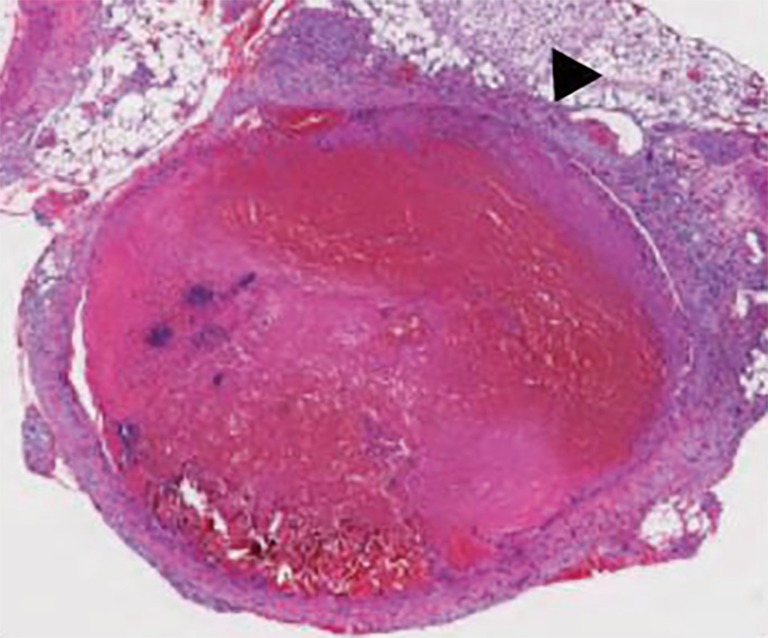
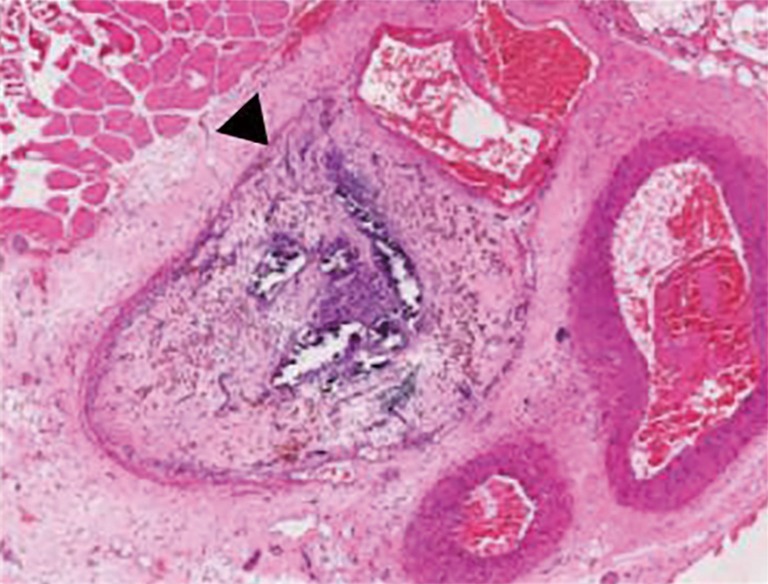
Figure 1
Figure 1
Image is 100× in magnification. Hematoxylin and eosin staining of a 5 micron section of a femoral vein fixed in 10% formalin and embedded in paraffin. The image demonstrates marked dilation of the vein containing a thrombus that is 3 days old. Black arrowhead indicates the vein wall.
Figure 2
Figure 2
Image is 100× in magnification. Hematoxylin and eosin staining of a 5 micron section of a femoral vein fixed in 10% formalin and embedded in paraffin. The image demonstrates a venous thrombus that is 30 days old with decreased dilation of the vein and significant fibrosis. Black arrowhead indicates the chronic fibrotic thrombus.
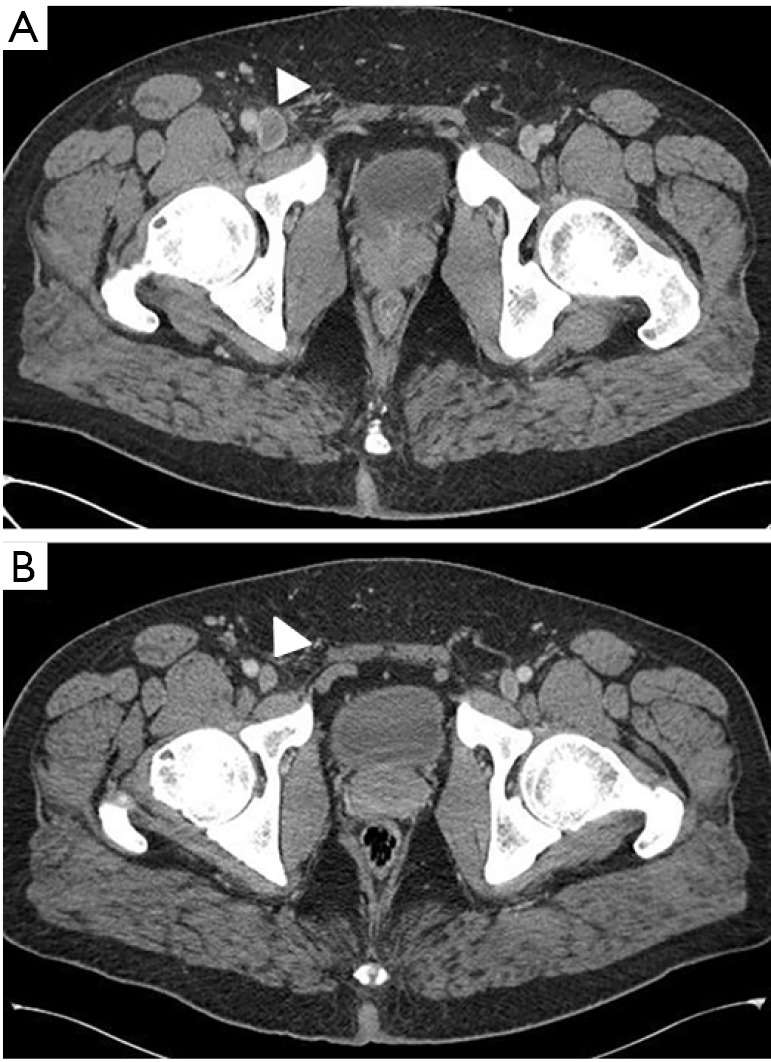
Figure 3
Figure 3
CT venogram demonstrates acute thrombus (A) in the right common femoral vein (white arrowhead) causing distention of the vessel lumen. Follow up CT venogram in 6 months (B) demonstrates chronic changes with the vessel remaining unopacified on delayed phases (white arrowhead).
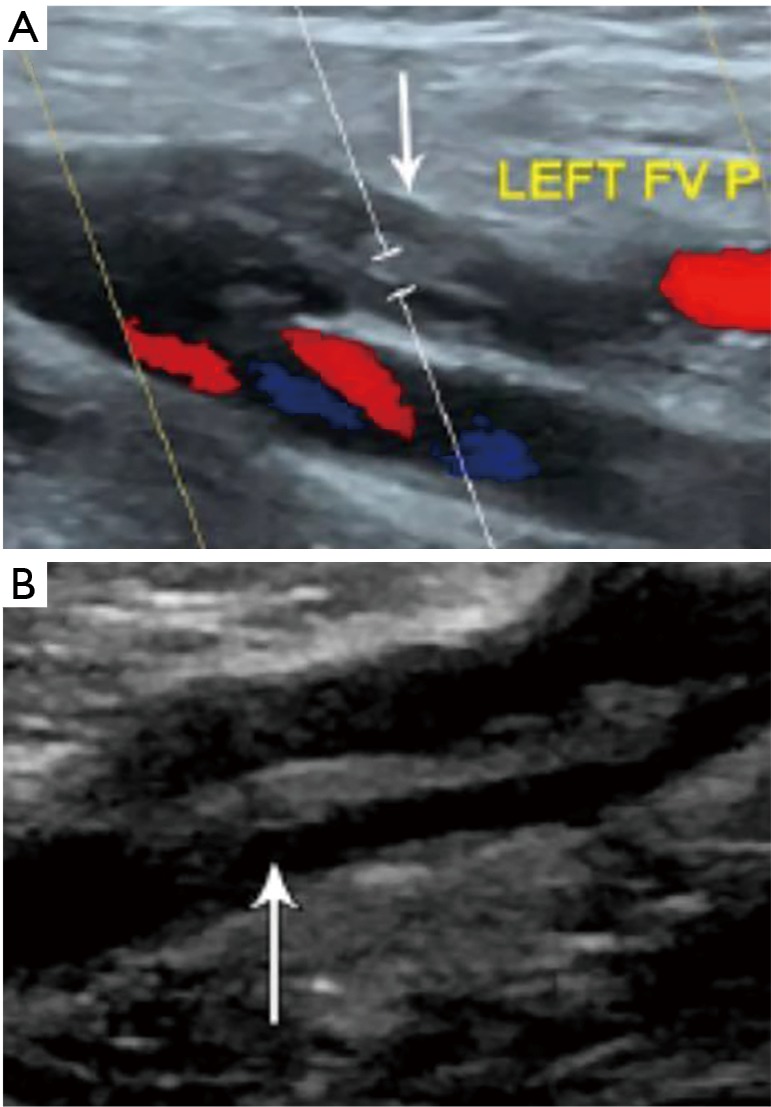
Figure 4
Figure 4
Venous duplex ultrasound demonstrating acute (A) and chronic (B) thrombus (white arrows) in the left femoral vein.

References

    1. Heit JA. The epidemiology of venous thromboembolism in the community. Arterioscler Thromb Vasc Biol 2008;28:370-2. 10.1161/ATVBAHA.108.162545 - DOI - PMC - PubMed
    1. Morris TA. Natural history of venous thromboembolism. Crit Care Clin 2011;27:869-84, vi. 10.1016/j.ccc.2011.09.001 - DOI - PubMed
    1. Spyropoulos AC, Lin J. Direct medical costs of venous thromboembolism and subsequent hospital readmission rates: an administrative claims analysis from 30 managed care organizations. J Manag Care Pharm 2007;13:475-86. 10.18553/jmcp.2007.13.6.475 - DOI - PMC - PubMed
    1. White RH. The epidemiology of venous thromboembolism. Circulation 2003;107:I4-8. 10.1161/01.CIR.0000078468.11849.66 - DOI - PubMed
    1. Stanford SN, Sabra A, D'Silva L, et al. The changes in clot microstructure in patients with ischaemic stroke and the effects of therapeutic intervention: a prospective observational study. BMC Neurol 2015;15:35. 10.1186/s12883-015-0289-1 - DOI - PMC - PubMed

LinkOut - more resources