


Impact of diabetes and early revascularization on the need for late and repeat procedures
- PMID: 29402330
- PMCID: PMC5798191
- DOI: 10.1186/s12933-018-0669-0
Impact of diabetes and early revascularization on the need for late and repeat procedures
Abstract
Background: Coronary artery disease often progresses more rapidly in diabetics, but the integrated impact of diabetes and early revascularization status on late or repeat revascularization in the contemporary era is less clear.
Methods: Coronary angiography was performed in 12,420 patients between the years 2000-2015 and early revascularization status [none, percutaneous coronary intervention (PCI) or bypass surgery (CABG)] was determined. Subsequent revascularization procedures were recorded over a median follow-up of 67 months and its relation to diabetic and baseline revascularization status was studied.
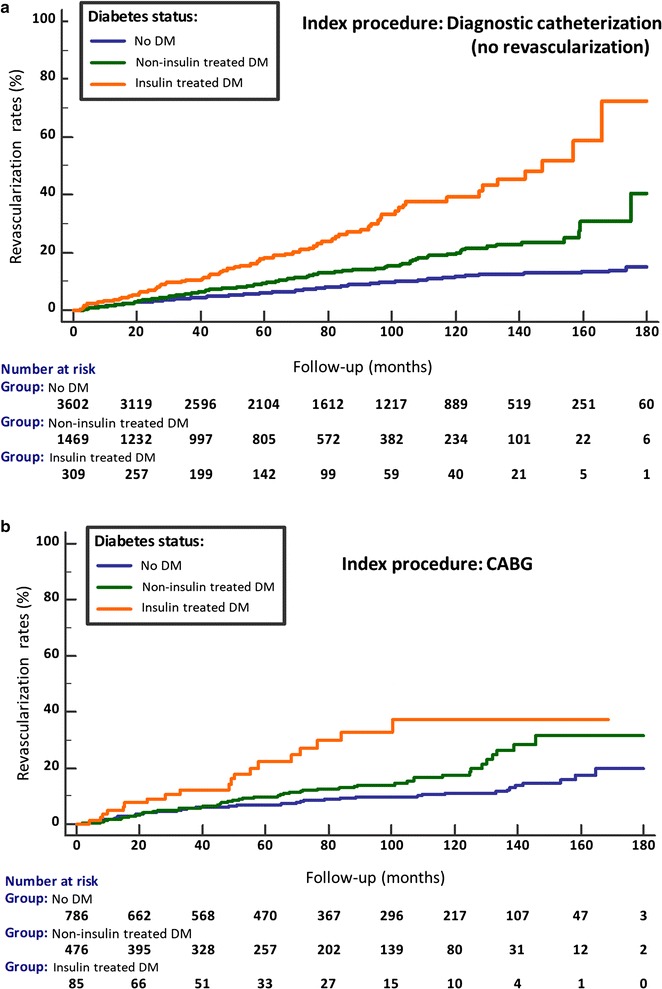
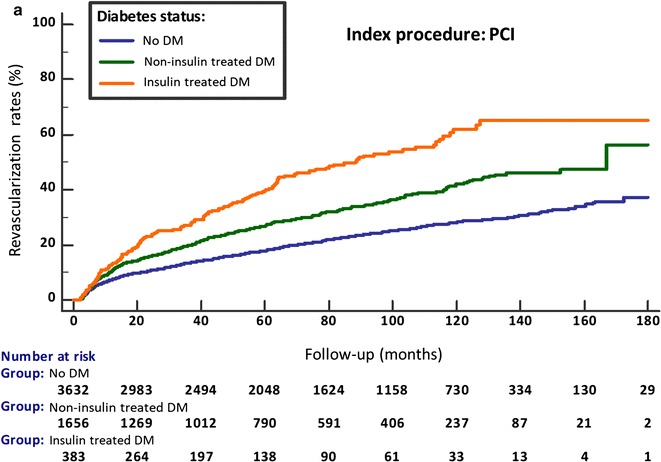
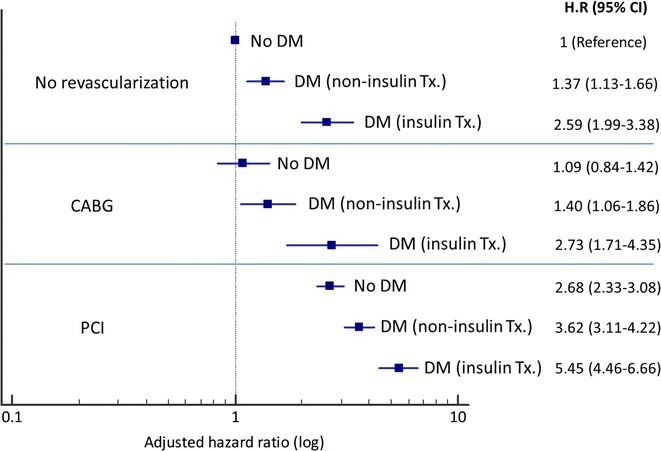
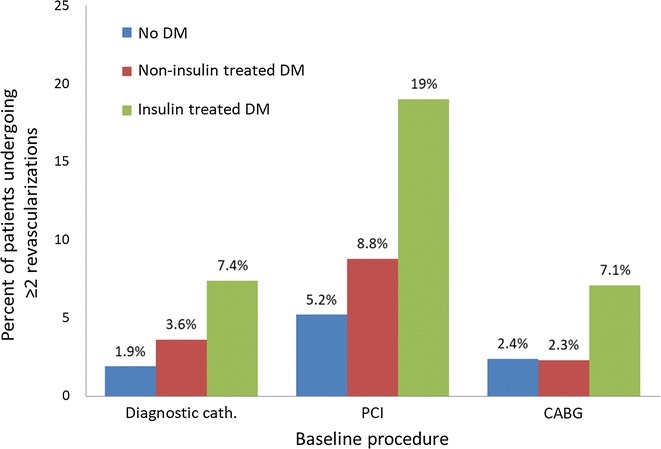
Results: Early revascularization status was none in 5391, PCI in 5682 and CABG in 1347 patients. Late revascularization rates were 10, 26 and 11.1% respectively. Diabetes was present in 37%; a stepwise relationship of diabetic status with late revascularization was observed: no diabetes (reference) 14.4%, non-insulin treated diabetes 21% (adjusted HR 1.35, 95% CI 1.23-1.49, p < 0.001) and insulin-treated diabetes 32.8% (adjusted HR 2.20, 95% CI 1.91-2.54, p < 0.001), which was similar in magnitude for each early revascularization state (none, PCI or CABG). Further revascularizations (≥ 2) were also significantly more common in diabetics, in particular if insulin-treated. Glycosylated hemoglobin level was moderately associated with late revascularization in diabetics after early PCI but not following diagnostic catheterization or CABG.
Conclusions: Diabetic status graded by treatment, and in particular insulin therapy, is a strong predictor for late or repeat revascularization irrespective of early revascularization status. The high rate of repeat revascularization in diabetics following PCI remains a challenging issue.
Keywords: Cardiac catheterization; Coronary revascularization; Diabetes mellitus; Percutaneous coronary intervention.
Figures
References
-
- Kedhi E, Généreux P, Palmerini T, McAndrew TC, Parise H, Mehran R, et al. Impact of coronary lesion complexity on drug-eluting stent outcomes in patients with and without diabetes mellitus: analysis from 18 pooled randomized trials. J Am Coll Cardiol. 2014;63(20):2111–2118. doi: 10.1016/j.jacc.2014.01.064. - DOI - PubMed
MeSH terms
Substances
LinkOut - more resources
Full Text Sources
Other Literature Sources
Medical
Miscellaneous
