


The last common ancestor of animals lacked the HIF pathway and respired in low-oxygen environments
- PMID: 29402379
- PMCID: PMC5800844
- DOI: 10.7554/eLife.31176
The last common ancestor of animals lacked the HIF pathway and respired in low-oxygen environments
Abstract
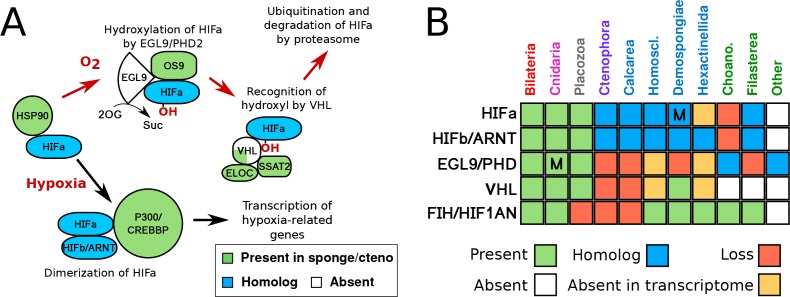
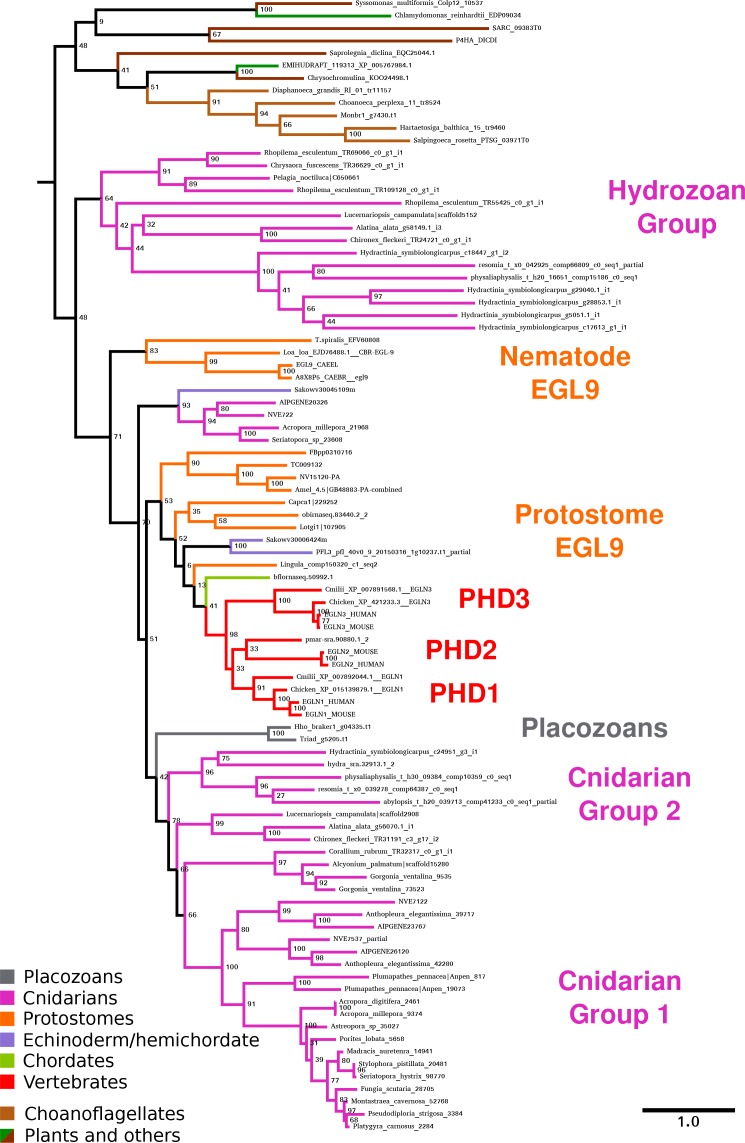
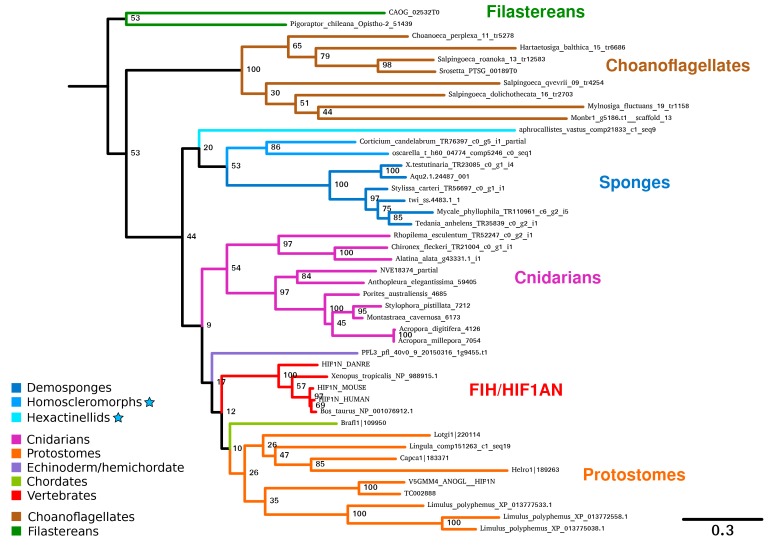
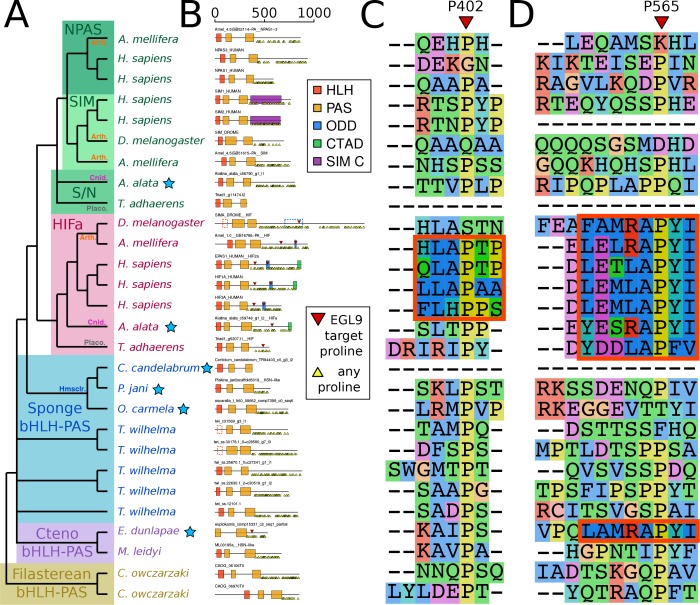
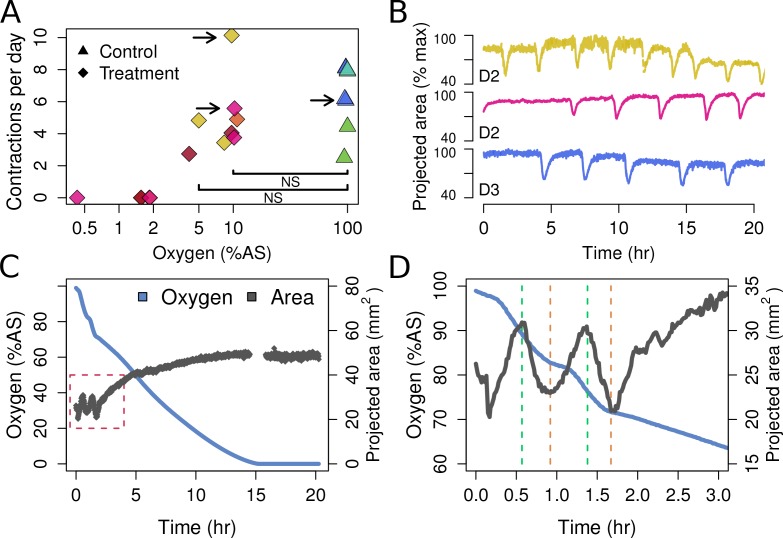
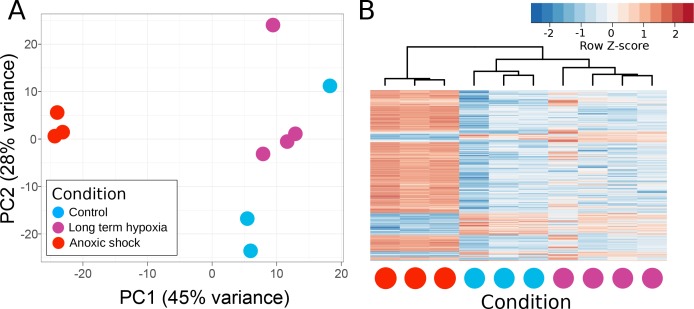
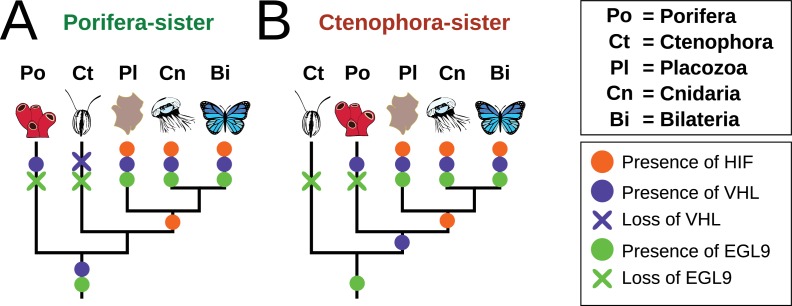
Animals have a carefully orchestrated relationship with oxygen. When exposed to low environmental oxygen concentrations, and during periods of increased energy expenditure, animals maintain cellular oxygen homeostasis by enhancing internal oxygen delivery, and by enabling the anaerobic production of ATP. These low-oxygen responses are thought to be controlled universally across animals by the hypoxia-inducible factor (HIF). We find, however, that sponge and ctenophore genomes lack key components of the HIF pathway. Since sponges and ctenophores are likely sister to all remaining animal phyla, the last common ancestor of extant animals likely lacked the HIF pathway as well. Laboratory experiments show that the marine sponge Tethya wilhelma maintains normal transcription under oxygen levels down to 0.25% of modern atmospheric saturation, the lowest levels we investigated, consistent with the predicted absence of HIF or any other HIF-like pathway. Thus, the last common ancestor of all living animals could have metabolized aerobically under very low environmental oxygen concentrations.
Keywords: Porifera; Tethya wilhelma; early animal evolution; evolutionary biology; genomics; hypoxia-inducible factor; oxygen sensing.
© 2017, Mills et al.
Conflict of interest statement
DM, WF, SV, ML, CE, DC, GW No competing interests declared
Figures
Comment in
-
Evolution: Oxygen and early animals.Elife. 2018 Feb 6;7:e34756. doi: 10.7554/eLife.34756. Elife. 2018. PMID: 29402380 Free PMC article.
References
-
- Beatteay S-L. Impact of Hypoxia on the Vertical Distribution of Jellyfish in the Eastern Tropical Northern Pacific. University of Washington; 2012.
-
- Bell JJ, Barnes DKA. Island, Ocean and Deep-Sea Biology. Springer; 2000. A Sponge Diversity Centre within a Marine ‘island; pp. 55–64. - DOI
Publication types
MeSH terms
Substances
Grants and funding
LinkOut - more resources
Full Text Sources
Other Literature Sources
