


Is Inferior Alveolar Nerve Block Sufficient for Routine Dental Treatment in 4- to 6-year-old Children?
- PMID: 29403231
- PMCID: PMC5789141
- DOI: 10.5005/jp-journals-10005-1467
Is Inferior Alveolar Nerve Block Sufficient for Routine Dental Treatment in 4- to 6-year-old Children?
Abstract
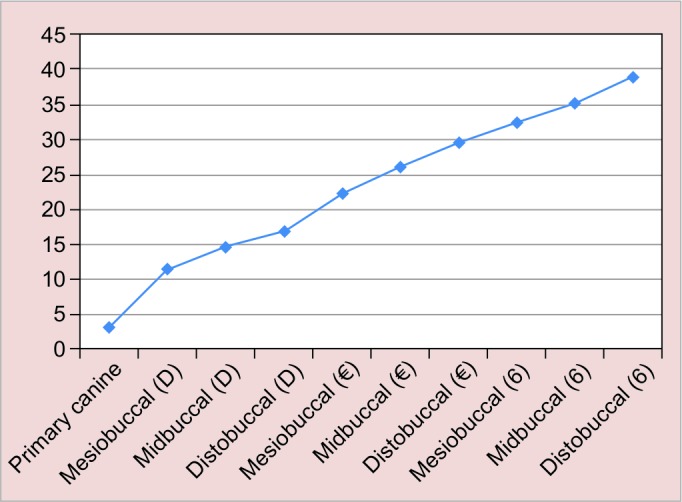
Introduction: Pain control is one of the most important aspects of behavior management in children. The most common way to achieve pain control is by using local anesthetics (LA). Many studies describe that the buccal nerve innervates the buccal gingiva and mucosa of the mandible for a variable extent from the vicinity of the lower third molar to the lower canine. Regarding the importance of appropriate and complete LA in child-behavior control, in this study, we examined the frequency of buccal gingiva anesthesia of primary mandibular molars and canine after inferior alveolar nerve block injection in 4- to 6-year-old children.
Study design: In this descriptive cross-sectional study, 220 4- to 6-year-old children were randomly selected and entered into the study. Inferior alveolar nerve block was injected with the same method and standards for all children, and after ensuring the success of block injection, anesthesia of buccal mucosa of primary molars and canine was examined by stick test and reaction of child using sound, eye, motor (SEM) scale. The data from the study were analyzed using descriptive statistics and statistical software Statistical Package for the Social Sciences (SPSS) version 21.
Results: The area that was the highest nonanesthetized was recorded as in the distobuccal of the second primary molars. The area of the lowest nonanesthesia was also reported in the gingiva of primary canine tooth.
Conclusion: According to this study, in 15 to 30% of cases, after inferior alveolar nerve block injection, the primary mandibular molars' buccal mucosa is not anesthetized.How to cite this article: Pourkazemi M, Erfanparast L, Sheykhgermchi S, Ghanizadeh M. Is Inferior Alveolar Nerve Block Sufficient for Routine Dental Treatment in 4- to 6-year-old Children? Int J Clin Pediatr Dent 2017;10(4):369-372.
Keywords: Anesthetized extent; Buccal gingiva; Local anesthesia; Long buccal nerve; Primary dentition..
Conflict of interest statement
Source of support: Nil Conflict of interest: None
Figures
References
-
- Council on Clinical Affairs AAoPD. Guideline on use of local anesthesia for pediatric dental patients. Pediatr Dent. 2015 Sep-Oct;37(5):71–77. - PubMed
-
- Ogle OE, Mahjoubi G. Advances in local anesthesia in dentistry. . Dent Clin North Am. 2011 Jul;55(3):481–499, viii. - PubMed
-
- Solow RA. Local anesthesia for restorative dentistry. . Gen Dent. 2014 Nov-Dec;62(6):18–20. - PubMed
-
- Boonsiriseth K, Sirintawat N, Arunakul K, Wongsirichat N. Comparative study of the novel and conventional injection approach for inferior alveolar nerve block. . Int J Oral Maxil-lofac Surg. 2013 Jul;42(7):852–856. - PubMed
LinkOut - more resources
Full Text Sources
Other Literature Sources