


Motivational factors for initiating, implementing, and maintaining physical activity behavior following a rehabilitation program for patients with type 2 diabetes: a longitudinal, qualitative, interview study
- PMID: 29403266
- PMCID: PMC5779276
- DOI: 10.2147/PPA.S150008
Motivational factors for initiating, implementing, and maintaining physical activity behavior following a rehabilitation program for patients with type 2 diabetes: a longitudinal, qualitative, interview study
Abstract
Aim: To explore motivational factors for initiating, implementing, and maintaining physical activity following a rehabilitation program for patients with type 2 diabetes mellitus.
Methods: Semi-structured, individual, qualitative interviews with five informants from the InterWalk trial were conducted at three separate occasions; at initiation of the rehabilitation program, at completion of the 12-week program, and 52 weeks after enrolment. Interviews were audio-recorded, transcribed, and analyzed according to Systematic Text Condensation. The framework of Self-Determination Theory was applied to guide analysis after identification of preliminary themes.
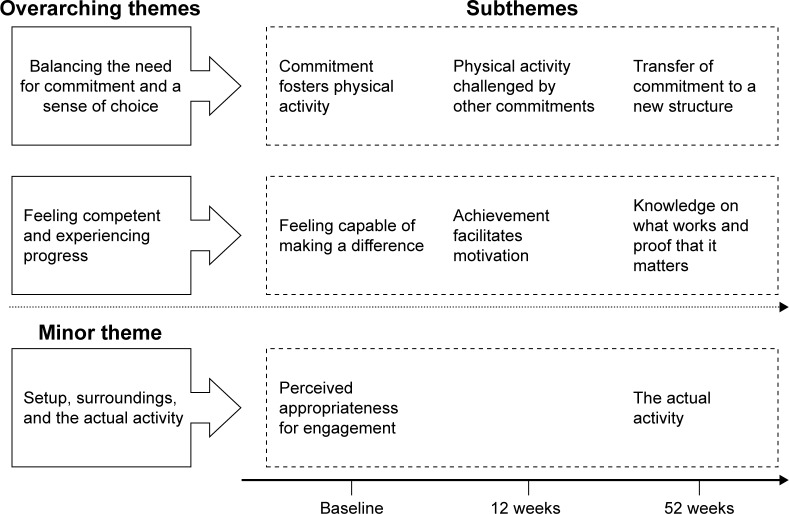
Results: Commitment and obligation were emphasized as being motivational in initiating physical activity. Toward the termination of the program, this was challenged by an expressed need for autonomy. Successful behavioral change was characterized by transfer of commitment to a new structure in everyday life, which also honored the request for autonomy. Feeling capable of participating in physical activity was facilitated through knowledge, practical experience, and progress and considered motivational, whereas lack of progress extinguished motivation. Finally, enjoyment of the activity was determining for long-term maintenance of physical activity behavior.
Conclusion: Satisfaction of innate psychological needs leads to more autonomous regulation of behavior and, through this study, we investigated determining factors for extrinsically motivated behavior and factors of importance to the internalization process.
Keywords: adherence; behavioral change; motivation; self-determination theory; type 2 diabetes mellitus.
Conflict of interest statement
Disclosure KCW and LSV also received funding from Tryg Foundation and LSV from Danish Association of Physiotherapists. LSV and HL further received funding from the City of Copenhagen. The authors report no other conflicts of interest in this work.
Figures
References
-
- Powell KE, Paluch AE, Blair SN. Physical activity for health: What kind? How much? How intense? On top of what? Annu Rev Public Health. 2011;32:349–365. - PubMed
-
- Sigal RJ, Kenny GP, Boulé NG, et al. Effects of aerobic training, resistance training, or both on glycemic control in type 2 diabetes: a randomized trial. Ann Intern Med. 2007;147(6):357–369. - PubMed
-
- Morrato EH, Hill JO, Wyatt HR, Ghushchyan V, Sullivan PW. Physical activity in U.S. adults with diabetes and at risk for developing diabetes, 2003. Diabetes Care. 2007;30(2):203–209. - PubMed
-
- Zhao G, Ford ES, Li C, Balluz LS. Physical activity in U.S. older adults with diabetes mellitus: prevalence and correlates of meeting physical activity recommendations. J Am Geriatr Soc. 2011;59(1):132–137. - PubMed
LinkOut - more resources
Full Text Sources
Other Literature Sources
