Association of Rooming-in With Outcomes for Neonatal Abstinence Syndrome: A Systematic Review and Meta-analysis
- PMID: 29404599
- PMCID: PMC5875350
- DOI: 10.1001/jamapediatrics.2017.5195
Association of Rooming-in With Outcomes for Neonatal Abstinence Syndrome: A Systematic Review and Meta-analysis
Abstract
Importance: Rising incidence of neonatal abstinence syndrome (NAS) is straining perinatal care systems. Newborns with NAS traditionally receive care in neonatal intensive care units (NICUs), but rooming-in with mother and family has been proposed to reduce the use of pharmacotherapy, length of stay (LOS), and cost.
Objective: To systematically review and meta-analyze if rooming-in is associated with improved outcomes for newborns with NAS.
Data sources: MEDLINE, CINAHL, The Cochrane Library, and clinicaltrials.gov were searched from inception through June 25, 2017.
Study selection: This investigation included randomized clinical trials, cohort studies, quasi-experimental studies, and before-and-after quality improvement investigations comparing rooming-in vs standard NICU care for newborns with NAS.
Data extraction and synthesis: Two independent investigators reviewed studies for inclusion. A random-effects model was used to pool dichotomous outcomes using risk ratio (RR) and 95% CI. The study evaluated continuous outcomes using weighted mean difference (WMD) and 95% CI.
Main outcomes and measures: The primary outcome was newborn treatment with pharmacotherapy. Secondary outcomes included LOS, inpatient cost, and harms from treatment, including in-hospital adverse events and readmission rates.
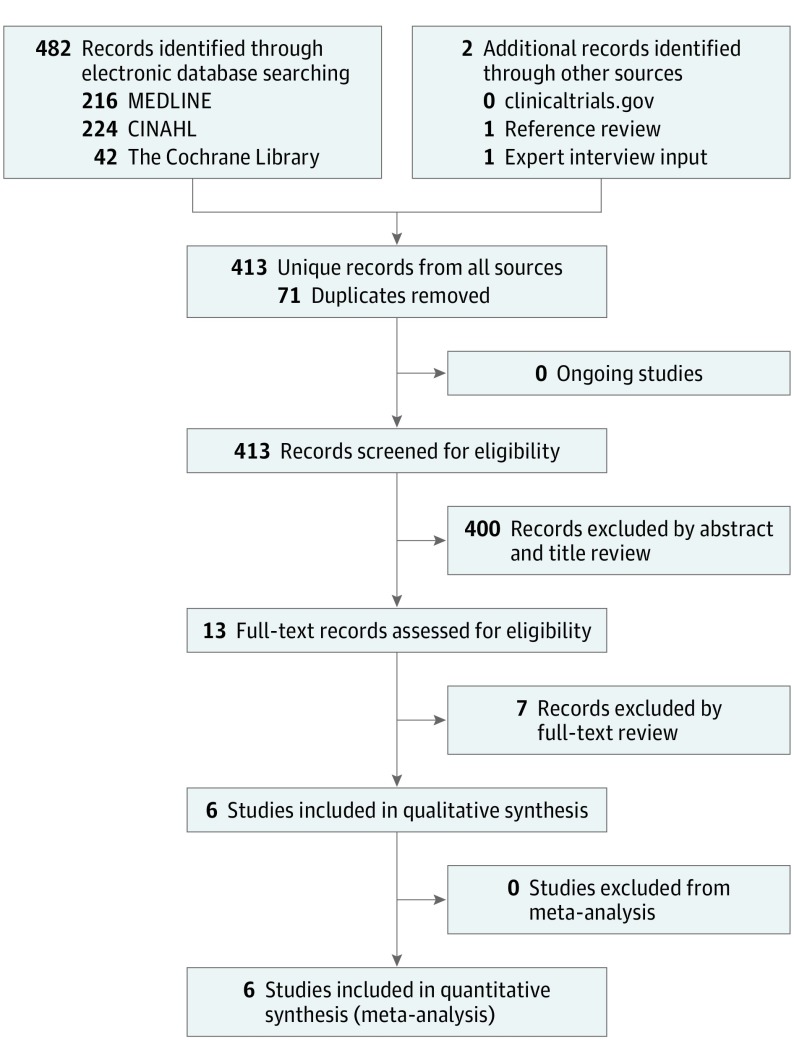
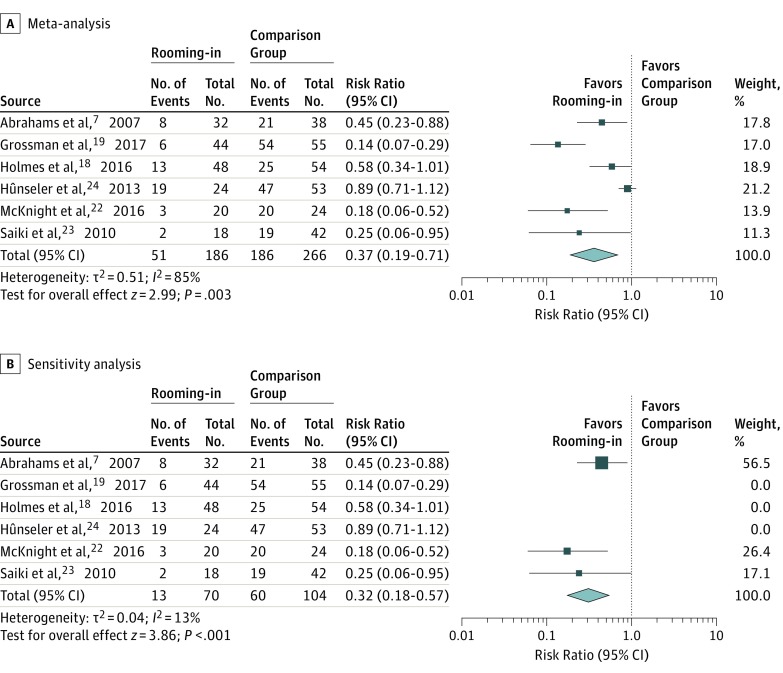
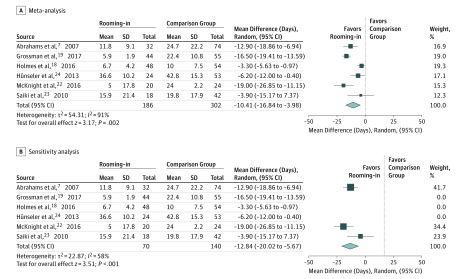
Results: Of 413 publications, 6 studies (n = 549 [number of patients]) met inclusion criteria. In meta-analysis of 6 studies, there was consistent evidence that rooming-in is preferable to NICU care for reducing both the use of pharmacotherapy (RR, 0.37; 95% CI, 0.19-0.71; I2 = 85%) and LOS (WMD, -10.41 days; 95% CI, -16.84 to -3.98 days; I2 = 91%). Sensitivity analysis resolved the heterogeneity for the use of pharmacotherapy, significantly favoring rooming-in (RR, 0.32; 95% CI, 0.18-0.57; I2 = 13%). Three studies reported that inpatient costs were lower with rooming-in; however, significant heterogeneity precluded quantitative analysis. Qualitative analysis favored rooming-in over NICU care for increasing breastfeeding rates and discharge home in familial custody, but few studies reported on these outcomes. Rooming-in was not associated with higher rates of readmission or in-hospital adverse events.
Conclusions and relevance: Opioid-exposed newborns rooming-in with mother or other family members appear to be significantly less likely to be treated with pharmacotherapy and have substantial reductions in LOS compared with those cared for in NICUs. Rooming-in should be recommended as a preferred inpatient care model for NAS.
Conflict of interest statement
Figures
Comment in
-
'Rooming-in' could be an effective non-pharmacological treatment for infants with neonatal abstinence syndrome.Evid Based Nurs. 2018 Oct;21(4):110. doi: 10.1136/eb-2018-102948. Epub 2018 Sep 5. Evid Based Nurs. 2018. PMID: 30185411 No abstract available.
References
-
- Jones HE, Fielder A. Neonatal abstinence syndrome. Prev Med. 2015;80:12-17. - PubMed
-
- McQueen K, Murphy-Oikonen J. Neonatal abstinence syndrome. N Engl J Med. 2016;375(25):2468-2479. - PubMed
-
- Ko JY, Patrick SW, Tong VT, Patel R, Lind JN, Barfield WD. Incidence of neonatal abstinence syndrome. MMWR Morb Mortal Wkly Rep. 2016;65(31):799-802. - PubMed
-
- Patrick SW, Schumacher RE, Benneyworth BD, Krans EE, McAllister JM, Davis MM. Neonatal abstinence syndrome and associated health care expenditures: United States, 2000-2009. JAMA. 2012;307(18):1934-1940. - PubMed
-
- Hudak ML, Tan RC; Committee on Drugs; Committee on Fetus and Newborn; American Academy of Pediatrics . Neonatal drug withdrawal. Pediatrics. 2012;129(2):e540-e560. - PubMed
Publication types
MeSH terms
Substances
LinkOut - more resources
Full Text Sources
Other Literature Sources
Miscellaneous