Review
. 2018:137:115-170.
doi: 10.1016/bs.acr.2017.11.003. Epub 2017 Dec 7.

Recent Advances in Nanoparticle-Based Cancer Drug and Gene Delivery

Affiliations
Review

Recent Advances in Nanoparticle-Based Cancer Drug and Gene Delivery

Narsireddy Amreddy et al. Adv Cancer Res. 2018.

Abstract

Effective and safe delivery of anticancer agents is among the major challenges in cancer therapy. The majority of anticancer agents are toxic to normal cells, have poor bioavailability, and lack in vivo stability. Recent advancements in nanotechnology provide safe and efficient drug delivery systems for successful delivery of anticancer agents via nanoparticles. The physicochemical and functional properties of the nanoparticle vary for each of these anticancer agents, including chemotherapeutics, nucleic acid-based therapeutics, small molecule inhibitors, and photodynamic agents. The characteristics of the anticancer agents influence the design and development of nanoparticle carriers. This review focuses on strategies of nanoparticle-based drug delivery for various anticancer agents. Recent advancements in the field are also highlighted, with suitable examples from our own research efforts and from the literature.

Keywords: Chemotherapeutics; Drug delivery; Exosomes; Gene therapy; Nanoparticle; Tumor targeting.


Figures

Fig. 1
Fig. 1
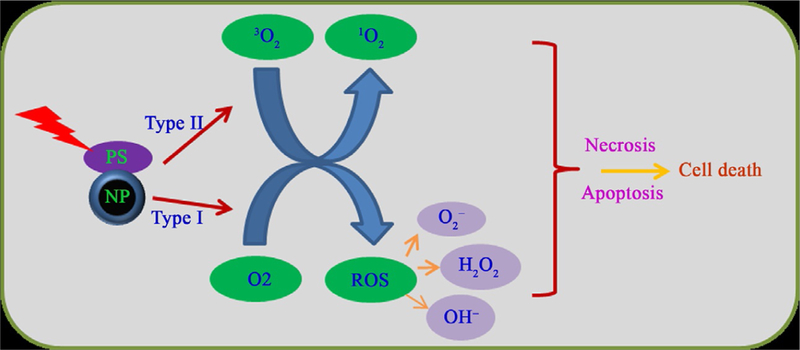
Schematic representation of the types I and II mechanisms of PDT upon light irradiation to generate ROS and singlet oxygen that cause necrosis and apoptosis, respectively.
Fig. 2
Fig. 2
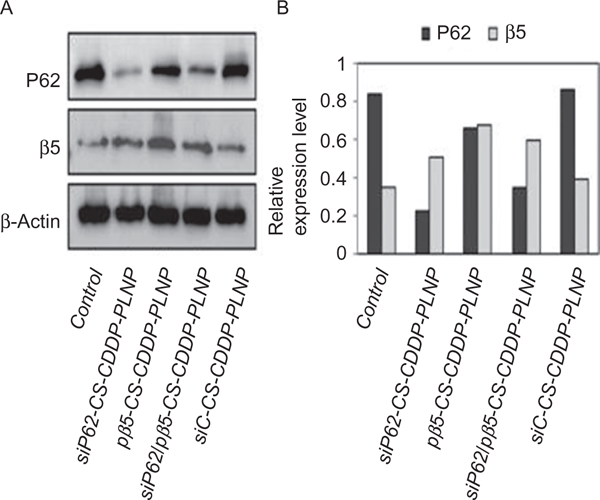
(A) The effect of codelivery of siP62 and/or pβ5 using cisplatin-encapsulated, chitosan-coated polylactic acid nanoparticles (CS-CDDP-PLNP) on P62 and β5 protein expression levels in cisplatin-resistant 2008/C13 cells. (B) The corresponding diagram shows relative expression levels of the two proteins normalized to beta actin. Figure reproduced from Babu, A, Wang, Q., Muralidharan, R., Shanker, M., Munshi, A, & Ramesh, R. (2014). Chitosan coated polylactic acid nanoparticle-mediated combinatorial delivery of cisplatin and siRNA/plasmid DNA chemosensitizes cisplatin-resistant human ovarian cancer cells. Molecular Pharmaceutics, 11(8), 2720–2733. doi:10.1021/mp500259e. Copyright © 2014, American Chemical Society.
Fig. 3
Fig. 3
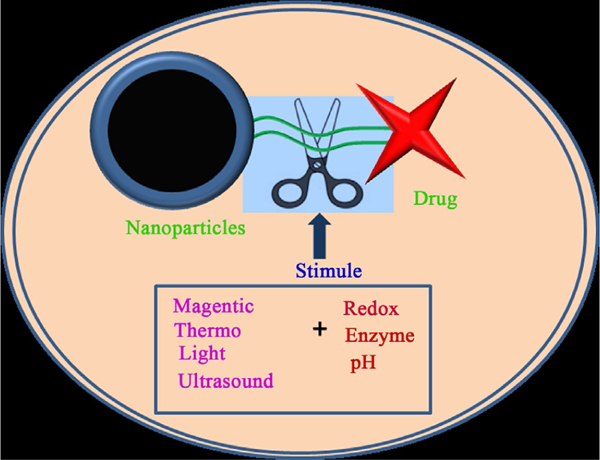
Schematic representation illustrating stimuli-responsive, tumor-targeted drug delivery under extracellular and intracellular gradients in nanoparticle–drug conjugates.
Fig. 4
Fig. 4
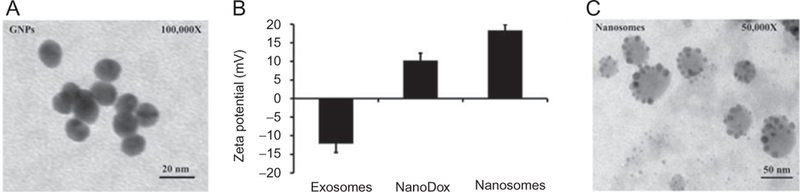
(A) TEM image of gold nanoparticles, (B) surface zeta potential values of exosomes that were isolated from MRC9 cells, NanoDox (GNP–DOX), nanosomes (exosomes+GNP–DOX), and (C) TEM image of nanosomes. Figure reproduced from Srivastava, A., Amreddy, N., Babu, A., Panneerselvam, J., Mehta, M., Muralidharan, R., ..., Ramesh, R. (2016). Nanosomes carrying doxorubicin exhibit potent anticancer activity against human lung cancer cells. Scientific Reports, 6, 38541. doi:10.1038/srep38541. Copyright © 2016, Rights Managed by Nature Publishing Group.
Fig. 5
Fig. 5
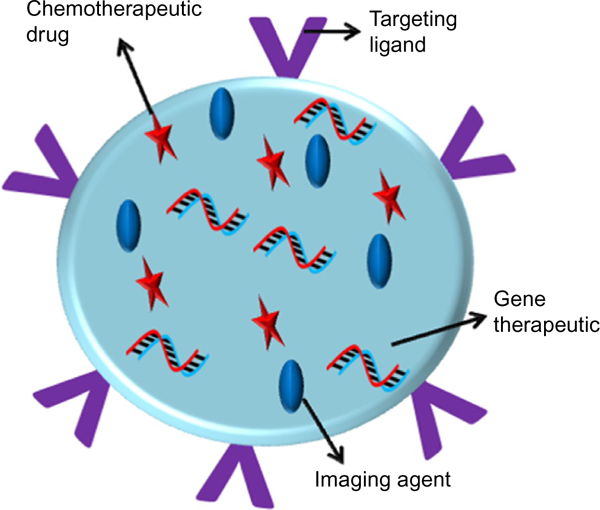
Schematic illustration of multifunctional nanoparticles for tumor-targeted delivery of therapeutics and imaging agents using targeted ligands functionalized on the surface of nanocarriers.
Fig. 6
Fig. 6
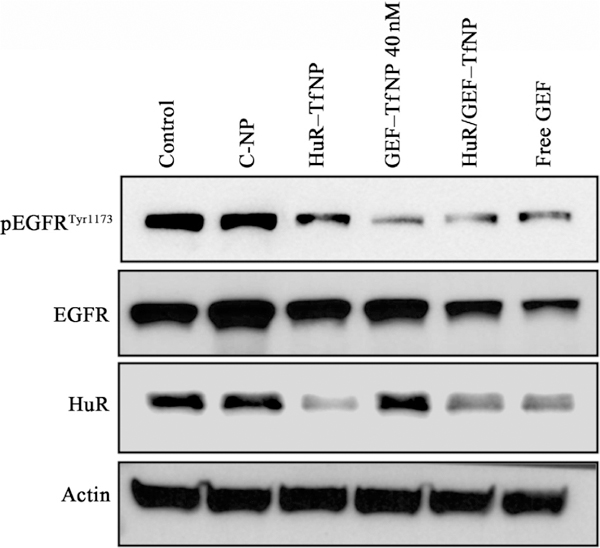
Western blot analysis of Tf receptor-targeted codelivery of HuR siRNA and gefitinib (40nM) with DOTAP-chol liposome nanoparticles to HCC827 lung cancer cells. The results showed the reduction of HuR and pEGFR expression.
Fig. 7
Fig. 7
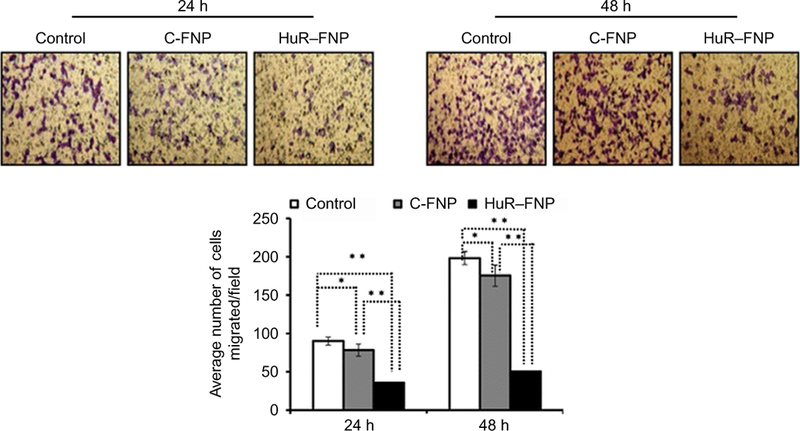
Folic acid-conjugated DOTAP:cholesterol-based liposomes (HuR-FNP) greatly inhibit tumor cell migration compared with control siRNA (C-FNP) and untreated control at 24 and 48h. Figure reproduced from Muralidharan, R., Babu, A., Amreddy, N., Basalingappa, K., Mehta, M., Chen, A., ..., Ramesh, R. (2016). Folate receptor-targeted nanoparticle delivery of HuR-RNAi suppresses lung cancer cell proliferation and migration. Journal of Nanobiotechnology, 14(1), 47. doi:10.1186/s12951–016-0201–1. Creativecommons.org license 2016.

References

    1. Abbasi E, Aval SF, Akbarzadeh A, Milani M, Nasrabadi HT, Joo SW, et al. (2014). Dendrimers: Synthesis, applications, and properties. Nanoscale Research Letters, 9(1), 247 10.1186/1556-276X-9-247. - DOI - PMC - PubMed
    1. Al-Ahmady ZS, Al-Jamal WT, Bossche JV, Bui TT, Drake AF, Mason AJ, et al. (2012). Lipid–peptide vesicle nanoscale hybrids for triggered drug release by mild hyperthermia in vitro and in vivo. ACS Nano, 6(10), 9335–9346. 10.1021/nn302148p. - DOI - PMC - PubMed
    1. Almeida E, Bellettini IC, Garcia FP, Farinacio MT, Nakamura CV, Rubira AF, et al. (2017). Curcumin-loaded dual pH- and thermo-responsive magnetic microcarriers based on pectin maleate for drug delivery. Carbohydrate Polymers, 171, 259–266. 10.1016/j.carbpol.2017.05.034. - DOI - PubMed
    1. Aluri R, & Jayakannan M (2017). Development of l-tyrosine-based enzyme-responsive amphiphilic poly(ester-urethane) nanocarriers for multiple drug delivery to cancer cells. Biomacromolecules, 18(1), 189–200. 10.1021/acs.biomac.6b01476. - DOI - PubMed
    1. Alvarez-Erviti L, Seow Y, Yin H, Betts C, Lakhal S, & Wood MJ (2011). Delivery of siRNA to the mouse brain by systemic injection of targeted exosomes. Nature Biotechnology, 29(4), 341–345. 10.1038/nbt.1807. - DOI - PubMed

FURTHER READING

    1. Bhattacharjee H, Balabathula P, & Wood GC (2010). Targeted nanoparticulate drug-delivery systems for treatment of solid tumors: A review. Therapeutic Delivery, 1(5), 713–734. - PubMed
    1. Greish K (2007). Enhanced permeability and retention of macromolecular drugs in solid tumors: A royal gate for targeted anticancer nanomedicines. Journal of Drug Targeting, 15(7–8), 457–464. 10.1080/10611860701539584. - DOI - PubMed
    1. Jiang XC, & Gao JQ (2017). Exosomes as novel bio-carriers for gene and drug delivery. International Journal of Pharmaceutics, 521(1–2), 167–175. - PubMed
    1. Maeda H, Bharate GY, & Daruwalla J (2009). Polymeric drugs for efficient tumor-targeted drug delivery based on EPR-effect. European Journal of Pharmaceutics and Biopharmaceutics, 71(3), 409–419. https://doi.org/10.1016Zj.ejpb.2008.11.010. - PubMed
    1. Singh R, & Lillard JW Jr. (2009). Nanoparticle-based targeted drug delivery. Experimental and Molecular Pathology, 86(3), 215–223. 10.1016/j.yexmp.2008.12.004. - DOI - PMC - PubMed

Publication types

MeSH terms

LinkOut - more resources