


Is β-hydroxy β-methylbutyrate an effective anabolic agent to improve outcome in older diseased populations?
- PMID: 29406417
- PMCID: PMC5882564
- DOI: 10.1097/MCO.0000000000000459
Is β-hydroxy β-methylbutyrate an effective anabolic agent to improve outcome in older diseased populations?
Abstract
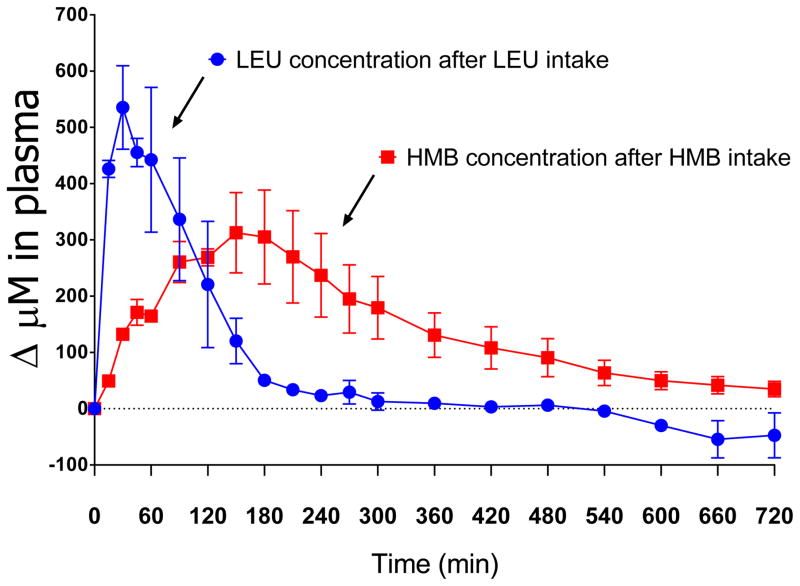
Purpose of review: β-Hydroxy β-methylbutyrate (HMB) has been used for many years in athletes for muscle buildup and strength, and endurance enhancement. In recent years, its interest quickly expanded in older (diseased) populations and during (exercise) rehabilitation and recovery from hospitalization and surgery. We will discuss recent literature about HMB metabolism, its pharmacokinetics compared with the frequently used metabolite leucine, effectiveness of HMB to improve outcome in older diseased adults, and novel approaches for HMB use.
Recent findings: HMB supplementation resulted in positive outcomes on muscle mass and functionality, related to its anabolic and anticatabolic properties and prolonged half-life time in blood. Furthermore, it was able to increase the benefits of (exercise) rehabilitation programs to enhance recovery from illness or medical procedures. There is promising evidence that HMB might support bone density, improve cognitive function, and reduce abdominal obesity, which is of importance particularly in the older (diseased) population.
Summary: The older diseased population might benefit from dietary HMB because of its established positive properties as well as its long lasting (pharmacological) effect. In addition to evaluating its efficacy and application in various clinical conditions, more research is needed into the mechanisms of action, the optimal dosage, and its potential additional beneficial effects on outcome.
Conflict of interest statement
Conflicts of Interest: ME and ND have received research funding and speaker honoraria from Abbott Nutrition.
Figures
References
-
- Molfino A, Gioia G, Fanelli FR, Muscaritoli M. Beta-hydroxy-beta-methylbutyrate supplementation in health and disease: a systematic review of randomized trials. Amino Acids. 2013:1–20. - PubMed
-
- Wilson JM, Fitschen PJ, Campbell B, Wilson GJ, Zanchi N, Taylor L, Wilborn C, Kalman DS, Stout JR, Hoffman JR, Ziegenfuss TN, Lopez HL, Kreider RB, Smith-Ryan AE, Antonio J. International Society of Sports Nutrition Position Stand: beta-hydroxy-beta-methylbutyrate (HMB) J Int Soc Sports Nutr. 2013;10(1):6. doi: 10.1186/1550-2783-10-6. - DOI - PMC - PubMed
-
- Holecek M. Beta-hydroxy-beta-methylbutyrate supplementation and skeletal muscle in healthy and muscle-wasting conditions. Journal of cachexia, sarcopenia and muscle. 2017;8(4):529–41. doi: 10.1002/jcsm.12208. Epub 2017/05/12. Excellent review paper that is a good start for new researchers in the field. - DOI - PMC - PubMed
-
- Wilkinson DJ, Hossain T, Hill DS, Phillips BE, Crossland H, Williams J, Loughna P, Churchward-Venne TA, Breen L, Phillips SM, Etheridge T, Rathmacher JA, Smith K, Szewczyk NJ, Atherton PJ. Effects of leucine and its metabolite beta-hydroxy-beta-methylbutyrate on human skeletal muscle protein metabolism. The Journal of physiology. 2013;591(Pt 11):2911–23. doi: 10.1113/jphysiol.2013.253203. - DOI - PMC - PubMed
-
- Mirza KA, Pereira SL, Voss AC, Tisdale MJ. Comparison of the anticatabolic effects of leucine and Ca-β-hydroxy-β-methylbutyrate in experimental models of cancer cachexia. Nutrition. 2014;30(7–8):807–13. doi: http://dx.doi.org/10.1016/j.nut.2013.11.012. - DOI - PubMed
Publication types
MeSH terms
Substances
Grants and funding
LinkOut - more resources
Full Text Sources
Other Literature Sources
Medical
