


The child health exposure analysis resource as a vehicle to measure environment in the environmental influences on child health outcomes program
- PMID: 29406438
- PMCID: PMC5947863
- DOI: 10.1097/MOP.0000000000000601
The child health exposure analysis resource as a vehicle to measure environment in the environmental influences on child health outcomes program
Abstract
Purpose of review: Demonstrate the role of environment as a predictor of child health.
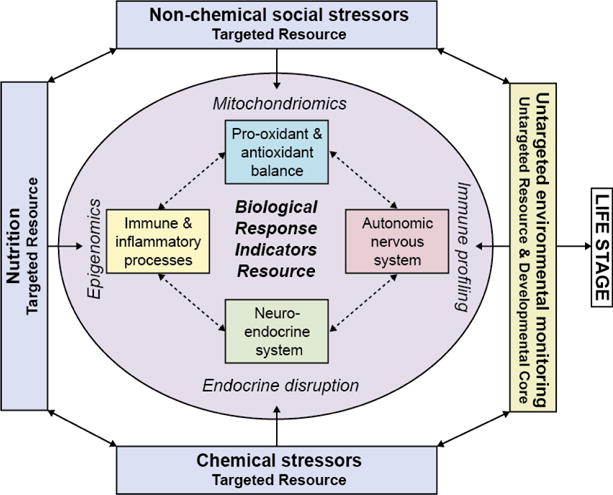
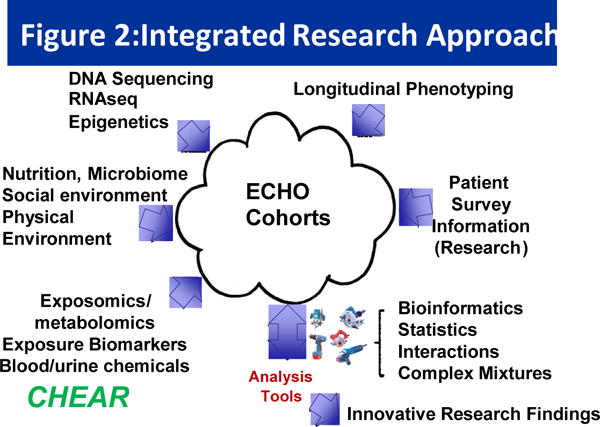
Recent findings: The children's health exposure analysis resource (CHEAR) assists the Environmental influences on child health outcomes (ECHO) program in understanding the time sensitive and dynamic nature of perinatal and childhood environment on developmental trajectories by providing a central infrastructure for the analysis of biological samples from the ECHO cohort awards. CHEAR will assist ECHO cohorts in defining the critical or sensitive period for effects associated with environmental exposures. Effective incorporation of these principles into multiple existing cohorts requires extensive multidisciplinary expertise, creativity, and flexibility. The pursuit of life course - informed research within the CHEAR/ECHO structure represents a shift in focus from single exposure inquiries to one that addresses multiple environmental risk factors linked through shared vulnerabilities. CHEAR provides ECHO both targeted analyses of inorganic and organic toxicants, nutrients, and social-stress markers and untargeted analyses to assess the exposome and discovery of exposure-outcome relationships.
Summary: Utilization of CHEAR as a single site for characterization of environmental exposures within the ECHO cohorts will not only support the investigation of the influence of environment on children's health but also support the harmonization of data across the disparate cohorts that comprise ECHO.
Conflict of interest statement
No relevant conflicts to be reported.
Figures
References
-
- Robinson O, Vrijheid M. The Pregnancy Exposome. Curr Environ Health Rep. 2015;2:204–213. - PubMed
Publication types
MeSH terms
Grants and funding
LinkOut - more resources
Full Text Sources
Other Literature Sources
Medical
Research Materials
