


Genetic risk of APOL1 and kidney disease in children and young adults of African ancestry
- PMID: 29406442
- PMCID: PMC6002812
- DOI: 10.1097/MOP.0000000000000603
Genetic risk of APOL1 and kidney disease in children and young adults of African ancestry
Abstract
Purpose of review: Understanding the genetic risk of APOL1 in children and young adults is important given the lifetime risk of hypertension and kidney disease among children of African descent. We review recent epidemiologic and biologic findings on the effects of APOL1 and kidney disease.
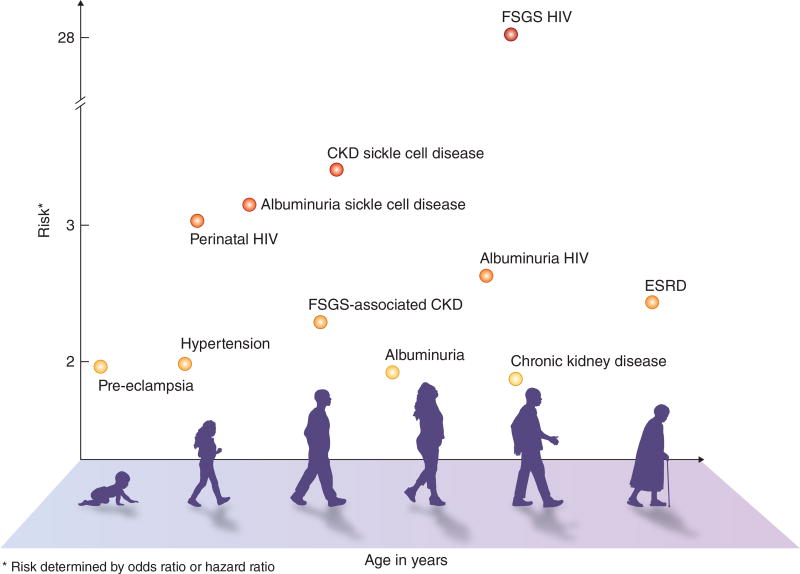
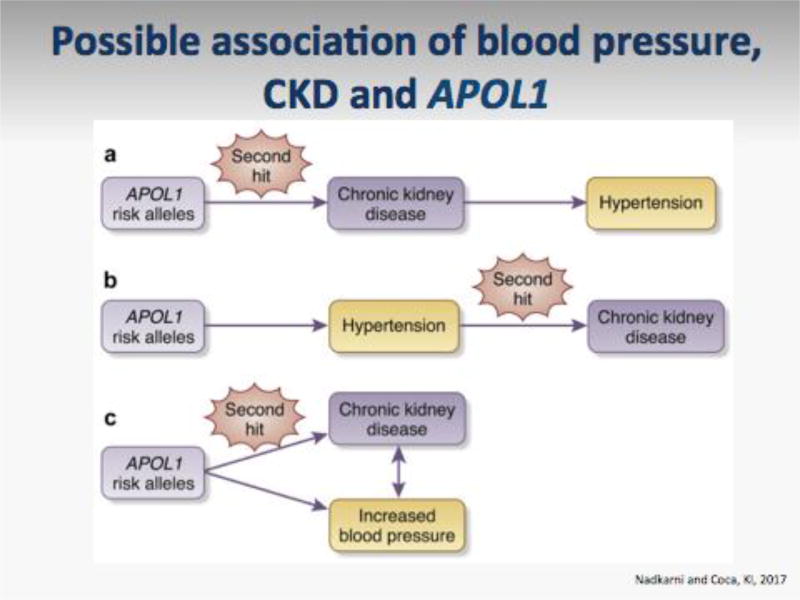
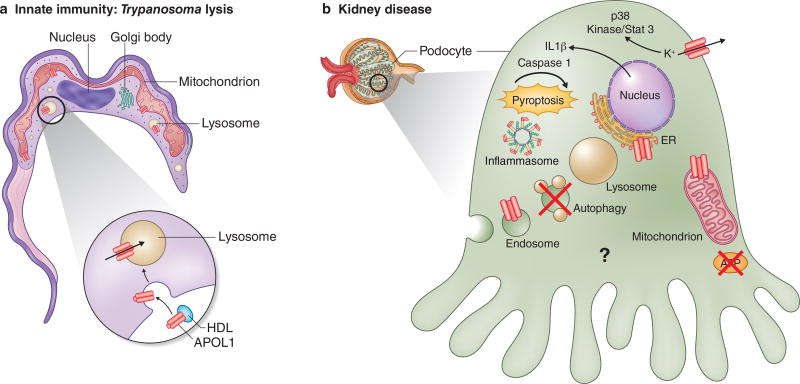
Recent findings: APOL1 in children and young adults is associated with hypertension, albuminuria and more rapid decline in kidney function and progression to end-stage kidney disease, especially among those with glomerular causes of kidney disease, and those affected by sickle cell disease or HIV. There are conflicting data on the APOL1 association with cardiovascular disease in children and young adults. APOL1 functions as part of the innate immune system. Podocyte expression of APOL1 likely contributes to the development of kidney disease. In cell culture and model organisms, APOL1 expression disrupts autophagic and ion flux, leads to defects in mitochondrial respiration and induces cell death.
Summary: APOL1 explains almost 70% of the excess risk of kidney disease in those of African descent, and is common in children with glomerular disease. An evolving understanding of the pathogenesis of APOL1-mediated kidney damage may aid in personalized medicine approaches to APOL1 attributable kidney disease.
Conflict of interest statement
KR is site PI for a Questcor supported clinical trial with no relevance to the contents of this manuscript. The remaining authors have no conflicts of interest.
Figures
References
Publication types
MeSH terms
Substances
Grants and funding
LinkOut - more resources
Full Text Sources
Other Literature Sources
Medical
Research Materials
Miscellaneous
