


Evaluation of the inactivation of Venezuelan equine encephalitis virus by several common methods
- PMID: 29407211
- PMCID: PMC5826796
- DOI: 10.1016/j.jviromet.2018.01.009
Evaluation of the inactivation of Venezuelan equine encephalitis virus by several common methods
Abstract
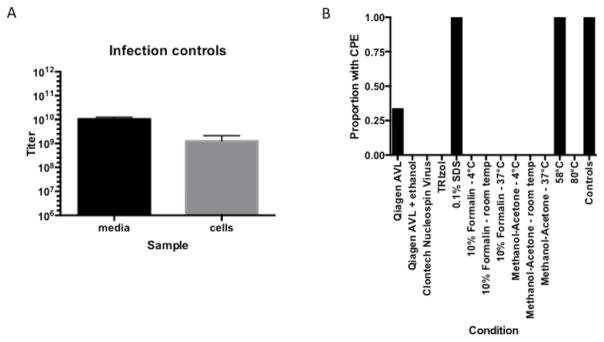
Working with virological samples requires validated inactivation protocols for safe handling and disposal. Although many techniques exist to inactivate samples containing viruses, not all procedures have been properly validated or are compatible with subsequent assays. To aid in the development of inactivation protocols for Alphaviruses, and specifically Venezuelan equine encephalitis virus (VEEV), a variety of methods were evaluated for their ability to completely inactivate a high titer sample of the vaccine strain VEEV TC-83. The methods evaluated include reagents used in RNA extraction, fixation, treatment with a detergent, and heat inactivation. Most methods were successful at inactivating the sample; however, treatment with only Buffer AVL, SDS, and heat inactivation at 58 °C for one hour were not capable of complete inactivation of the virus in the sample. These results provide a substantial framework for identifying techniques that are safe for complete inactivation of Alphaviruses and to advise protocol implementation.
Keywords: Alphavirus; Venezuelan equine encephalitis virus; Virus inactivation.
Copyright © 2018 Elsevier B.V. All rights reserved.
Figures
References
-
- Beaty, Calisher, Shope, Lennette, Lennette, Lennette . Diagnostic procedures for viral, rickettsial and chlamydial infections. 7. American Public Health Association; Washington, DC: 1995. Arboviruses; pp. 189–212.
-
- Blow J, Dohm D, Negley D, Mores C. Virus inactivation by nucleic acid extraction reagents. J Virol Methods. 2004;119:195–198. - PubMed
-
- Blow J, Mores C, Dyer J, Dohm D. Viral nucleic acid stabilization by RNA extraction reagent. J Virol Methods. 2008;150:41–44. - PubMed
-
- Centers for Disease Control and Prevention. Guidance on the Inactivation or Removal of Select Agents and Toxins for Future Use. 2017.
Publication types
MeSH terms
Substances
Grants and funding
LinkOut - more resources
Full Text Sources
Other Literature Sources
Medical
