


Occupational Exposure to Polycyclic Aromatic Hydrocarbons and Elevated Cancer Incidence in Firefighters
- PMID: 29410452
- PMCID: PMC5802792
- DOI: 10.1038/s41598-018-20616-6
Occupational Exposure to Polycyclic Aromatic Hydrocarbons and Elevated Cancer Incidence in Firefighters
Abstract
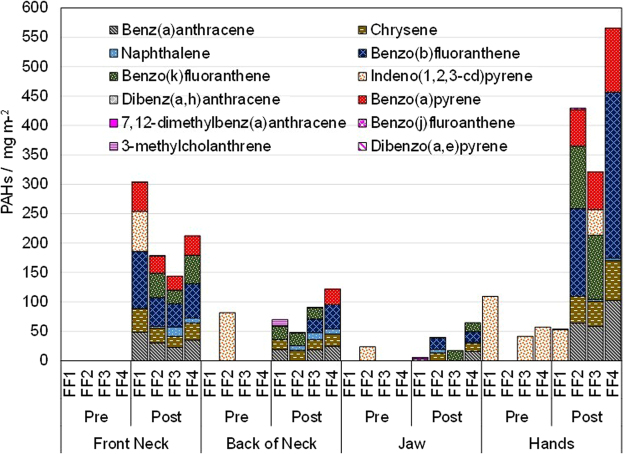
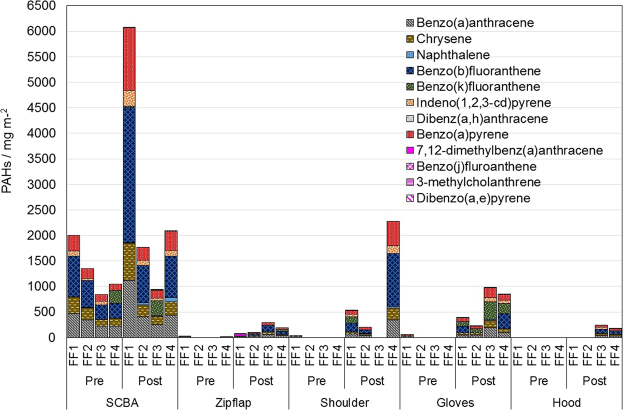
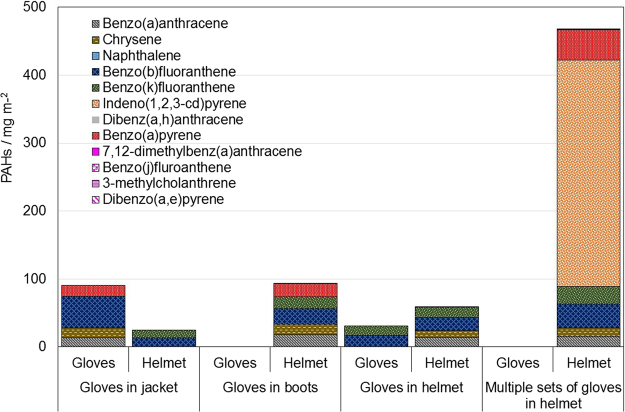
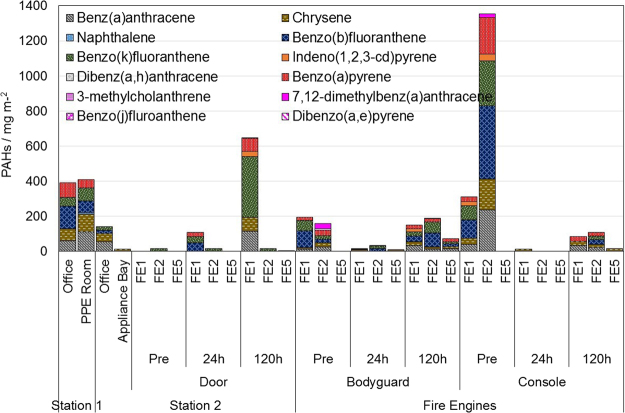
Cancer incidence appears to be higher amongst firefighters compared to the general population. Given that many cancers have an environmental component, their occupational exposure to products of carbon combustion such as polycyclic aromatic hydrocarbons (PAHs) is of concern. This is the first UK study identifying firefighters exposure to PAH carcinogens. Wipe samples were collected from skin (jaw, neck, hands), personal protective equipment of firefighters, and work environment (offices, fire stations and engines) in two UK Fire and Rescue Service Stations. Levels of 16 US Environmental Protection Agency (EPA) PAHs were quantified together with more potent carcinogens: 7,12-dimethylbenzo[a]anthracene, and 3-methylcholanthrene (3-MCA) (12 months post-initial testing). Cancer slope factors, used to estimate cancer risk, indicate a markedly elevated risk. PAH carcinogens including benzo[a]pyrene (B[a]P), 3-MCA, and 7,12-dimethylbenz[a]anthracene PAHs were determined on body surfaces (e.g., hands, throat), on PPE including helmets and clothing, and on work surfaces. The main exposure route would appear to be via skin absorption. These results suggest an urgent need to monitor exposures to firefighters in their occupational setting and conduct long-term follow-up regarding their health status.
Conflict of interest statement
The authors declare that they have no competing interests.
Figures


References
-
- Daniels RD, et al. Exposure-response relationships for select cancer and non-cancer health outcomes in a cohort of U.S. firefighters from San Francisco, Chicago and Philadelphia (1950-2009) Occupational and Environmental Medicine. 2015;72:699–706. doi: 10.1136/oemed-2014-102671. - DOI - PMC - PubMed
MeSH terms
Substances
LinkOut - more resources
Full Text Sources
Other Literature Sources
Medical
Research Materials
