


Probing cardiac metabolism by hyperpolarized 13C MR using an exclusively endogenous substrate mixture and photo-induced nonpersistent radicals
- PMID: 29411415
- PMCID: PMC5821575
- DOI: 10.1002/mrm.27122
Probing cardiac metabolism by hyperpolarized 13C MR using an exclusively endogenous substrate mixture and photo-induced nonpersistent radicals
Abstract
Purpose: To probe the cardiac metabolism of carbohydrates and short chain fatty acids simultaneously in vivo following the injection of a hyperpolarized 13 C-labeled substrate mixture prepared using photo-induced nonpersistent radicals.
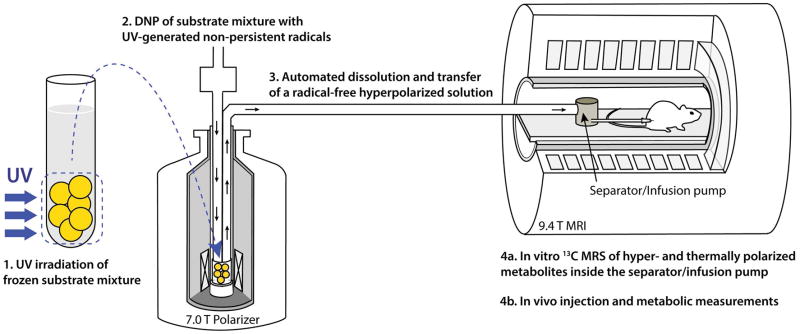
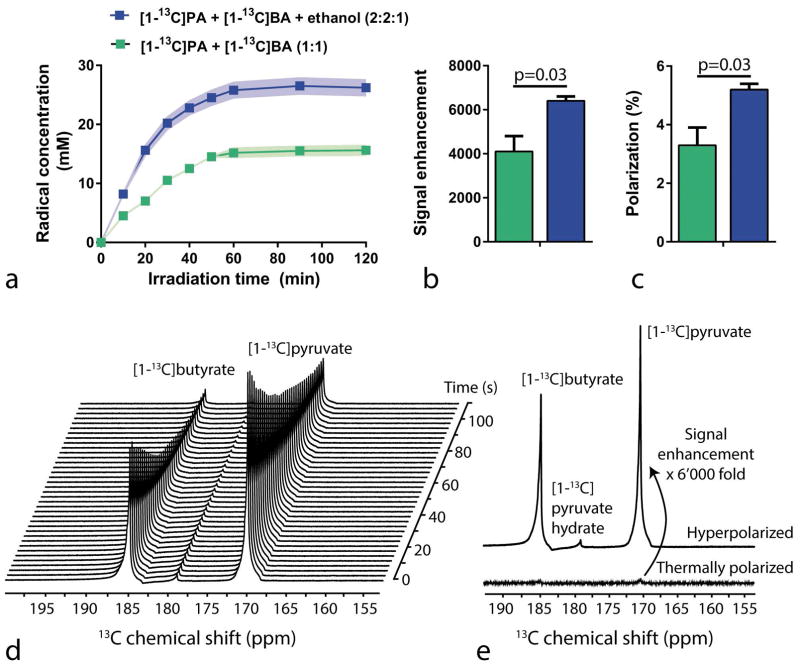
Methods: Droplets of mixed [1-13 C]pyruvic and [1-13 C]butyric acids were frozen into glassy beads in liquid nitrogen. Ethanol addition was investigated as a means to increase the polarization level. The beads were irradiated with ultraviolet light and the radical concentration was measured by ESR spectroscopy. Following dynamic nuclear polarization in a 7T polarizer, the beads were dissolved, and the radical-free hyperpolarized solution was rapidly transferred into an injection pump located inside a 9.4T scanner. The hyperpolarized solution was injected in healthy rats to measure cardiac metabolism in vivo.
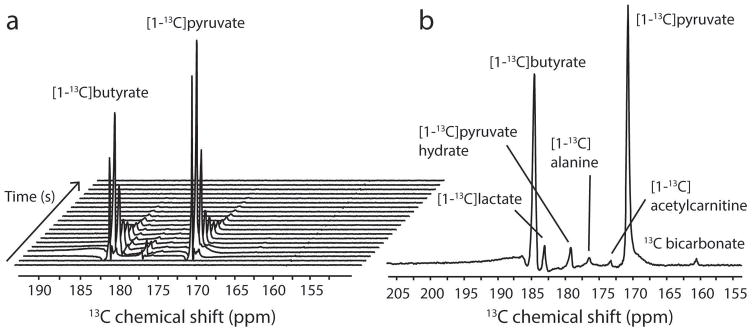
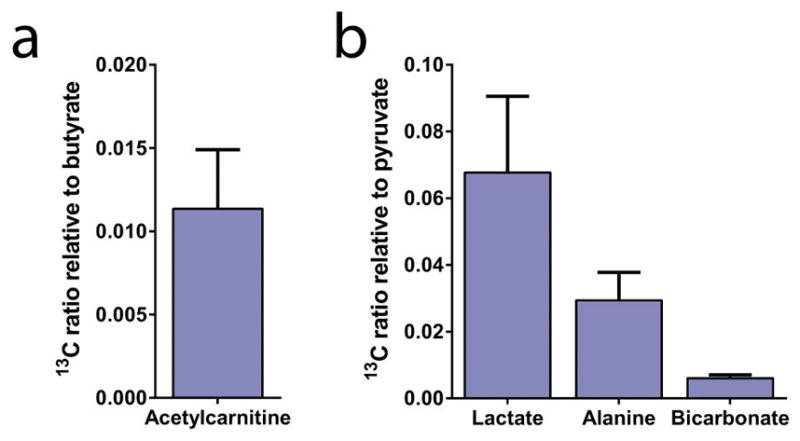
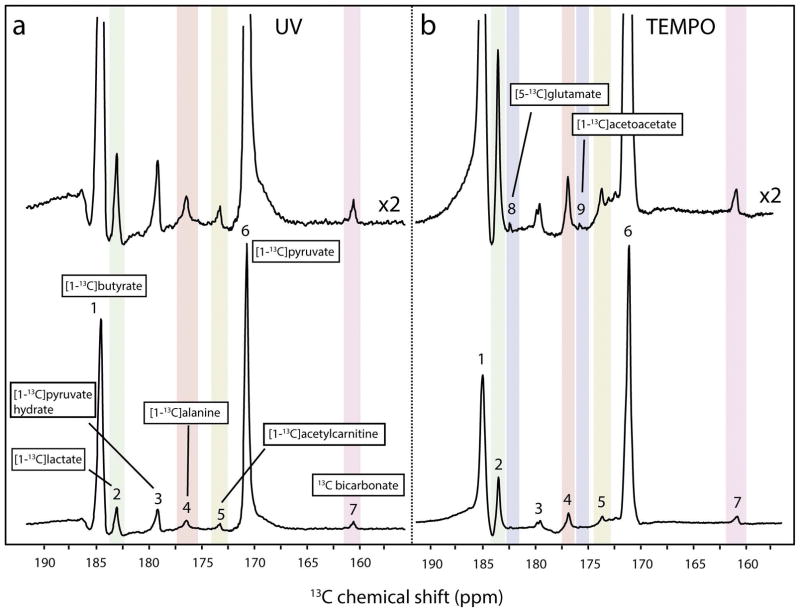
Results: Ultraviolet irradiation created nonpersistent radicals in a mixture containing 13 C-labeled pyruvic and butyric acids, and enabled the hyperpolarization of both substrates by dynamic nuclear polarization. Ethanol addition increased the radical concentration from 16 to 26 mM. Liquid-state 13 C polarization was 3% inside the pump at the time of injection, and increased to 5% by addition of ethanol to the substrate mixture prior to ultraviolet irradiation. In the rat heart, the in vivo 13 C signals from lactate, alanine, bicarbonate, and acetylcarnitine were detected following the metabolism of the injected substrate mixture.
Conclusion: Copolarization of two different 13 C-labeled substrates and the detection of their myocardial metabolism in vivo was achieved without using persistent radicals. The absence of radicals in the solution containing the hyperpolarized 13 C-substrates may simplify the translation to clinical use, as no radical filtration is required prior to injection.
Keywords: carbon-13; energy metabolism; hyperpolarization; metabolic imaging; oxidative metabolism.
© 2018 International Society for Magnetic Resonance in Medicine.
Conflict of interest statement
Arnaud Comment is currently employed by General Electric Medical Systems, Inc.
Figures
References
Publication types
MeSH terms
Substances
Grants and funding
LinkOut - more resources
Full Text Sources
Other Literature Sources
Miscellaneous
