


PTX3, a Humoral Pattern Recognition Molecule, in Innate Immunity, Tissue Repair, and Cancer
- PMID: 29412047
- PMCID: PMC5985957
- DOI: 10.1152/physrev.00016.2017
PTX3, a Humoral Pattern Recognition Molecule, in Innate Immunity, Tissue Repair, and Cancer
Abstract
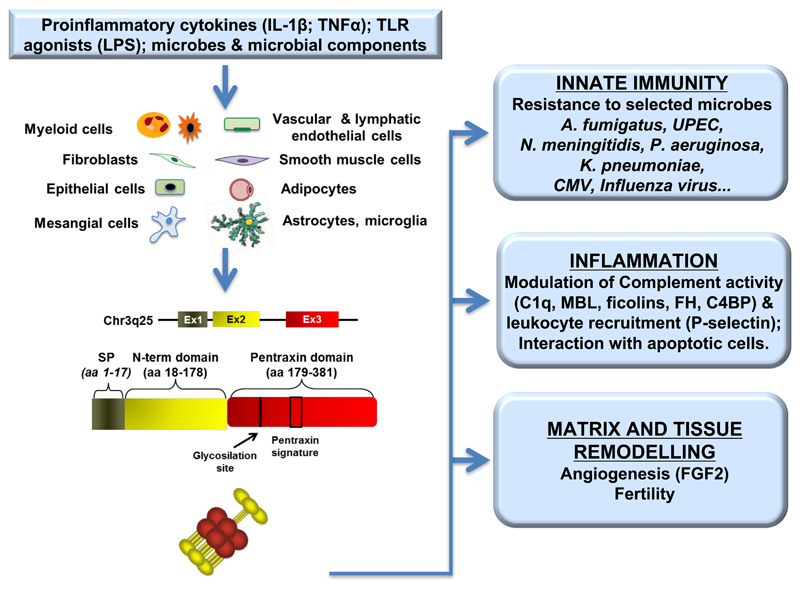
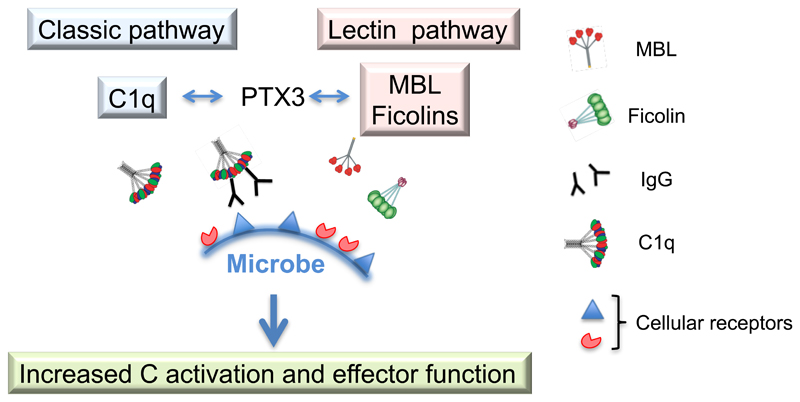
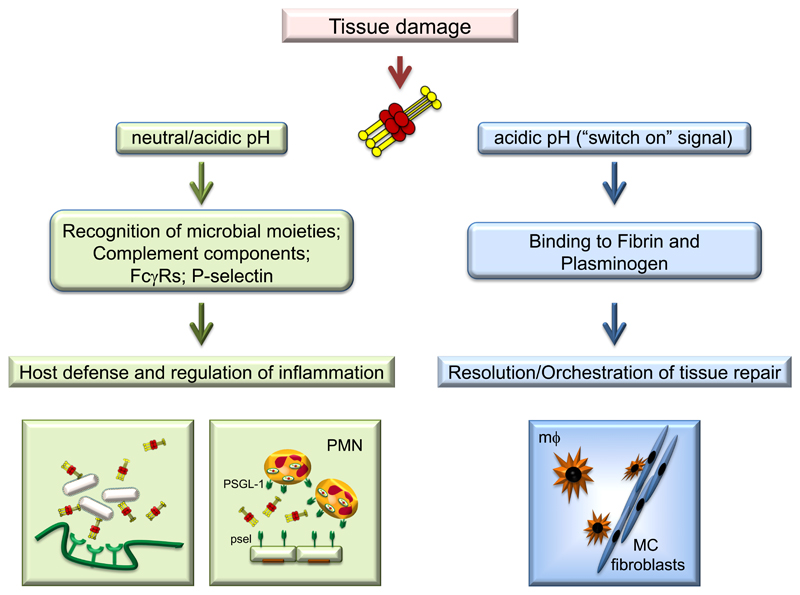
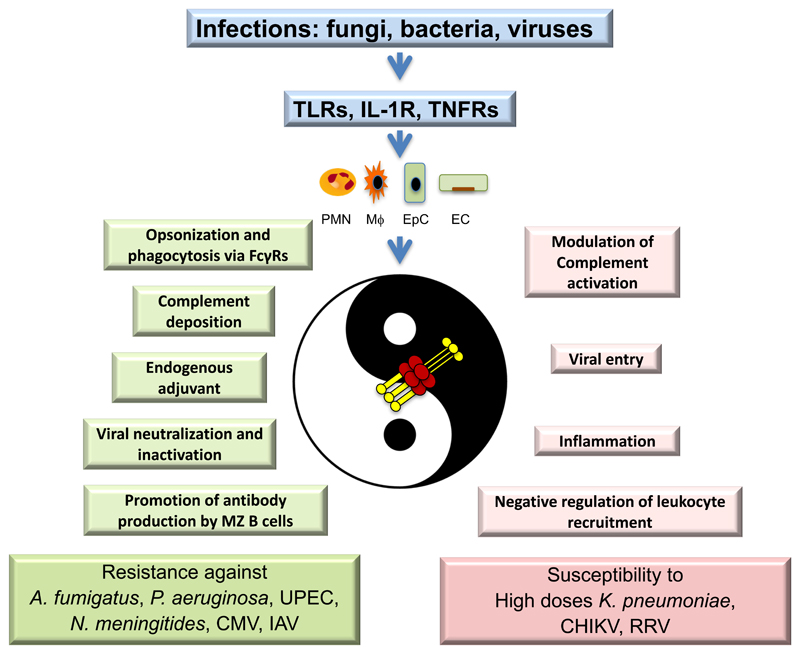
Innate immunity includes a cellular and a humoral arm. PTX3 is a fluid-phase pattern recognition molecule conserved in evolution which acts as a key component of humoral innate immunity in infections of fungal, bacterial, and viral origin. PTX3 binds conserved microbial structures and self-components under conditions of inflammation and activates effector functions (complement, phagocytosis). Moreover, it has a complex regulatory role in inflammation, such as ischemia/reperfusion injury and cancer-related inflammation, as well as in extracellular matrix organization and remodeling, with profound implications in physiology and pathology. Finally, PTX3 acts as an extrinsic oncosuppressor gene by taming tumor-promoting inflammation in murine and selected human tumors. Thus evidence suggests that PTX3 is a key homeostatic component at the crossroad of innate immunity, inflammation, tissue repair, and cancer. Dissecting the complexity of PTX3 pathophysiology and human genetics paves the way to diagnostic and therapeutic exploitation.
Figures
References
-
- Abernethy TJ, Avery OT. The occurence during acute infections of a protein non normally present in the blood. I. Distribution of the reactive protein in patients' sera and the effect of calcium on the flocculation reaction with C. Polysaccharide of Pneumococcus. J Exp Med. 1941;73:173–182. - PMC - PubMed
-
- Alberti L, Gilardini L, Zulian A, Micheletto G, Peri G, Doni A, Mantovani A, Invitti C. Expression of long pentraxin PTX3 in human adipose tissue and its relation with cardiovascular risk factors. Atherosclerosis. 2009;202:455–460. - PubMed
-
- Assi F, Fruscio R, Bonardi C, Ghidini A, Allavena P, Mantovani A, Locatelli A. Pentraxin 3 in plasma and vaginal fluid in women with preterm delivery. Bjog. 2007;114:143–147. - PubMed
-
- Azzurri A, Sow OY, Amedei A, Bah B, Diallo S, Peri G, Benagiano M, D'Elios MM, Mantovani A, Del Prete G. IFN-gamma-inducible protein 10 and pentraxin 3 plasma levels are tools for monitoring inflammation and disease activity in Mycobacterium tuberculosis infection. Microbes Infect. 2005;7:1–8. - PubMed
Publication types
MeSH terms
Substances
LinkOut - more resources
Full Text Sources
Other Literature Sources
Miscellaneous
