Review
. 2017 Dec 1;9(1):1444-1460.
doi: 10.18632/oncotarget.22846. eCollection 2018 Jan 2.

Circular RNAs: clinical relevance in cancer

Affiliations
Review

Circular RNAs: clinical relevance in cancer

Zhijie Xu et al. Oncotarget. .

Abstract

Circular RNAs, as recently discovered new endogenous non-coding RNAs, are important gene modulators with critical roles in tumor initiation and malignant progression. With the development of RNA sequencing and microarray technologies, numerous of functional circRNAs have been identified in cancerous tissues and cell lines. Mechanistically, circRNAs function as miRNA sponges, miRNA reservoirs or parental gene expression regulators. In this review, we discuss the properties and functions of circRNAs and their clinical implication as promising biomarkers for cancer research. Moreover, some emerging fields, such as exosome-loaded and immune response-associated circRNAs, are also discussed, suggesting novel insights into the carcinogenesis and therapy associated with these molecules.

Keywords: biomarkers; cancer; circular RNAs; gene expression regulation; miRNA sponges.


Conflict of interest statement

COMPETING INTEREST The authors declare that they have no potential conflicts in relation to publishing this paper.

Figures
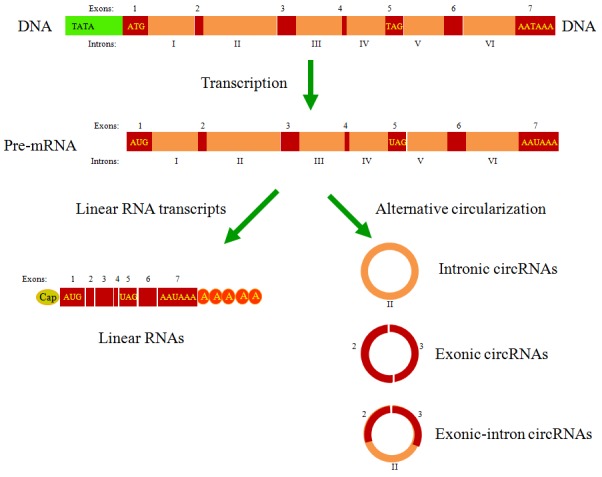
Figure 1
Figure 1. The types of circRNAs generated from the pre-mRNA by backsplicing
Three main types of circRNAs were recently identified: intronic circRNAs, exonic circRNAs and exonic-intron circRNAs. Studies have demonstrated that circRNAs are most likely generated co-transcriptionally from the same gene locus in competition with the formation of canonical linear RNA transcripts, a phenomenon called alternative circularization.
Figure 2
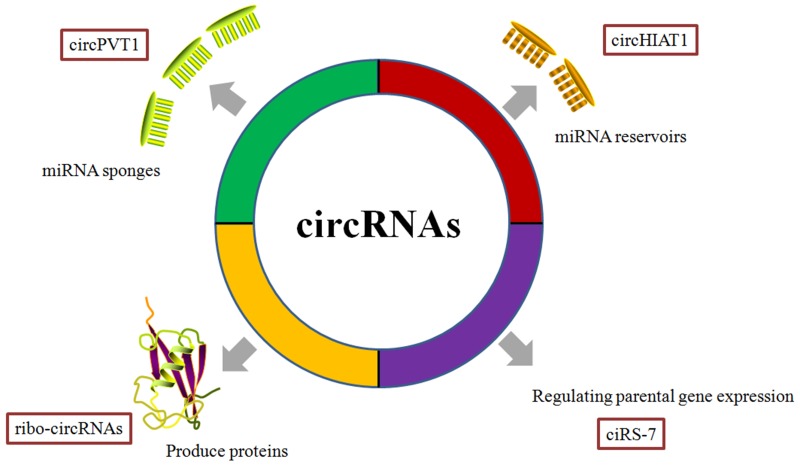
Figure 2. Functions of circRNAs determined through cancer research
CircRNAs serve as miRNA sponges/reservoirs or parental gene expression regulators involved in the onset and progression of cancers. Although the complete function of circRNAs in cancer biology remains unidentified clearly, several probable mechanisms have been reported so far. In general, a well-known function of circRNAs is of miRNA regulation through sponging miRNAs, if circRNA contains the corresponding miRNA binding sites. For example, circPVT1 promotes gastric cancers progression via acting as miR-125 sponge. Surprisingly, a specific circRNAs with corresponding miRNA binding sites, like cytoplasmic circHIAT1, serves as a miRNA reservoir, further stabilizing the miR-195-5p/29a-3p/29c-3p in renal cell carcinoma. In addition, some circRNAs, like ciRS-7/CDR1-AS, regulate parental genes through direct interactions. CiRS-7 is reported to enhance the CDR1 expression by interacting and stabilizing the sense CDR1 mRNA.
Figure 3
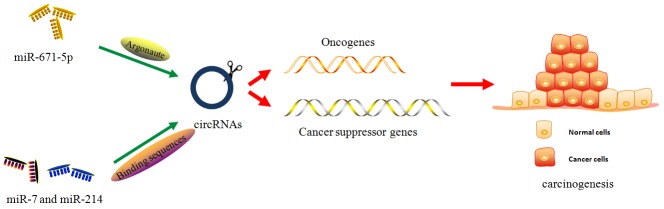
Figure 3. The miRNA-mediated cirRNA degradation
Emerging studies have demonstrated miRNA could mediate the cirRNA degradation via Argonaute-mediated signaling or circRNA-binding sequences, further to regulating the downstream cancer-associated genes, oncogenes or cancer suppressor genes. The detailed mechanisms are well explained in the relevant sections.
Figure 4
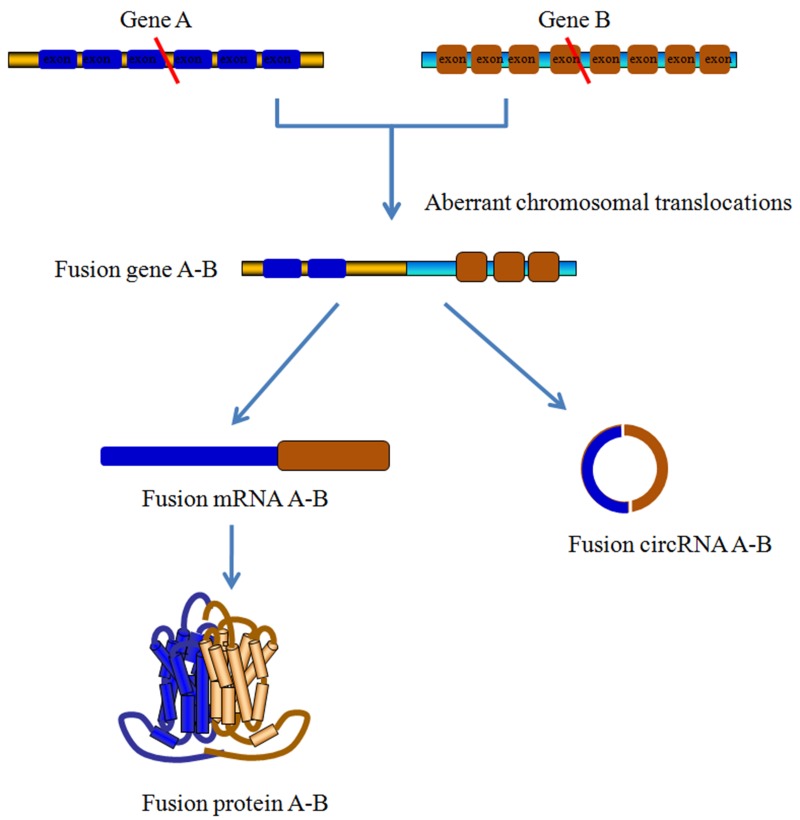
Figure 4. Fusion-circRNAs derived from aberrant chromosomal translocations
Cancer-related chromosomal translocations could produce linear fusion mRNA and fusion circRNAs (f-circRNAs). The formation of f-circRNAs is shown here. Briefly, after the chromosomal translocation of Gene A and Gene B, the fusion and backsplice junctions of one exon from Gene A and another exon from Gene B result in the formation of f-circRNA. Meanwhile, corresponding linear fusion mRNA can be translated into functional fusion proteins. Both fusion proteins and f-circRNAs involve in the cancer development and progression, especially the hematological malignancies.

References

    1. Maiese K. Disease onset and aging in the world of circular RNAs. J Transl Sci. 2016;2:327–9. - PMC - PubMed
    1. Beermann J, Piccoli MT, Viereck J, Thum T. Non-coding RNAs in development and disease: background, mechanisms, and therapeutic approaches. Physiol Rev. 2016;96:1297–325. https://doi.org/10.1152/physrev.00041.2015. - DOI - PubMed
    1. Hou LD, Zhang J. Circular RNAs: an emerging type of RNA in cancer. Int J Immunopathol Pharmacol. 2017;30:1–6. https://doi.org/10.1177/0394632016686985. - DOI - PMC - PubMed
    1. Liu J, Liu T, Wang X, He A. Circles reshaping the RNA world: from waste to treasure. Mol Cancer. 2017;16:58. https://doi.org/10.1186/s12943-017-0630-y. - DOI - PMC - PubMed
    1. Qu S, Yang X, Li X, Wang J, Gao Y, Shang R, Sun W, Dou K, Li H, Circular RNA. a new star of noncoding RNAs. Cancer Lett. 2015;365:141–8. https://doi.org/10.1016/j.canlet.2015.06.003. - DOI - PubMed

LinkOut - more resources