


Antibody targeting of phosphatidylserine for the detection and immunotherapy of cancer
- PMID: 29417044
- PMCID: PMC5788995
- DOI: 10.2147/ITT.S134834
Antibody targeting of phosphatidylserine for the detection and immunotherapy of cancer
Abstract
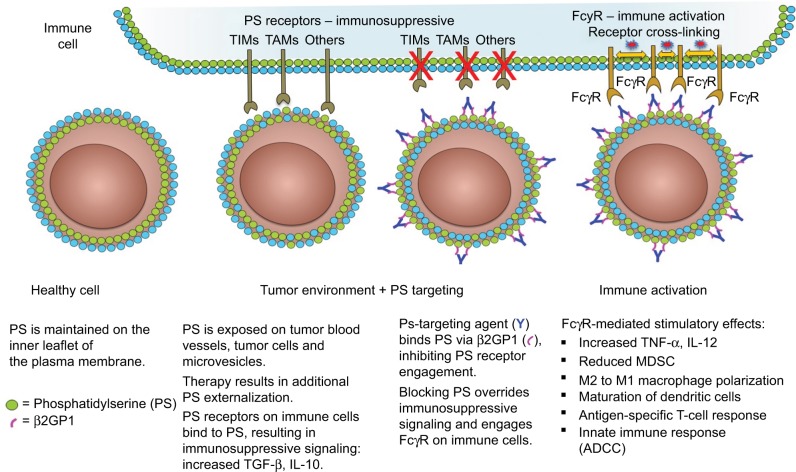
Phosphatidylserine (PS) is a negatively charged phospholipid in all eukaryotic cells that is actively sequestered to the inner leaflet of the cell membrane. Exposure of PS on apoptotic cells is a normal physiological process that triggers their rapid removal by phagocytic engulfment under noninflammatory conditions via receptors primarily expressed on immune cells. PS is aberrantly exposed in the tumor microenvironment and contributes to the overall immunosuppressive signals that antagonize the development of local and systemic antitumor immune responses. PS-mediated immunosuppression in the tumor microenvironment is further exacerbated by chemotherapy and radiation treatments that result in increased levels of PS on dying cells and necrotic tissue. Antibodies targeting PS localize to tumors and block PS-mediated immunosuppression. Targeting exposed PS in the tumor microenvironment may be a novel approach to enhance immune responses to cancer.
Keywords: bavituximab; imaging; immunosuppression; immunotherapy; phos-phatidylserine; tumor microenvironment.
Conflict of interest statement
Disclosure XH, JG, JC, and BDF are employees of Peregrine Pharmaceuticals, Inc., Tustin, CA, USA, and receive salary and stock options from the company. OB, RAB, and AJS, University of Texas Southwestern Medical Center, are collaborators of Peregrine and receive research funding from the company. The authors report no other conflicts of interest in this work.
Figures
References
Publication types
LinkOut - more resources
Full Text Sources
Other Literature Sources
