


Low-dose bevacizumab as an effective pre-treatment for peri-tumoral brain edema prior to CyberKnife radiosurgery: A case report
- PMID: 29420112
- PMCID: PMC5927660
- DOI: 10.1080/15384047.2018.1433499
Low-dose bevacizumab as an effective pre-treatment for peri-tumoral brain edema prior to CyberKnife radiosurgery: A case report
Abstract
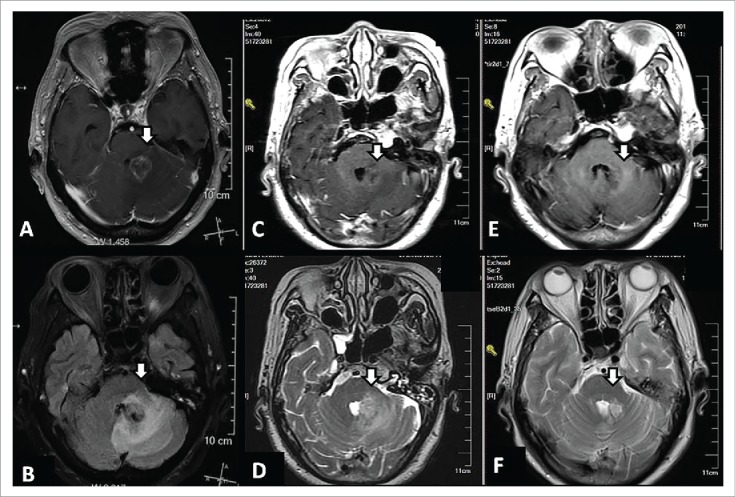
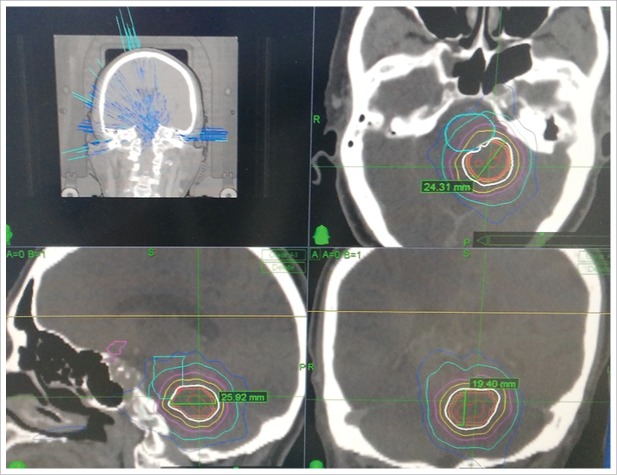
A 75-y-old Chinese female patient diagnosed with lung adenocarcinoma with brain metastasis suffered severe nausea and vomiting, and these symptoms were contraindications for CyberKnife treatment. Neither mannitol, nor dexamethasone, relieved the symptoms. However, after the patient received a single dose of bevacizumab (200 mg, 2.9 mg/kg), the patient's symptoms were significantly relieved. The patient subsequently completed a successful CyberKnife treatment. In addition, the patient received an oral treatment of gefitinib. At 15 months post treatment, the patient's brain tumor was controlled. Thus, administration of bevacizumab at a low dose (2.9 mg/kg) may significantly alleviate peri-tumoral brain edema and its symptoms, thereby facilitating radiosurgery treatment.
Keywords: Brain metastasis; bevacizumab; peri-tumoral brain edema; radiosurgery.
Figures
References
-
- Lemercier P, Paz Maya S, Patrie JT, Flors L, Leiva-Salinas C. Gradient of apparent diffusion coefficient values in peritumoral edema helps in differentiation of glioblastoma from solitary metastatic lesions. AJR Am J Roentgenol. 2014;203:163–169. doi: 10.2214/AJR.13.11186. PMID:24951211. - DOI - PubMed
-
- Palma L, Bruni G, Fiaschi AI, Mariottini A. Passage of mannitol into the brain around gliomas: a potential cause of rebound phenomenon. A study on 21 patients. J Neurosurg Sci. 2006;50:63–66. - PubMed
Publication types
MeSH terms
Substances
LinkOut - more resources
Full Text Sources
Other Literature Sources
Medical
