Th-POK regulates mammary gland lactation through mTOR-SREBP pathway
- PMID: 29420538
- PMCID: PMC5821406
- DOI: 10.1371/journal.pgen.1007211
Th-POK regulates mammary gland lactation through mTOR-SREBP pathway
Abstract
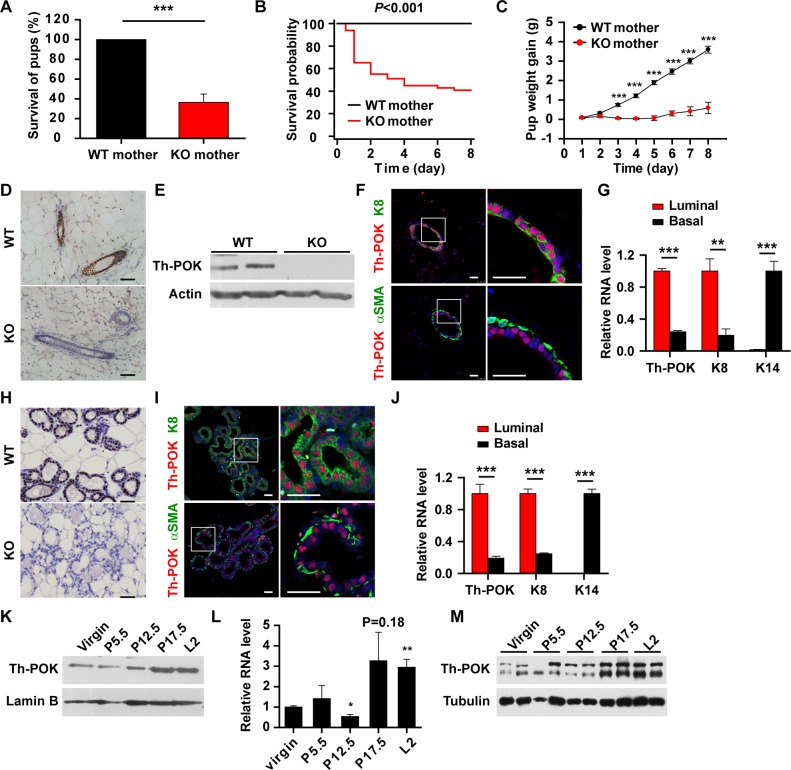
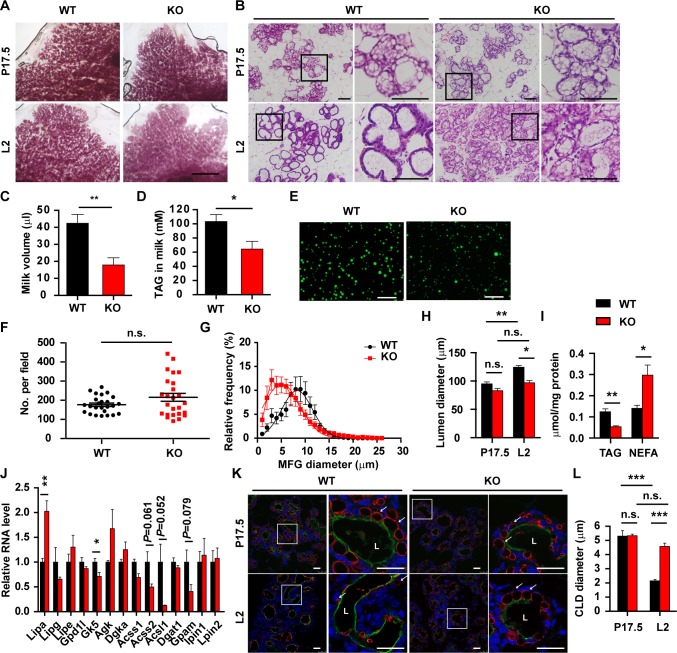
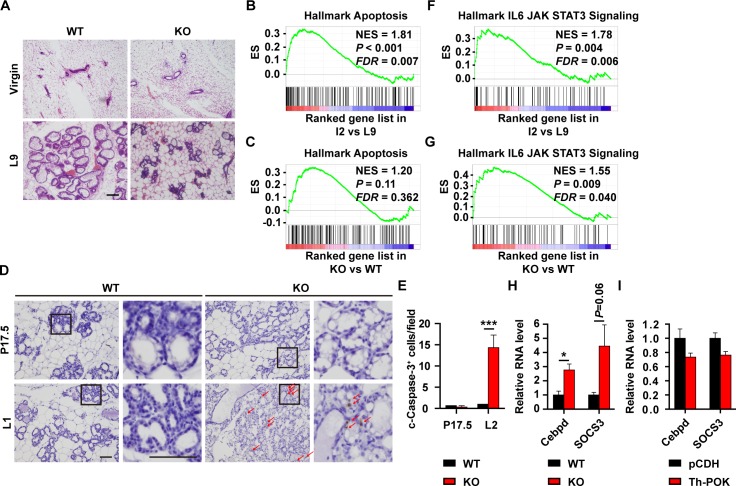
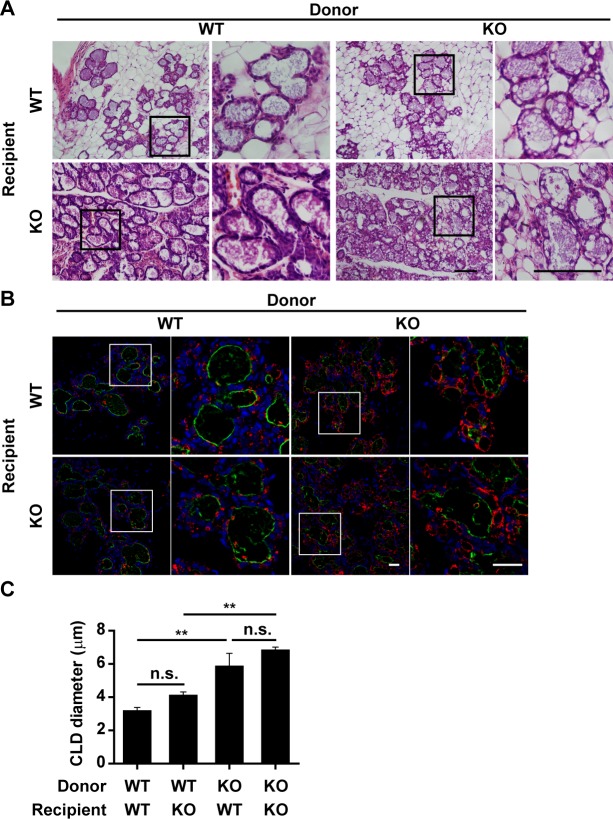
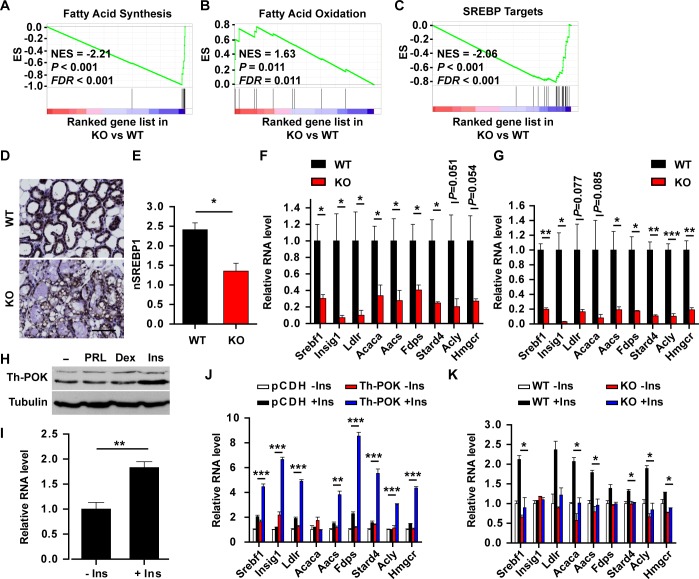
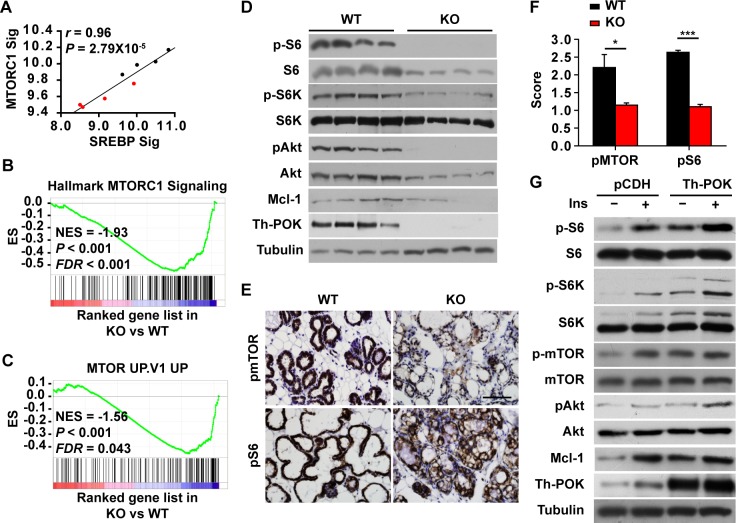
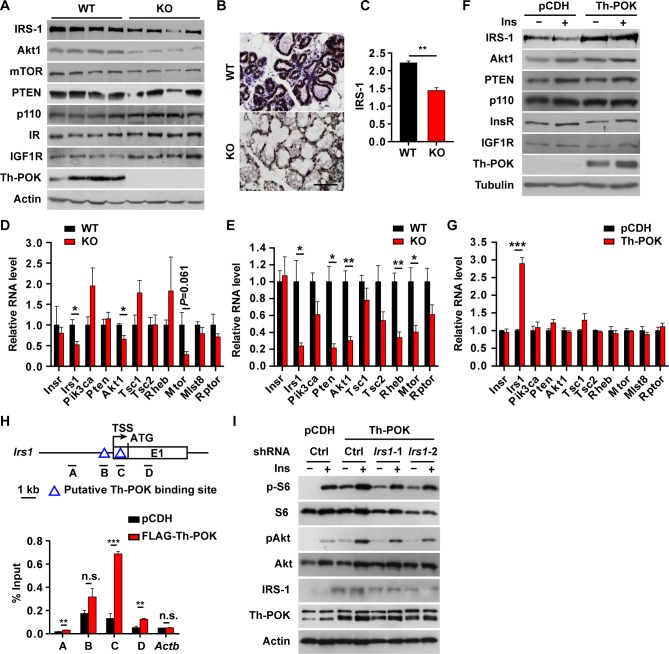
The Th-inducing POK (Th-POK, also known as ZBTB7B or cKrox) transcription factor is a key regulator of lineage commitment of immature T cell precursors. It is yet unclear the physiological functions of Th-POK besides helper T cell differentiation. Here we show that Th-POK is restrictedly expressed in the luminal epithelial cells in the mammary glands that is upregulated at late pregnancy and lactation. Lineage restrictedly expressed Th-POK exerts distinct biological functions in the mammary epithelial cells and T cells in a tissue-specific manner. Th-POK is not required for mammary epithelial cell fate determination. Mammary gland morphogenesis in puberty and alveologenesis in pregnancy are phenotypically normal in the Th-POK-deficient mice. However, Th-POK-deficient mice are defective in triggering the onset of lactation upon parturition with large cellular lipid droplets retained within alveolar epithelial cells. As a result, Th-POK knockout mice are unable to efficiently secret milk lipid and to nurse the offspring. Such defect is mainly attributed to the malfunctioned mammary epithelial cells, but not the tissue microenvironment in the Th-POK deficient mice. Th-POK directly regulates expression of insulin receptor substrate-1 (IRS-1) and insulin-induced Akt-mTOR-SREBP signaling. Th-POK deficiency compromises IRS-1 expression and Akt-mTOR-SREBP signaling in the lactating mammary glands. Conversely, insulin induces Th-POK expression. Thus, Th-POK functions as an important feed-forward regulator of insulin signaling in mammary gland lactation.
Conflict of interest statement
The authors have declared that no competing interests exist.
Figures
References
-
- He X, Park K, Kappes DJ. The role of ThPOK in control of CD4/CD8 lineage commitment. Annu Rev Immunol. 2010;28:295–320. doi: 10.1146/annurev.immunol.25.022106.141715 - DOI - PubMed
-
- Keefe R, Dave V, Allman D, Wiest D, Kappes DJ. Regulation of lineage commitment distinct from positive selection. Science. 1999;286(5442):1149–53. - PubMed
-
- Naito T, Taniuchi I. The network of transcription factors that underlie the CD4 versus CD8 lineage decision. Int Immunol. 2010;22(10):791–6. doi: 10.1093/intimm/dxq436 - DOI - PubMed
-
- He X, Dave VP, Zhang Y, Hua X, Nicolas E, Xu W, et al. The zinc finger transcription factor Th-POK regulates CD4 versus CD8 T-cell lineage commitment. Nature. 2005;433(7028):826–33. doi: 10.1038/nature03338 - DOI - PubMed
-
- Sun G, Liu X, Mercado P, Jenkinson SR, Kypriotou M, Feigenbaum L, et al. The zinc finger protein cKrox directs CD4 lineage differentiation during intrathymic T cell positive selection. Nat Immunol. 2005;6(4):373–81. doi: 10.1038/ni1183 - DOI - PubMed
Publication types
MeSH terms
Substances
LinkOut - more resources
Full Text Sources
Other Literature Sources
Molecular Biology Databases
Research Materials
Miscellaneous