Host preferences support the prominent role of Hyalomma ticks in the ecology of Crimean-Congo hemorrhagic fever
- PMID: 29420542
- PMCID: PMC5821391
- DOI: 10.1371/journal.pntd.0006248
Host preferences support the prominent role of Hyalomma ticks in the ecology of Crimean-Congo hemorrhagic fever
Abstract
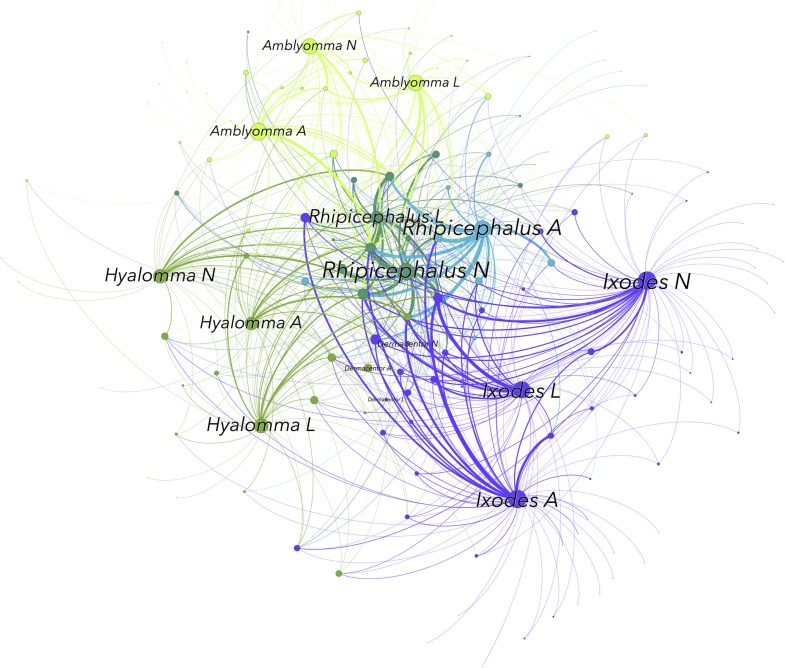
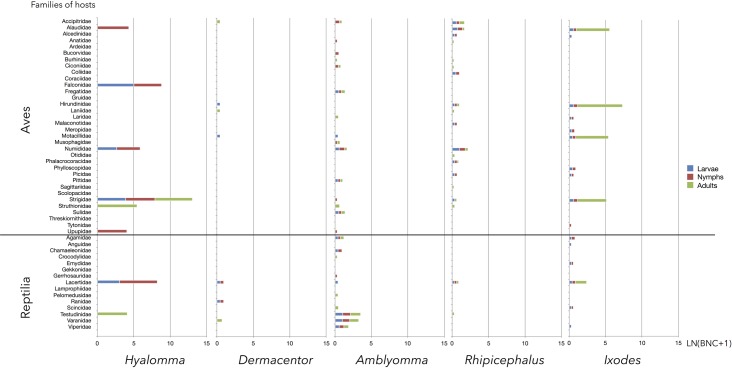
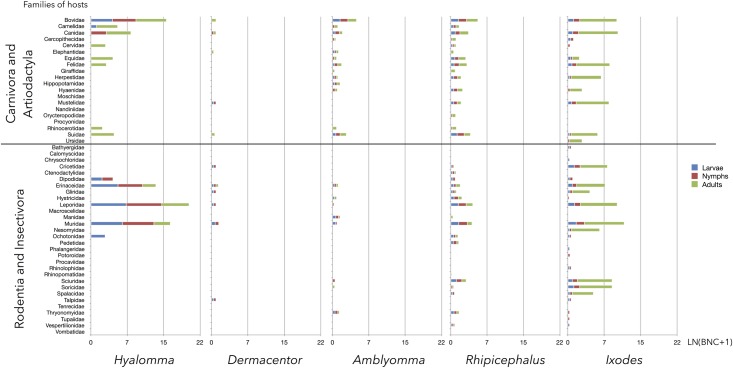
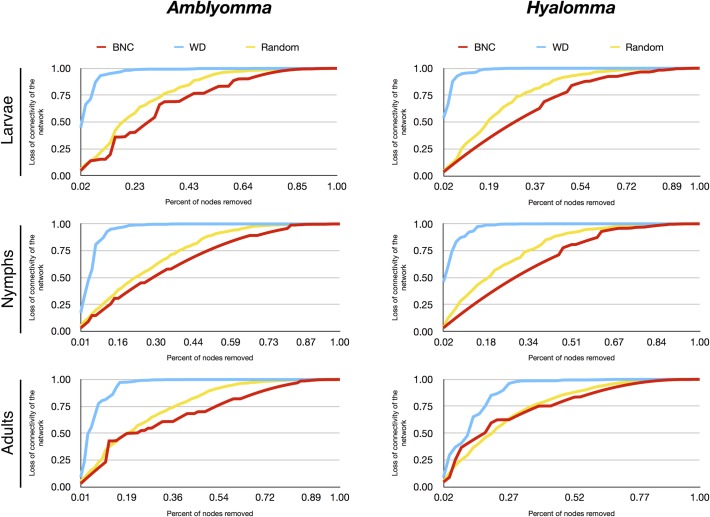
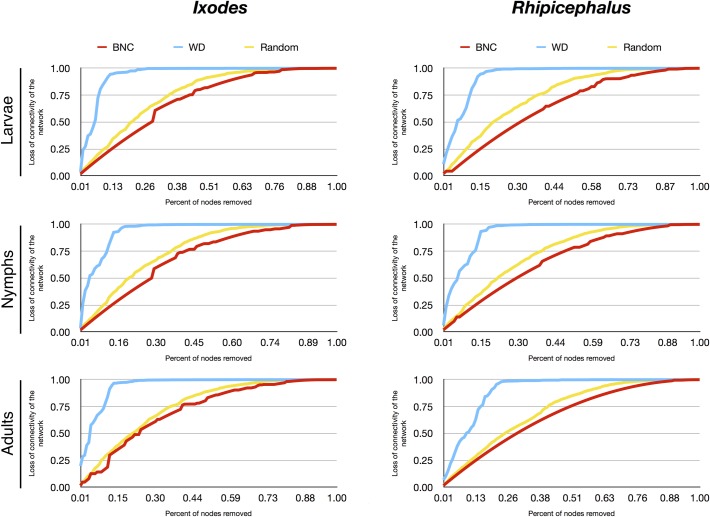
Crimean-Congo hemorrhagic fever virus (CCHFV) is a tick-borne zoonotic agent that is maintained in nature in an enzootic vertebrate-tick-vertebrate cycle. Hyalomma genus ticks have been implicated as the main CCHFV vector and are key in maintaining silent endemic foci. However, what contributes to their central role in CCHFV ecology is unclear. To assess the significance of host preferences of ticks in CCHFV ecology, we performed comparative analyses of hosts exploited by 133 species of ticks; these species represent 5 genera with reported geographical distribution over the range of CCHFV. We found that the composition of vertebrate hosts on which Hyalomma spp. feed is different than for other tick genera. Immatures of the genus Hyalomma feed preferentially on species of the orders Rodentia, Lagomorpha, and the class Aves, while adults concentrate mainly on the family Bovidae. With the exception of Aves, these hosts include the majority of the vertebrates consistently reported to be viremic upon CCHFV infection. While other tick genera also feed on these hosts, Hyalomma spp. almost completely concentrate their populations on them. Hyalomma spp. feed on less phylogenetically diverse hosts than any other tick genus, implying that this network of hosts has a low resilience. Indeed, removing the most prominent hosts quickly collapsed the network of parasitic interactions. These results support the intermittent activity of CCHFV foci: likely, populations of infected Hyalomma spp. ticks exceed the threshold of contact with humans only when these critical hosts reach adequate population density, accounting for the sporadic occurence of clinical tick-transmitted cases. Our data describe the association of vertebrate host preferences with the role of Hyalomma spp. ticks in maintaining endemic CCHFV foci, and highlight the importance of host-tick dynamics in pathogen ecology.
Conflict of interest statement
The authors have declared that no competing interests exist.
Figures
References
-
- Spengler JR, Estrada-Peña A, Garrison AR, Schmaljohn C, Spiropoulou CF, Bergeron E, et al. A chronological review of experimental infection studies on the role of wild animals and livestock in maintenance and transmission of Crimean-Congo hemorrhagic fever virus. Antiviral Res. 2016;135: 31–47. doi: 10.1016/j.antiviral.2016.09.013 - DOI - PMC - PubMed
-
- Spengler JR, Bergeron É, Rollin PE. Seroepidemiological Studies of Crimean-Congo Hemorrhagic Fever Virus in Domestic and Wild Animals. PLoS Negl Trop Dis. 2016;10: e0004210 doi: 10.1371/journal.pntd.0004210 - DOI - PMC - PubMed
-
- Bente DA, Forrester NL, Watts DM, McAuley AJ, Whitehouse CA, Bray M. Crimean-Congo hemorrhagic fever: history, epidemiology, pathogenesis, clinical syndrome and genetic diversity. Antiviral Res. 2013;100: 159–89. doi: 10.1016/j.antiviral.2013.07.006 - DOI - PubMed
-
- Gargili A, Estrada-Peña A, Spengler JR, Lukashev A, Nuttall PA, Bente DA. The role of ticks in the maintenance and transmission of Crimean-Congo hemorrhagic fever virus: A review of published field and laboratory studies. Antiviral Res. 2017;144: 93–119. doi: 10.1016/j.antiviral.2017.05.010 - DOI - PMC - PubMed
-
- Gonzalez JP, Camicas JL, Cornet JP, Faye O, Wilson ML. Sexual and transovarian transmission of Crimean-Congo haemorrhagic fever virus in Hyalomma truncatum ticks. Res Virol. 1992;143: 23–8. doi: 10.1016/S0923-2516(06)80073-7 - DOI - PubMed
MeSH terms
Grants and funding
LinkOut - more resources
Full Text Sources
Other Literature Sources
Miscellaneous