


Development of a UiO-Type Thin Film Electrocatalysis Platform with Redox-Active Linkers
- PMID: 29421875
- PMCID: PMC6067658
- DOI: 10.1021/jacs.7b13077
Development of a UiO-Type Thin Film Electrocatalysis Platform with Redox-Active Linkers
Abstract
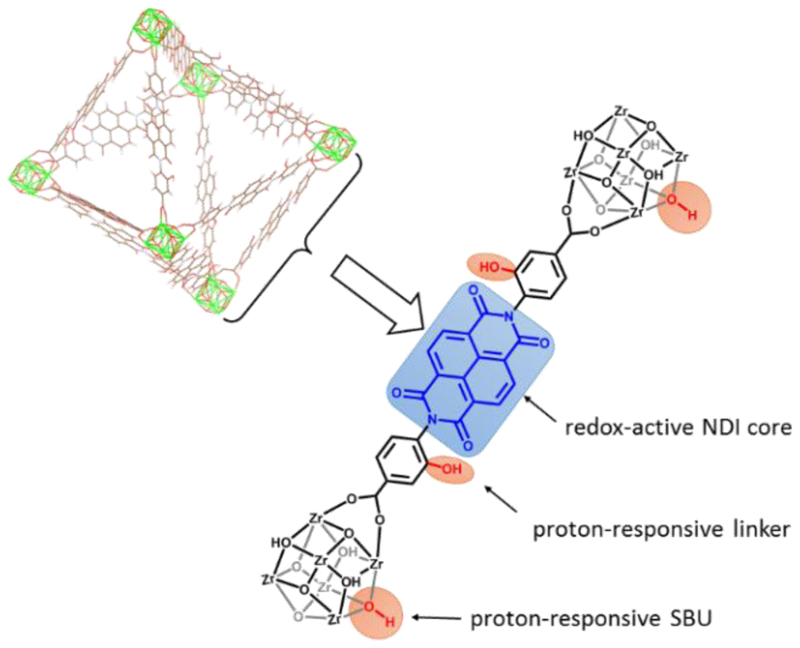
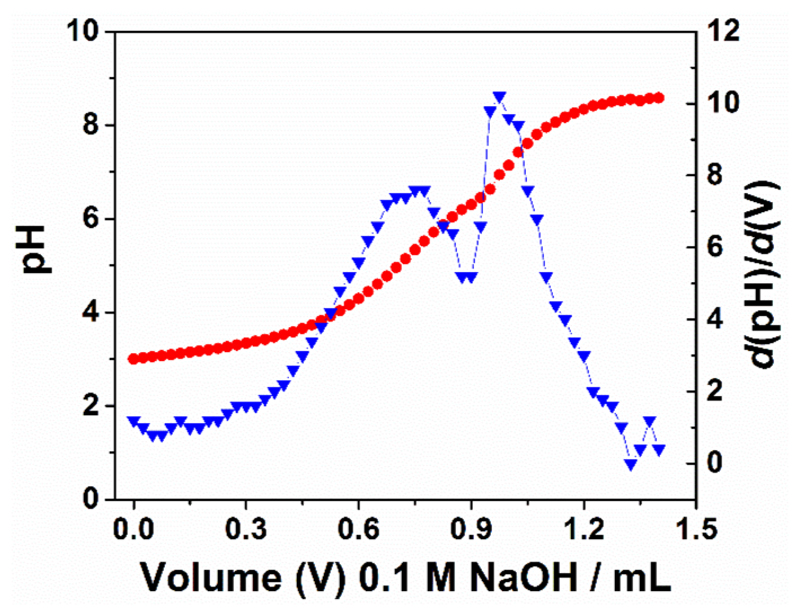
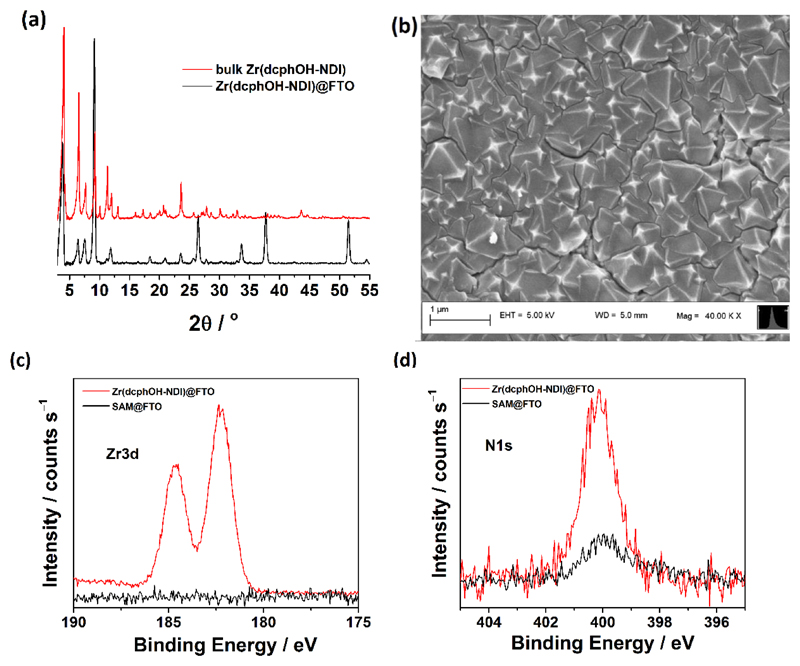
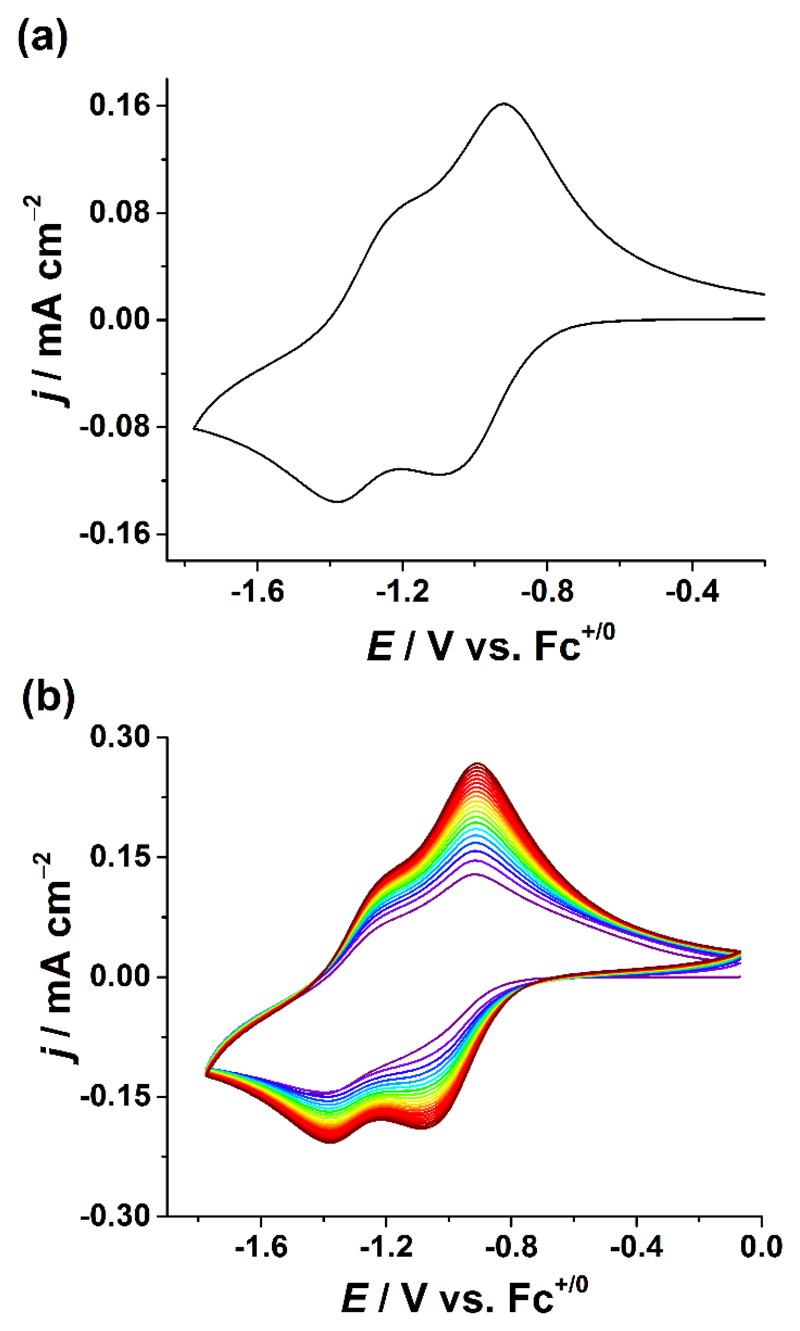
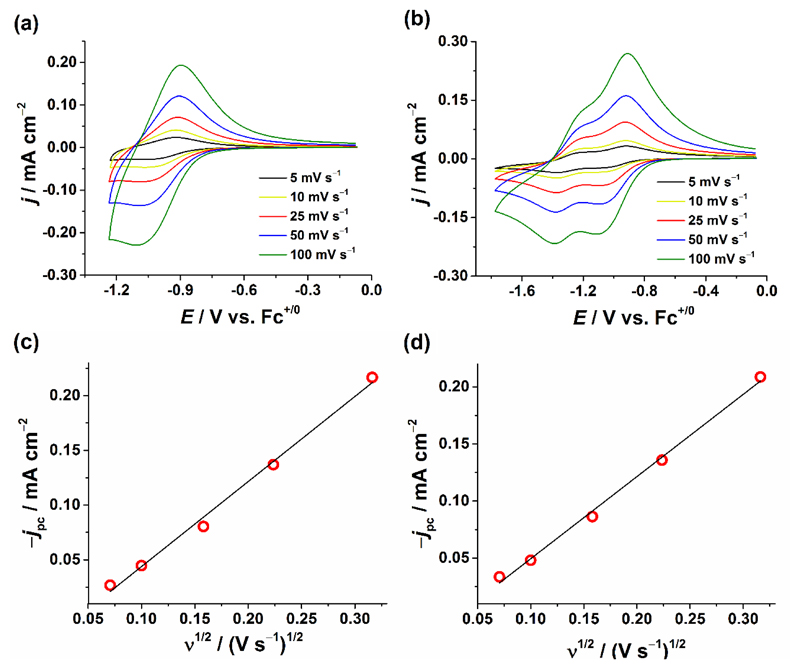
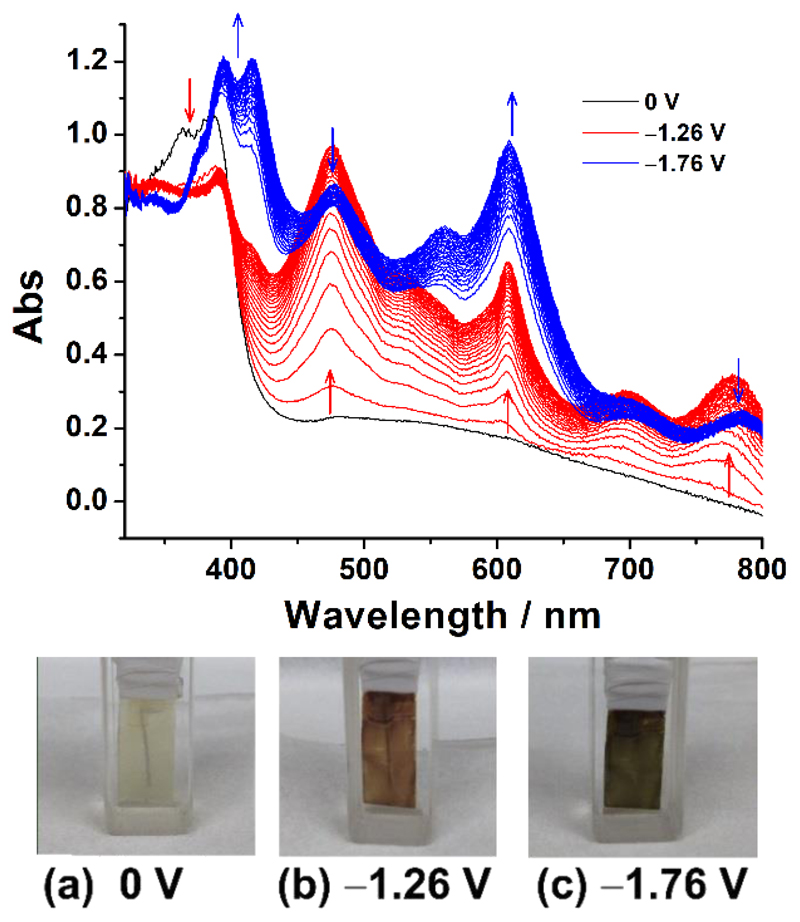
Metal-organic frameworks (MOFs) as electrocatalysis scaffolds are appealing due to the large concentration of catalytic units that can be assembled in three dimensions. To harness the full potential of these materials, charge transport to the redox catalysts within the MOF has to be ensured. Herein, we report the first electroactive MOF with the UiO/PIZOF topology (Zr(dcphOH-NDI)), i.e., one of the most widely used MOFs for catalyst incorporation, by using redox-active naphthalene diimide-based linkers (dcphOH-NDI). Hydroxyl groups were included on the dcphOH-NDI linker to facilitate proton transport through the material. Potentiometric titrations of Zr(dcphOH-NDI) show the proton-responsive behavior via the -OH groups on the linkers and the bridging Zr-μ3-OH of the secondary building units with pKa values of 6.10 and 3.45, respectively. When grown directly onto transparent conductive fluorine-doped tin oxide (FTO), 1 μm thin films of Zr(dcphOH-NDI)@FTO could be achieved. Zr(dcphOH-NDI)@FTO displays reversible electrochromic behavior as a result of the sequential one-electron reductions of the redox-active NDI linkers. Importantly, 97% of the NDI sites are electrochemically active at applied potentials. Charge propagation through the thin film proceeds through a linker-to-linker hopping mechanism that is charge-balanced by electrolyte transport, giving rise to cyclic voltammograms of the thin films that show characteristics of a diffusion-controlled process. The equivalent diffusion coefficient, De, that contains contributions from both phenomena was measured directly by UV/vis spectroelectrochemistry. Using KPF6 as electrolyte, De was determined to be De(KPF6) = (5.4 ± 1.1) × 10-11 cm2 s-1, while an increase in countercation size to n-Bu4N+ led to a significant decrease of De by about 1 order of magnitude (De(n-Bu4NPF6) = (4.0 ± 2.5) × 10-12 cm2 s-1).
Conflict of interest statement
The authors declare no competing financial interests.
Figures
References
-
- Furukawa H, Cordova KE, O’Keeffe M, Yaghi OM. Science. 2013;341 - PubMed
-
- Kuppler RJ, Timmons DJ, Fang Q-R, Li J-R, Makal TA, Young MD, Yuan D, Zhao D, Zhuang W, Zhou H-C. Coord Chem Rev. 2009;253:3042–3066.
-
- Yaghi OM, O'Keeffe M, Ockwig NW, Chae HK, Eddaoudi M, Kim J. Nature. 2003;423:705–714. - PubMed
-
- Deria P, Mondloch JE, Karagiaridi O, Bury W, Hupp JT, Farha OK. Chem Soc Rev. 2014;43:5896–5912. - PubMed
-
- Wang Z, Cohen SM. Chem Soc Rev. 2009;38:1315–1329. - PubMed
Publication types
Grants and funding
LinkOut - more resources
Full Text Sources
Other Literature Sources
Research Materials
