


Soil salinity and matric potential interaction on water use, water use efficiency and yield response factor of bean and wheat
- PMID: 29422674
- PMCID: PMC5805728
- DOI: 10.1038/s41598-018-20968-z
Soil salinity and matric potential interaction on water use, water use efficiency and yield response factor of bean and wheat
Erratum in
-
Author Correction: Soil salinity and matric potential interaction on water use, water use efficiency and yield response factor of bean and wheat.Sci Rep. 2018 Aug 31;8(1):13280. doi: 10.1038/s41598-018-31452-z. Sci Rep. 2018. PMID: 30171188 Free PMC article.
Abstract
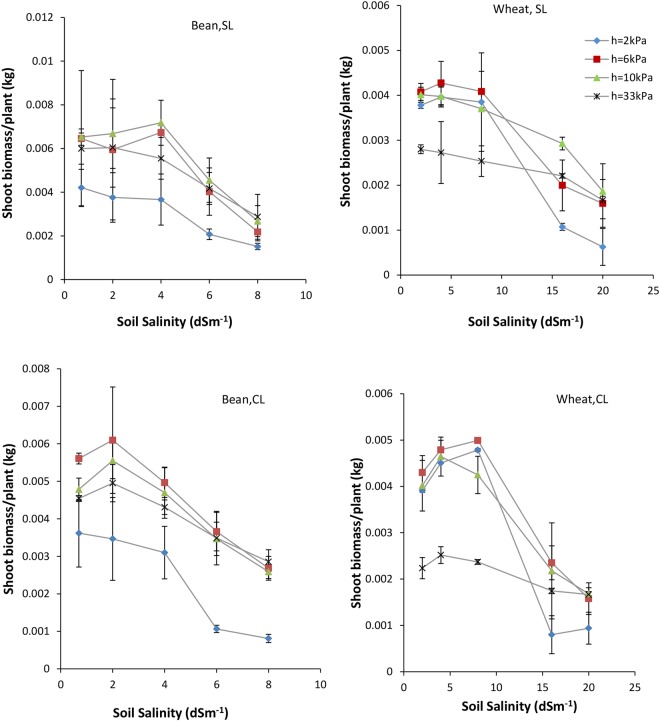
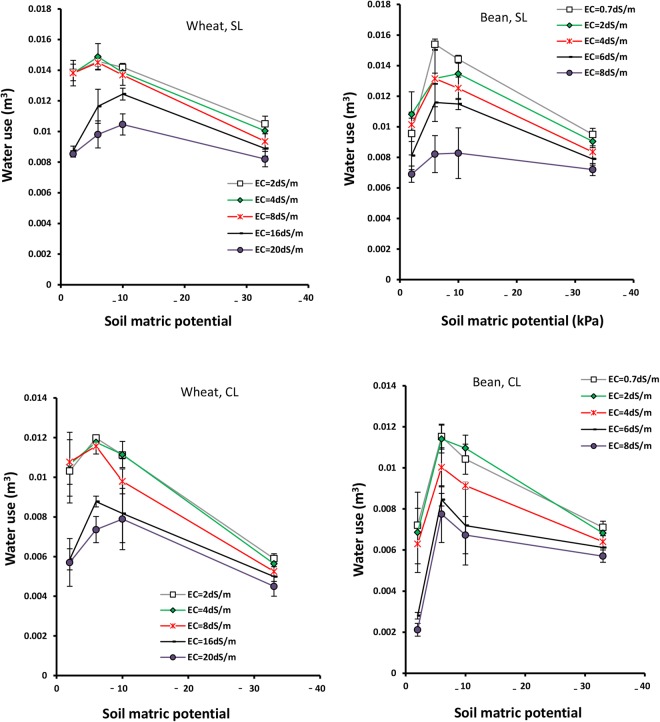
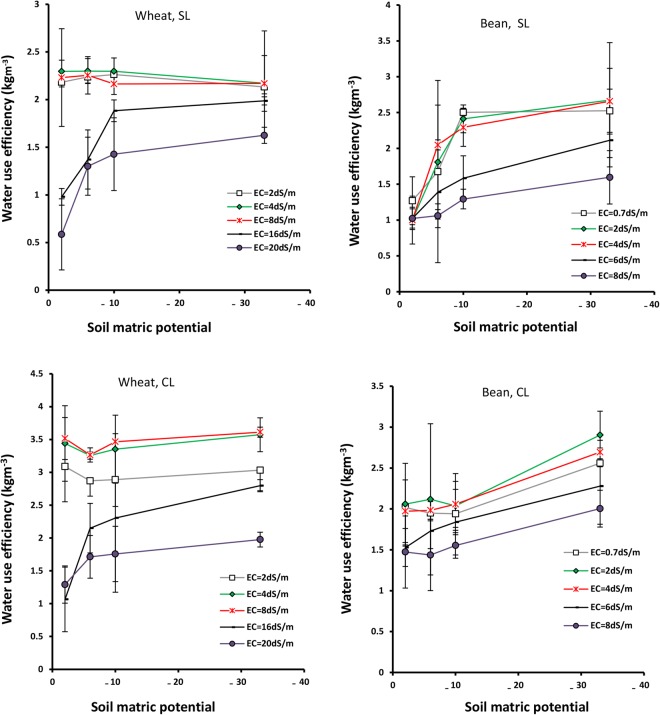
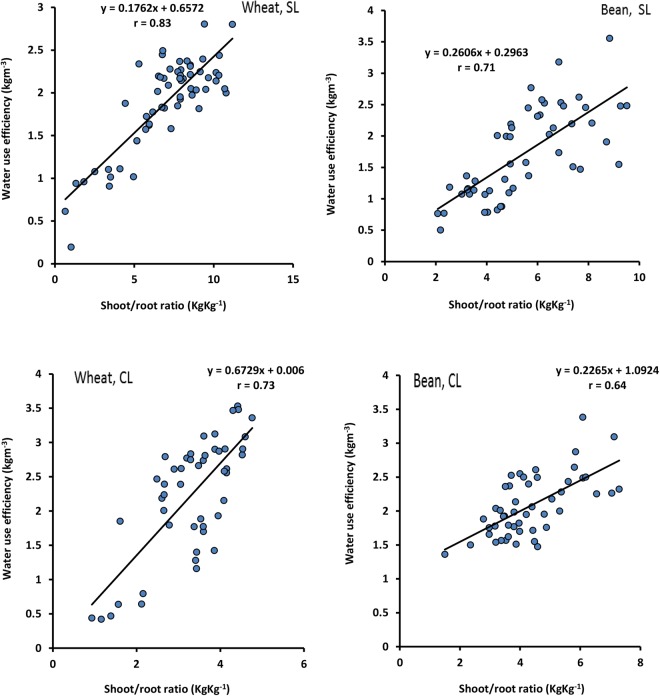
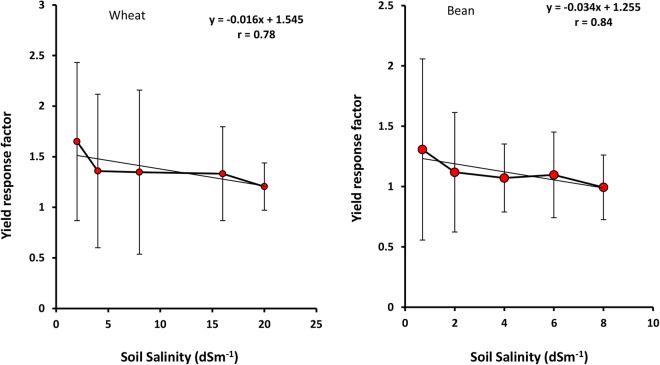
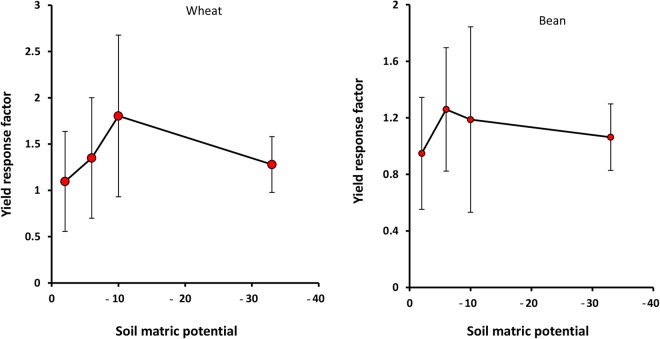
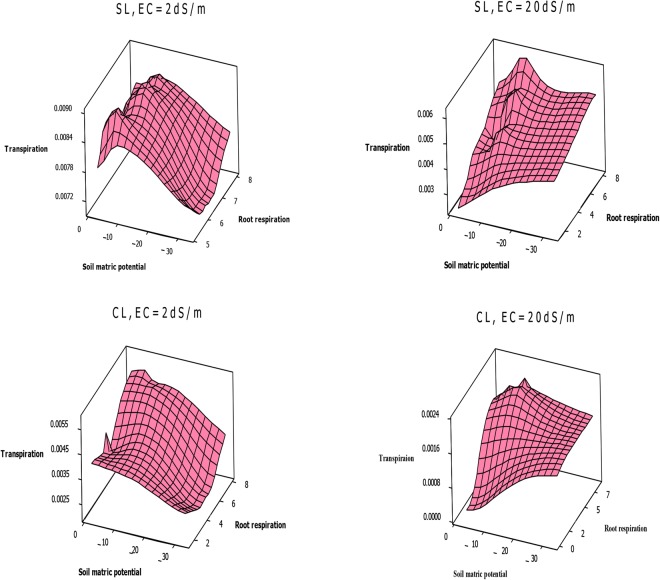
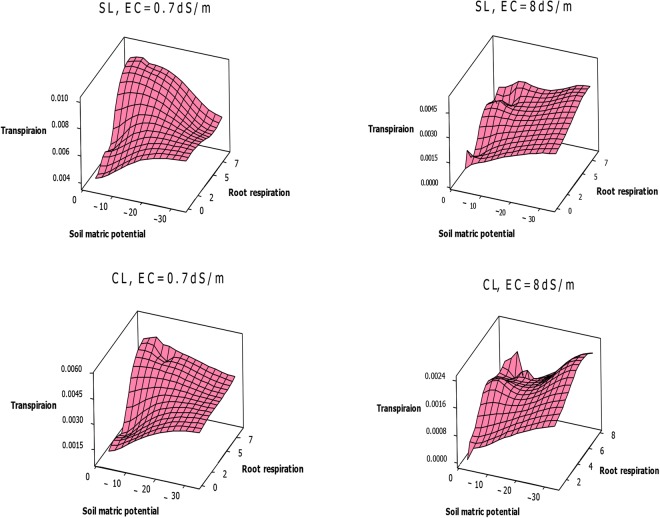
We studied the effects of soil matric potential and salinity on the water use (WU), water use efficiency (WUE) and yield response factor (Ky), for wheat (Triticum aestivum cv. Mahdavi) and bean (Phaseoulus vulgaris cv. COS16) in sandy loam and clay loam soils under greenhouse conditions. Results showed that aeration porosity is the predominant factor controlling WU, WUE, Ky and shoot biomass (Bs) at high soil water potentials. As matric potential was decreased, soil aeration improved, with Bs, WU and Ky reaching maximum value at -6 to -10 kPa, under all salinities. Wheat WUE remained almost unchanged by reduction of matric potential under low salinities (EC ≤ 8 dSm-1), but increased under higher salinities (EC ≥ 8 dSm-1), as did bean WUE at all salinities, as matric potential decreased to -33 kPa. Wheat WUE exceeds that of bean in both sandy loam and clay loam soils. WUE of both plants increased with higher shoot/root ratio and a high correlation coefficient exists between them. Results showed that salinity decreases all parameters, particularly at high potentials (h = -2 kPa), and amplifies the effects of waterlogging. Further, we observed a strong relationship between transpiration (T) and root respiration (Rr) for all experiments.
Conflict of interest statement
The authors declare no competing interests.
Figures
References
-
- Mohammadi M, Asadzadeh F, Vanclooster M. Refining and unifying the upper limits of the least limiting water range using soil and plant properties. Plant and soil. 2010;334:221–234. doi: 10.1007/s11104-010-0377-3. - DOI
-
- Khatar M, Mohammadi M, Shekari F. Some physiological responses of wheat and bean to soil salinity at low matric suctions. International Agrophysics. 2017;31:83–91. doi: 10.1515/intag-2016-0028. - DOI
-
- Ding X, Liu G, Li Z, Li Z, Chen Y. Ground subsidence monitoring in Hong Kong with satellite SAR interferometry. Photogrammetric Engineering & Remote Sensing. 2004;70:1151–1156. doi: 10.14358/PERS.70.10.1151. - DOI
-
- Medrano H, et al. From leaf to whole-plant water use efficiency (WUE) in complex canopies: limitations of leaf WUE as a selection target. The Crop Journal. 2015;3:220–228. doi: 10.1016/j.cj.2015.04.002. - DOI
MeSH terms
Substances
LinkOut - more resources
Full Text Sources
Other Literature Sources
Research Materials
