


Audiovisual Biofeedback-Based Trunk Stabilization Training Using a Pressure Biofeedback System in Stroke Patients: A Randomized, Single-Blinded Study
- PMID: 29423328
- PMCID: PMC5750490
- DOI: 10.1155/2017/6190593
Audiovisual Biofeedback-Based Trunk Stabilization Training Using a Pressure Biofeedback System in Stroke Patients: A Randomized, Single-Blinded Study
Abstract
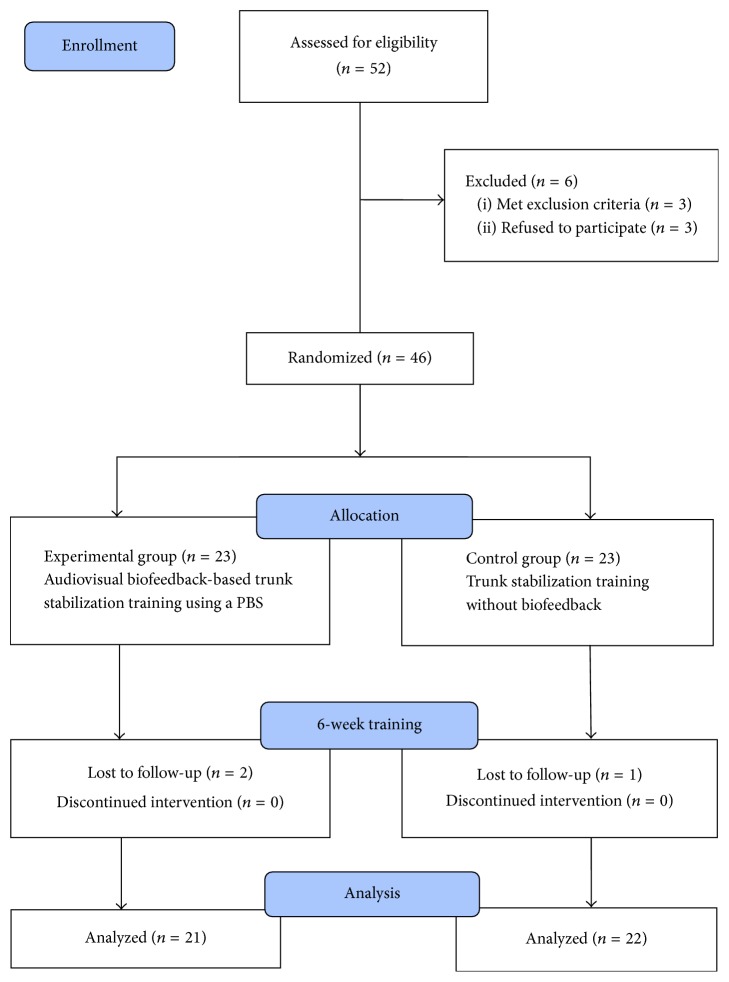
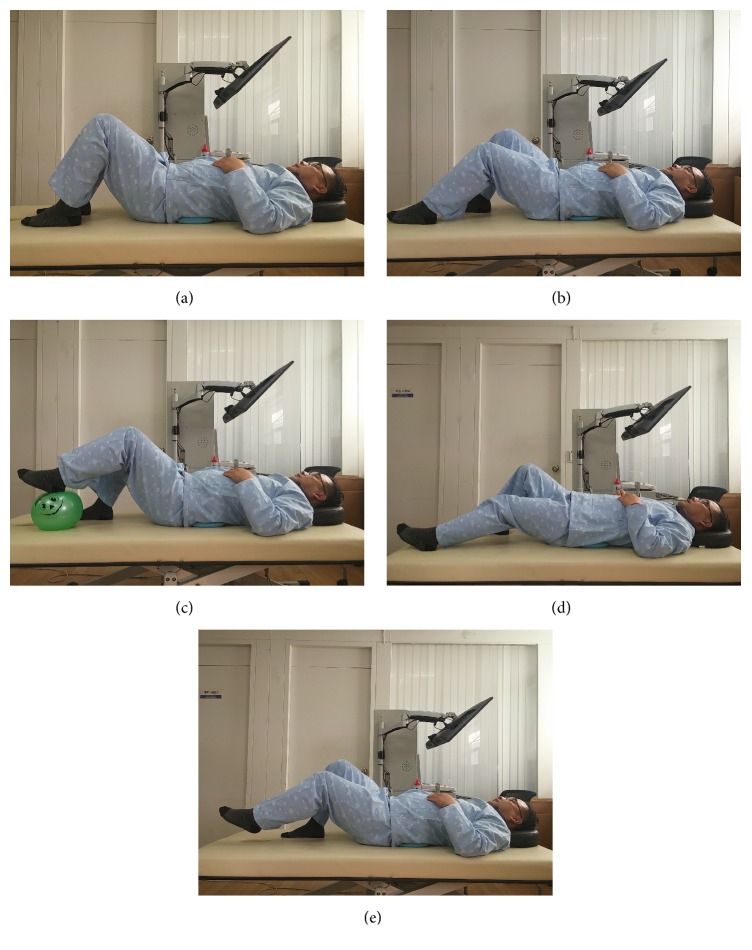
The purpose of this study was to assess the effects of audiovisual biofeedback-based trunk stabilization training using a pressure biofeedback system (PBS) in stroke patients. Forty-three chronic stroke patients, who had experienced a stroke more than 6 months ago and were able to sit and walk independently, participated in this study. The subjects were randomly allocated to an experimental group (n = 21) or a control group (n = 22). The experimental group participated in audiovisual biofeedback-based trunk stabilization training for 50 minutes/day, 5 days/week, for 6 weeks. The control group underwent trunk stabilization training without any biofeedback. The primary outcome of this study was the thickness of the trunk muscles. The secondary outcomes included static sitting balance ability and dynamic sitting balance ability. The thickness of the trunk muscles, static sitting balance ability, and dynamic sitting balance ability were significantly improved in the experimental group compared to the control group (p < 0.05). The present study showed that trunk stabilization training using a PBS had a positive effect on the contracted ratio of trunk muscles and balance ability. By providing audiovisual feedback, the PBS enables accurate and effective training of the trunk muscles, and it is an effective method for trunk stabilization.
Figures
References
LinkOut - more resources
Full Text Sources
Other Literature Sources
