


Anaphylactoid Reactions to Intravenous N-Acetylcysteine during Treatment for Acetaminophen Poisoning
- PMID: 29423816
- PMCID: PMC5962465
- DOI: 10.1007/s13181-018-0653-9
Anaphylactoid Reactions to Intravenous N-Acetylcysteine during Treatment for Acetaminophen Poisoning
Erratum in
-
Correction to: Anaphylactoid Reactions to Intravenous N-Acetylcysteine during Treatment for Acetaminophen Poisoning.J Med Toxicol. 2018 Jun;14(2):173. doi: 10.1007/s13181-018-0657-5. J Med Toxicol. 2018. PMID: 29532341 Free PMC article.
Abstract
Background: Anaphylactoid reactions to intravenous (IV) N-acetylcysteine (NAC) are well-recognized adverse events during treatment for acetaminophen (APAP) poisoning. Uncertainty exists regarding their incidence, severity, risk factors, and management. We sought to determine the incidence, risk factors, and treatment of anaphylactoid reactions to IV NAC in a large, national cohort of patients admitted to hospital for acetaminophen overdose.
Methods: This retrospective medical record review included all patients initiated on the 21-h IV NAC protocol for acetaminophen poisoning in 34 Canadian hospitals between February 1980 and November 2005. The primary outcome was any anaphylactoid reaction, defined as cutaneous (urticaria, pruritus, angioedema) or systemic (hypotension, respiratory symptoms). We examined the incidence, severity and timing of these reactions, and their association with patient and overdose characteristics using multivariable analysis.
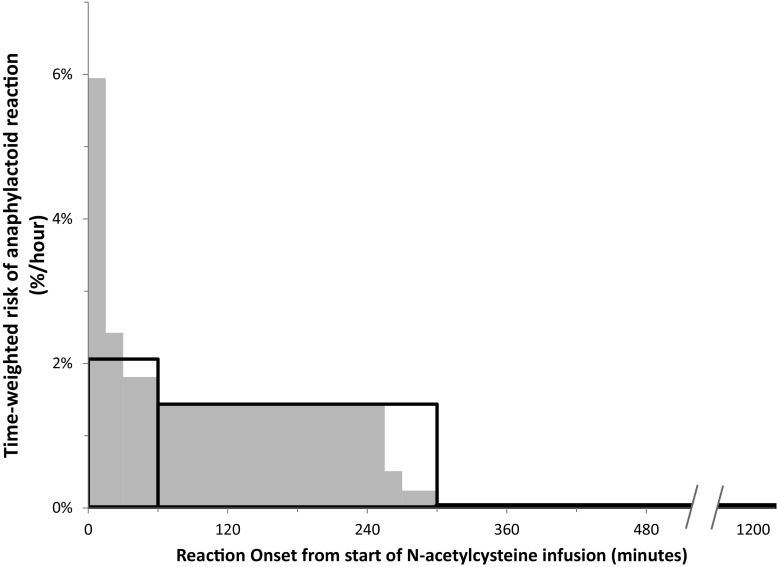
Results: An anaphylactoid reaction was documented in 528 (8.2%) of 6455 treatment courses, of which 398 (75.4%) were cutaneous. Five hundred four (95.4%) reactions occurred during the first 5 h. Of 403 patients administered any medication for these reactions, 371 (92%) received an antihistamine. Being female (adjusted OR 1.24 [95%CI 1.08, 1.42]) and having taken a single, acute overdose (1.24 [95%CI 1.10, 1.39]) were each associated with more severe reactions, whereas higher serum APAP concentrations were associated with fewer reactions (0.79 [95%CI 0.68, 0.92]).
Conclusion: Anaphylactoid reactions to the 21-h IV NAC protocol were uncommon and involved primarily cutaneous symptoms. While the protective effects of higher APAP concentrations are of interest in understanding the pathophysiology, none of the associations identified are strong enough to substantially alter the threshold for NAC initiation.
Keywords: Acetaminophen; Adverse drug event; N-acetylcysteine; Paracetamol.
Conflict of interest statement
The authors declare that they have no conflicts of interest.
Figures
References
-
- Kao LW, Kirk MA, Furbee RB, Mehta NH, Skinner JR, Brizendine EJ. What is the rate of adverse events after oral N-acetylcysteine administered by the intravenous route to patients with suspected acetaminophen poisoning? Ann Emerg Med. 2003;42(6):741–750. doi: 10.1016/S0196-0644(03)00508-0. - DOI - PubMed
-
- Lynch RM, Robertson R. Anaphylactoid reactions to intravenous N-acetylcysteine: a prospective case controlled study. AccidEmergNurs. 2004;12:10–15. - PubMed
-
- Gheshlaghi F, Eizadi-Mood N. Atopic diseases: risk factor in developing adverse reaction to intravenous N-acetylcysteine. J Res Med Sci. 2006;11(2):108–110.
MeSH terms
Substances
LinkOut - more resources
Full Text Sources
Other Literature Sources
Medical
