


Dietary Phytoestrogen Intake is Inversely Associated with Hypertension in a Cohort of Adults Living in the Mediterranean Area
- PMID: 29425149
- PMCID: PMC6017940
- DOI: 10.3390/molecules23020368
Dietary Phytoestrogen Intake is Inversely Associated with Hypertension in a Cohort of Adults Living in the Mediterranean Area
Abstract
Background: Dietary polyphenols, including phytoestrogens are abundantly present in a balanced diet. Evidence for their role in preventing non-communicable diseases is emerging.
Methods: We examined the association between estimated habitual intakes of dietary phytoestrogens and hypertension in a cohort study. The baseline data included 1936 men and women aged 18 years and older. Intakes of total phytoestrogens, isoflavones, and lignans were calculated from validated food frequency questionnaire. Data on the polyphenols content in foods were retrieved from the Phenol-Explorer database.
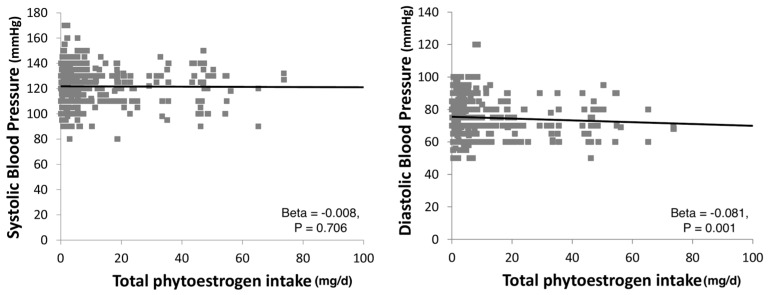
Results: Individuals in the highest quartile of dietary phytoestrogens intake were less likely to be hypertensive (OR: 0.66, 95% CI: 0.44-0.98); moreover, the association showed a significant decreasing trend. Isoflavones and lignans were not associated with lower odds of hypertension; however, some individual compounds, such as biochanin A and pinoresinol showed an independent inverse association with hypertension.
Conclusions: Dietary phytoestrogens are associated with lower likelihood of hypertension in adults living in the Mediterranean area. Future studies are needed to confirm the present findings (i.e., prospective cohort studies) and to better understand the mechanisms underlying such associations.
Keywords: CVD; blood pressure; hypertension; isoflavone; lignan; meditteranean cohort; phytoestrogen.
Conflict of interest statement
The authors declare no conflict of interest.
Figures
References
-
- Grosso G., Godos J., Lamuela-Raventos R., Ray S., Micek A., Pajak A., Sciacca S., D’Orazio N., Rio D.D., Galvano F. A comprehensive meta-analysis on dietary flavonoid and lignan intake and cancer risk: Level of evidence and limitations. Mol. Nutr. Food Res. 2016 doi: 10.1002/mnfr.201600930. - DOI - PubMed
Publication types
MeSH terms
Substances
LinkOut - more resources
Full Text Sources
Other Literature Sources
Medical
