Evaluation of the WHO 2009 classification for diagnosis of acute dengue in a large cohort of adults and children in Sri Lanka during a dengue-1 epidemic
- PMID: 29425194
- PMCID: PMC5823472
- DOI: 10.1371/journal.pntd.0006258
Evaluation of the WHO 2009 classification for diagnosis of acute dengue in a large cohort of adults and children in Sri Lanka during a dengue-1 epidemic
Abstract
Background: Dengue is a leading cause of fever and mimics other acute febrile illnesses (AFI). In 2009, the World Health Organization (WHO) revised criteria for clinical diagnosis of dengue.
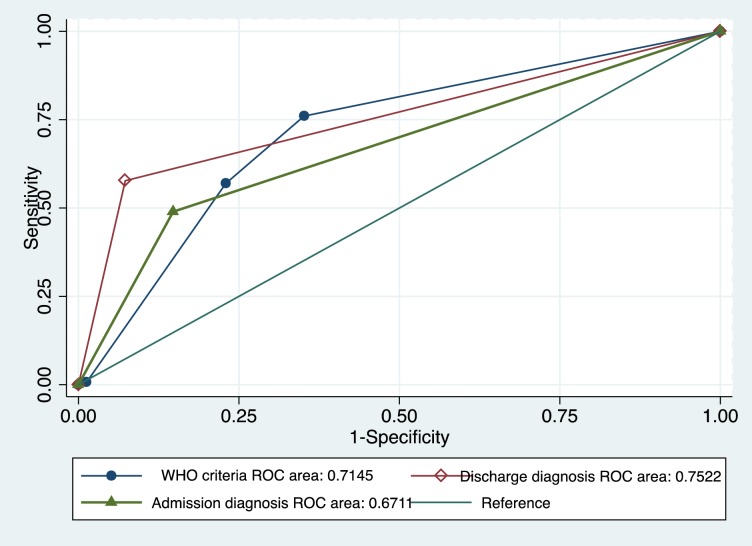
Methodology/principal findings: The new WHO 2009 classification of dengue divides suspected cases into three categories: dengue without warning signs, dengue with warning signs and severe dengue. We evaluated the WHO 2009 classification vs physicians' subjective clinical diagnosis (gestalt clinical impression) in a large cohort of patients presenting to a tertiary care center in southern Sri Lanka hospitalized with acute febrile illness. We confirmed acute dengue in 388 patients (305 adults ≥ 18 years and 83 children), including 103 primary and 245 secondary cases, of 976 patients prospectively enrolled with AFI. At presentation, both adults and children with acute dengue were more likely than those with other AFI to have leukopenia and thrombocytopenia. Additionally, adults were more likely than those with other AFI to have joint pain, higher temperatures, and absence of crackles on examination whereas children with dengue were more likely than others to have sore throat, fatigue, oliguria, and elevated hematocrit and transaminases. Similarly, presence of joint pain, thrombocytopenia, and absence of cough were independently associated with secondary vs primary dengue in adults whereas no variables were different in children. The 2009 WHO dengue classification was more sensitive than physicians' clinical diagnosis for identification of acute dengue (71.5% vs 67.1%), but was less specific. However, despite the absence of on-site diagnostic confirmation of dengue, clinical diagnosis was more sensitive on discharge (75.2%). The 2009 WHO criteria classified almost 75% as having warning signs, even though only 9 (2.3%) patients had evidence of plasma leakage and 16 (4.1%) had evidence of bleeding.
Conclusions/significance: In a large cohort with AFI, we identified features predictive of dengue vs other AFI and secondary vs primary dengue in adults versus children. The 2009 WHO dengue classification criteria had high sensitivity but low specificity compared to physicians' gestaldt diagnosis. Large cohort studies will be needed to validate the diagnostic yield of clinical impression and specific features for dengue relative to the 2009 WHO classification criteria.
Conflict of interest statement
The authors have declared that no competing interests exist.
Figures
References
-
- Bhatt S, Gething PW, Brady OJ, Messina JP, Farlow AW, Moyes CL, et al. The global distribution and burden of dengue. Nature. 2013;496(7446):504–7. doi: 10.1038/nature12060 - DOI - PMC - PubMed
-
- Woon YL, Hor CP, Hussin N, Zakaria A, Goh PP, Cheah WK. A Two-Year Review on Epidemiology and Clinical Characteristics of Dengue Deaths in Malaysia, 2013–2014. PLoS neglected tropical diseases. 2016;10(5):e0004575 doi: 10.1371/journal.pntd.0004575 - DOI - PMC - PubMed
-
- World Health Organization. Dengue guidelines for diagnosis, treatment, prevention and control. Geneva: 2009. - PubMed
Publication types
MeSH terms
Grants and funding
LinkOut - more resources
Full Text Sources
Other Literature Sources
Medical