


Feasibility and acceptability of a beverage intervention for Hispanic adults: a protocol for a pilot randomized controlled trial
- PMID: 29426328
- PMCID: PMC5807795
- DOI: 10.1186/s12937-018-0329-y
Feasibility and acceptability of a beverage intervention for Hispanic adults: a protocol for a pilot randomized controlled trial
Abstract
Background: In the U.S., Hispanics have among the highest rates of overweight and obesity when compared to other racial/ethnic groups placing them at a greater risk for obesity-related disease. Identifying intervention strategies to reduce caloric intake and/or improve cardiometabolic health in Hispanics is critical to reducing morbidity and mortality among this large and growing population. Evidence exists to support diet-specific behavioral interventions, including beverage modifications, in reducing obesity-related health risks. However, the acceptability and feasibility of a beverage intervention in obese Hispanic adults has not been robustly evaluated.
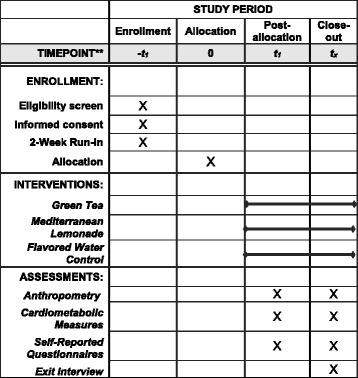
Methods: The objective of this pilot study is to assess the feasibility and acceptability of a randomized, controlled beverage intervention in 50 obese Hispanic adults ages 18-64 over 8-weeks. Eligible participants were obese (30-50.0 kg/m2), between the ages 18-64, self-identified as Hispanic, and were able to speak, read, and write in either English and/or Spanish. Study recruitment was completed August 2017. Upon the completion of baseline assessments, participants will be randomized to either Mediterranean lemonade, Green Tea, or flavored water control. After completing a 2-week washout period, participants will be asked to consume 32 oz. per day of study beverage for 6-weeks while avoiding all other sources of tea, lemonade, citrus, juice, and other sweetened beverages; water is permissible. Primary outcomes will be recruitment, retention, and acceptability of the intervention strategies. Our study will also evaluate participant-reported tolerance and as an exploratory aim, assess safety/toxicity-related to renal and/or liver function. Fasting blood samples will be collected at baseline and 8-weeks to assess the primary efficacy outcomes: total cholesterol, high-density lipoprotein (HDL), and low-density lipoprotein (LDL). Secondary outcomes include fasting glucose, hemoglobin A1c (HbA1c), and high-sensitivity C-reactive protein (hs-CRP).
Discussion: This pilot study will provide important feasibility, safety, and early efficacy data necessary to design a larger, adequately-powered randomized controlled trial.
Trial registration: NCT02911753 ( ClinicalTrials.gov ). Registered September 19, 2016. Last updated November 1, 2017.
Keywords: Green tea; Hispanic; Mediterranean lemonade; Sugar-sweetened beverages (SSBs).
Conflict of interest statement
Ethics approval and consent to participate
All participants were informed about the potential benefits and risk of the dietary intervention. All participants signed an informed consent prior to enrollment. The experimental design and study procedures were approved by the University of Arizona Institutional Review Board (IRB approval #1606621176).
Consent for publication
Not applicable.
Competing interests
The authors declare that they have no competing interests. The funding sponsors had no role in the design of the study and writing of the manuscript. Further, the funding sponsors will have no involvement in the collection, analyses or interpretation of the data, nor in the decision to publish the results.
Publisher’s Note
Springer Nature remains neutral with regard to jurisdictional claims in published maps and institutional affiliations.
Figures
References
-
- Klein S, Burke LE, Bray GA, Blair S, Allison DB, Pi-Sunyer X, Hong Y, Eckel RH. Clinical implications of obesity with specific focus on cardiovascular disease: a statement for professionals from the American Heart Association Council on nutrition, physical activity, and metabolism: endorsed by the American College of Cardiology Foundation. Circulation. 2004;110:2952–2967. doi: 10.1161/01.CIR.0000145546.97738.1E. - DOI - PubMed
-
- Schiller JS, Lucas JW, Ward BW, Peregoy JA. Summary health statistics for U.S. adults: National Health Interview Survey, 2010. Vital Health Stat. 2012;10:1–207. - PubMed
Publication types
MeSH terms
Associated data
Grants and funding
LinkOut - more resources
Full Text Sources
Other Literature Sources
Medical
Research Materials
Miscellaneous
