


PD-L1 diagnostic tests: a systematic literature review of scoring algorithms and test-validation metrics
- PMID: 29426340
- PMCID: PMC5807740
- DOI: 10.1186/s13000-018-0689-9
PD-L1 diagnostic tests: a systematic literature review of scoring algorithms and test-validation metrics
Abstract
Background: The programmed death receptor 1 (PD-1) protein is a cell-surface receptor on certain lymphocytes that, with its ligand programmed death ligand 1 (PD-L1), helps to down-regulate immune responses. Many cancer types express PD-L1 and evade immune recognition via the PD-1/PD-L1 interaction. Precision therapies targeting the PD-1/PD-L1 pathway have the potential to improve response and thereby offer a novel treatment avenue to some patients with cancer. However, this new therapeutic approach requires reliable methods for identifying patients whose cancers are particularly likely to respond. Therefore, we conducted a systematic literature review assessing evidence on test validation and scoring algorithms for PD-L1 immunohistochemistry (IHC) tests that might be used to select potentially responsive patients with bladder/urothelial cell, lung, gastric, or ovarian cancers for immunotherapy treatment.
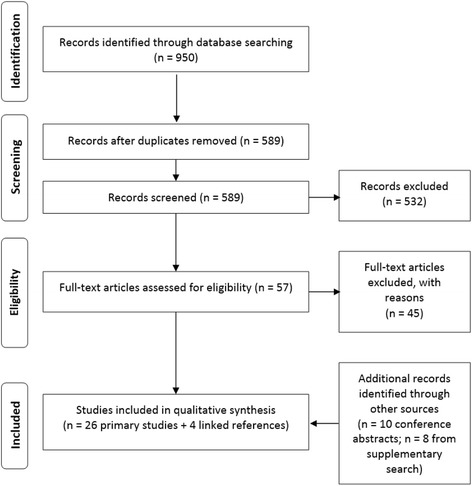
Methods and results: To identify evidence on commercially available PD-L1 IHC assays, we systematically searched MEDLINE and Embase for relevant studies published between January 2010 and September 2016 and appraised abstracts from recent oncology conferences (January 2013 to November 2016). Publications that met the predefined inclusion criteria were extracted and key trends summarized. In total, 26 eligible primary studies were identified, all of which reported on the test validation metrics associated with PD-L1 IHC tests in lung cancer, most using immunohistochemistry testing. There was significant heterogeneity among the available tests for PD-L1. Specifically, no definitive cutoff for PD-L1 positivity was identifiable, with more than one threshold being reported for most antibodies. Studies also differed as to whether they evaluated tumor cells only or tumor cells and tumor-infiltrating immune cells. However, all of the tests developed and validated to support a therapeutic drug in the context of phase 2-3 clinical trials reported more than 90% inter-reader concordance. In contrast, other PD-L1 antibodies identified in the literature reported poorer concordance.
Conclusions: Published validation metric data for PD-L1 tests are mainly focused on immunohistochemistry tests from studies in lung cancer. The variability in test cutoffs and standards for PD-L1 testing suggests that there is presently no standardized approach. This current variability may have implications for the uptake of precision treatments.
Keywords: Antibody; Cancer; Diagnostic; Immunotherapy; PD-1; PD-L1; Programmed cell death protein 1; Programmed death ligand 1; Test; Tests.
Conflict of interest statement
Ethics approval and consent to participate
Not applicable
Consent for publication
Not applicable
Competing interests
JK, MR and EF are employed by Evidera, a consultancy company contracted to perform research. SD, PR, MU and JD are employed by Pfizer.
Publisher’s Note
Springer Nature remains neutral with regard to jurisdictional claims in published maps and institutional affiliations.
References
-
- US Food & Drug Administration (FDA). Companion Diagnostics. https://www.fda.gov/MedicalDevices/ProductsandMedicalProcedures/InVitroD.... Accessed 30 March 2017.
-
- Boyd ZS, Smith D, Baker B, Vennapusa B, Koeppen H, Kowanetz M, et al. Development of a PD-L1 companion diagnostic IHC assay (SP142) for atezolizumab. In: The inaugural international cancer immunotherapy conference; September 16–19, 2015; New York, NY [abstract B001].
-
- Roach C, Zhang N, Corigliano E, Jansson M, Toland G, Ponto G, et al. Development of a companion diagnostic PD-L1 immunohistochemistry assay for pembrolizumab therapy in non-small-cell lung cancer. Appl Immunohistochem Mol Morphol. 2016;24(6):392–397. doi: 10.1097/PAI.0000000000000408. - DOI - PMC - PubMed
Publication types
MeSH terms
Substances
LinkOut - more resources
Full Text Sources
Other Literature Sources
Medical
Research Materials
Miscellaneous
