


Wearable sensors for clinical applications in epilepsy, Parkinson's disease, and stroke: a mixed-methods systematic review
- PMID: 29427026
- PMCID: PMC6060770
- DOI: 10.1007/s00415-018-8786-y
Wearable sensors for clinical applications in epilepsy, Parkinson's disease, and stroke: a mixed-methods systematic review
Abstract
Objectives: Wearable technology is increasingly used to monitor neurological disorders. The purpose of this systematic review was to synthesize knowledge from quantitative and qualitative clinical researches using wearable sensors in epilepsy, Parkinson's disease (PD), and stroke.
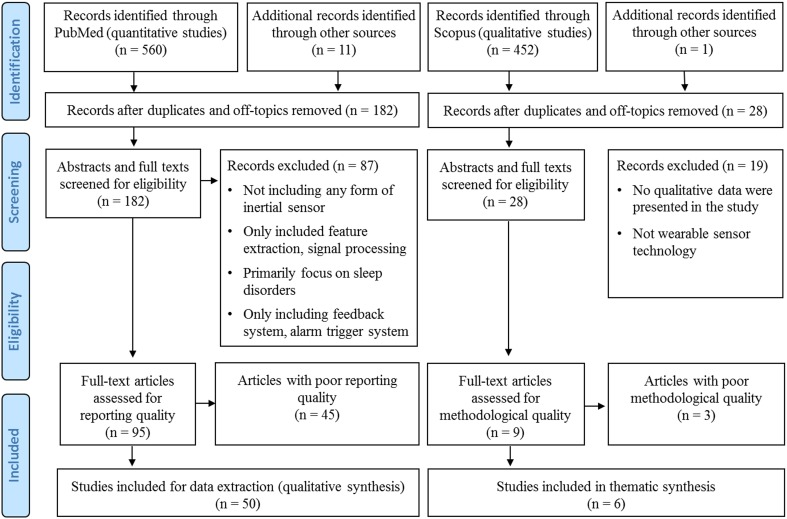
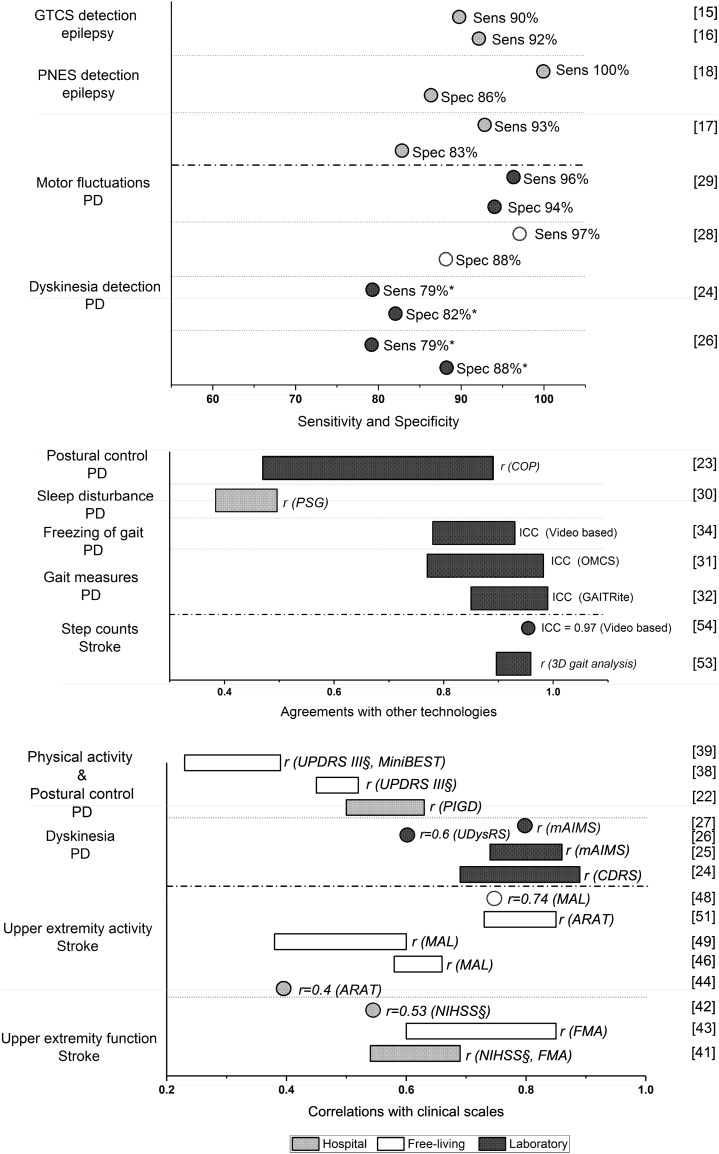
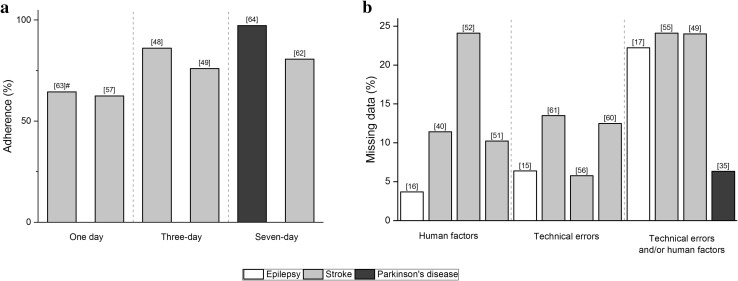
Methods: A systematic literature search was conducted in PubMed and Scopus spanning from 1995 to January 2017. A synthesis of the main findings, reported adherence to wearables and missing data from quantitative studies, is provided. Clinimetric properties of measures derived from wearables in laboratory, free activities in hospital, and free-living environment were also evaluated. Qualitative thematic synthesis was conducted to explore user experiences and acceptance of wearables.
Results: In total, 56 studies (50 reporting quantitative and 6 reporting qualitative data) were included for data extraction and synthesis. Among studies reporting quantitative data, 5 were in epilepsy, 21 PD, and 24 studies in stroke. In epilepsy, wearables are used to detect and differentiate seizures in hospital settings. In PD, the focus is on quantification of cardinal motor symptoms and medication-evoked adverse symptoms in both laboratory and free-living environment. In stroke upper extremity activity, walking and physical activity have been studied in laboratory and during free activities. Three analytic themes emerged from thematic synthesis of studies reporting qualitative data: acceptable integration in daily life, lack of confidence in technology, and the need to consider individualization.
Conclusions: Wearables may provide information of clinical features of interest in epilepsy, PD and stroke, but knowledge regarding the clinical utility for supporting clinical decision making remains to be established.
Keywords: Epilepsy; Parkinson’s disease; Stroke; Systematic review; Wearable sensors.
Conflict of interest statement
None of the authors report any conflicts of interest with regard to the present study.
Figures
References
-
- Ozanne A, Johansson D, Hallgren Graneheim U, Malmgren K, Bergquist F, Alt Murphy M. Wearables in epilepsy and Parkinson’s disease—a focus group study. Acta Neurol Scand. 2017 - PubMed
-
- Richardson WS, Wilson MC, Nishikawa J, Hayward RS. The well-built clinical question: a key to evidence-based decisions. ACP J Club. 1995;123(3):A12–A13. - PubMed
Publication types
MeSH terms
Grants and funding
LinkOut - more resources
Full Text Sources
Other Literature Sources
Medical
