


An Online Risk Index for the Cross-Sectional Prediction of New HIV Chlamydia, and Gonorrhea Diagnoses Across U.S. Counties and Across Years
- PMID: 29427233
- PMCID: PMC7069599
- DOI: 10.1007/s10461-018-2046-0
An Online Risk Index for the Cross-Sectional Prediction of New HIV Chlamydia, and Gonorrhea Diagnoses Across U.S. Counties and Across Years
Abstract
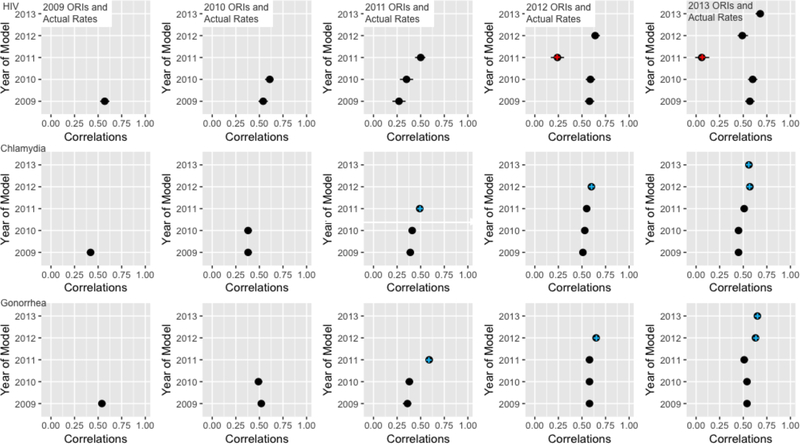
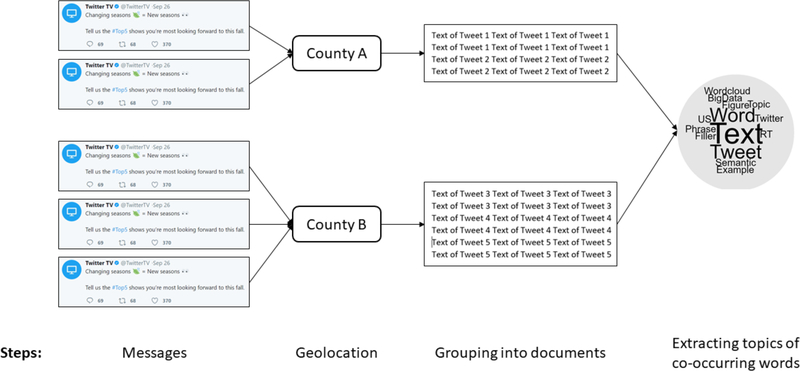
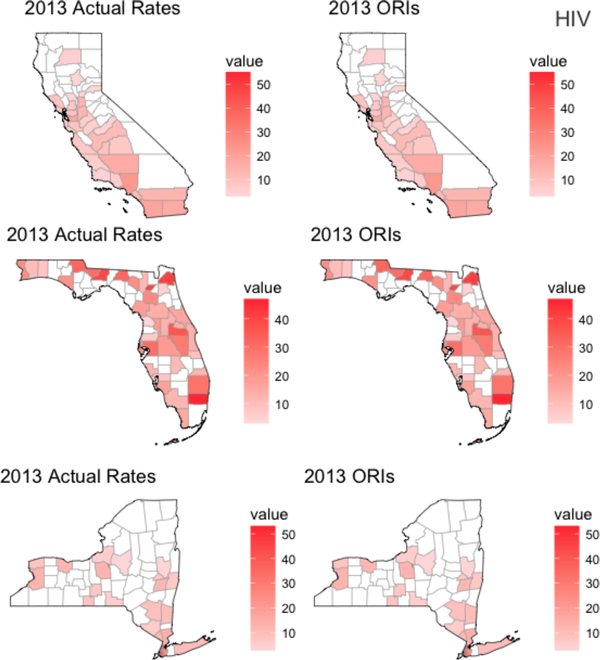
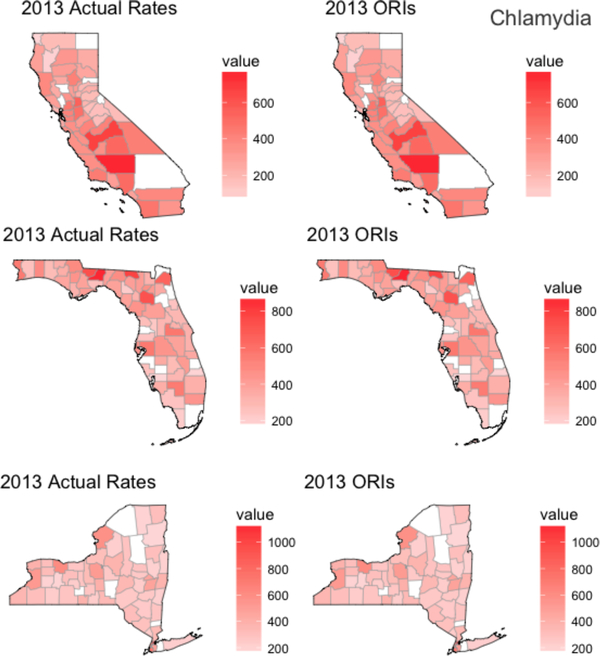
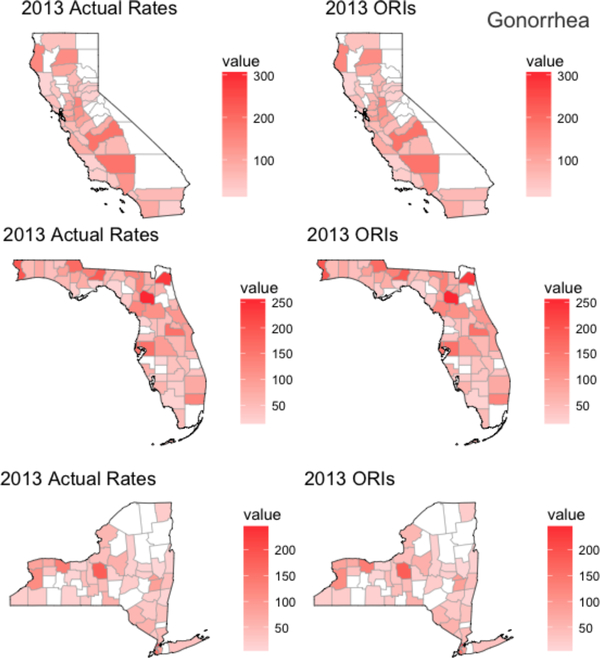
The present study evaluated the potential use of Twitter data for providing risk indices of STIs. We developed online risk indices (ORIs) based on tweets to predict new HIV, gonorrhea, and chlamydia diagnoses, across U.S. counties and across 5 years. We analyzed over one hundred million tweets from 2009 to 2013 using open-vocabulary techniques and estimated the ORIs for a particular year by entering tweets from the same year into multiple semantic models (one for each year). The ORIs were moderately to strongly associated with the actual rates (.35 < rs < .68 for 93% of models), both nationwide and when applied to single states (California, Florida, and New York). Later models were slightly better than older ones at predicting gonorrhea and chlamydia, but not at predicting HIV. The proposed technique using free social media data provides signals of community health at a high temporal and spatial resolution.
Keywords: Big data; Chlamydia; Gonorrhea; HIV; Social media.
Conflict of interest statement
Figures
References
-
- Centers for Disease Control and Prevention. Sexually Transmitted Disease Surveillance 2016. Atlanta, GA; 2017.
-
- Centers for Disease Control and Prevention. NCHHSTP AtlasPlus. https://www.cdc.gov/nchhstp/atlas/. Published 2017 Accessed May 25, 2017.
-
- Centers for Disease Control and Prevention. Overview of the CDC FY 2018 Budget Request; 2017. https://www.cdc.gov/budget/documents/fy2018/fy-2018-cdc-budgetoverview.pdf.
MeSH terms
Grants and funding
LinkOut - more resources
Full Text Sources
Other Literature Sources
Medical
