


Editorial
doi: 10.1186/s13054-018-1946-8.
Animal-assisted intervention in the ICU: a tool for humanization
Affiliations
- PMID: 29429412
- PMCID: PMC5808422
- DOI: 10.1186/s13054-018-1946-8
Item in Clipboard
Editorial
Animal-assisted intervention in the ICU: a tool for humanization
Crit Care.
.
No abstract available
Conflict of interest statement
Authors’ information
MH is a clinical psychologist with post-doctoral fellowship training in rehabilitation psychology.
Email: mhosey@jhu.edu
Twitter: @DrMeganHoseyPhD
Ethics approval and consent to participate
Not applicable.
Consent for publication
All adult patients had decisional capacity and provided written consent to have their images used for educational purposes outside of the institution.
Competing interests
The authors declare that they have no competing interests.
Publisher’s note
Springer Nature remains neutral with regard to jurisdictional claims in published maps and institutional affiliations.
Figures
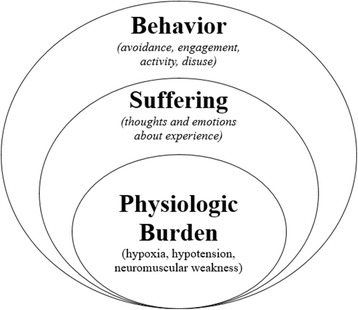
Application of non-pharmacological intervention in the humanized ICU may lead to reduced physiologic burden, less suffering, and more engaged behavior with reciprocal effects in each domain
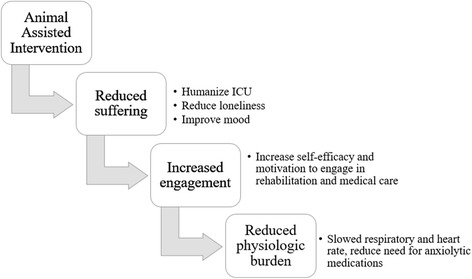
Animal assisted intervention as an example of non-pharmacologic intervention to reduce suffering with potential downstream benefits
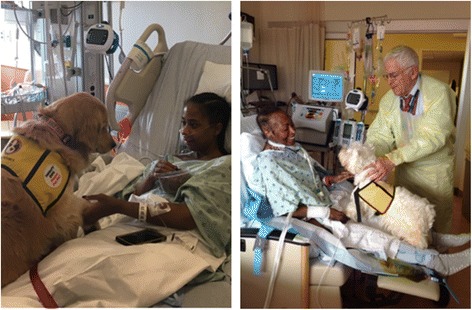
Patient with pain after chest tube removal gets distraction and relaxation with Winnie, the Golden Retriever (left), and patient receiving continuous renal replacement therapy and mechanical ventilation via tracheostomy finds motivation to sit out of bed in a chair thanks to Pippi, the West Highland Terrier (right)
References
-
- Brown S, Beesley S, Hopkins R. Humanizing intensive care: theory, evidence, and possibilities. In: Jean-Louis Vincent, editor. Annual update in intensive care and emergency medicine 2016. Switzerland: Springer International Publishing; 2016. p. 405–20. 10.1007/978-3-319-27349-5.
Publication types
MeSH terms
Grants and funding
LinkOut - more resources
Full Text Sources
Other Literature Sources
