Review
. 2018 Jan:231:13-18.
doi: 10.1016/j.tvjl.2017.11.004. Epub 2017 Nov 20.

Enteric coronavirus infection in adult horses

Affiliations
Review

Enteric coronavirus infection in adult horses

N Pusterla et al. Vet J. 2018 Jan.

Abstract

A new enteric virus of adult horses, equine coronavirus (ECoV), has recently been recognized. It is associated with fever, lethargy, anorexia, and less frequently, colic and diarrhea. This enteric virus is transmitted via the feco-oral route and horses become infected by ingesting fecally contaminated feed and water. Various outbreaks have been reported since 2010 from Japan, Europe and the USA. While the clinical signs are fairly non-specific, lymphopenia and neutropenia are often seen. Specific diagnosis is made by the detection of ECoV in feces by either quantitative real-time PCR, electron microscopy or antigen-capture ELISA. Supportive treatment is usually required, as most infections are self-limiting. However, rare complications, such as endotoxemia, septicemia and hyperammonemia-associated encephalopathy, have been reported, and have been related to the loss of barrier function at the intestinal mucosa. This review article will focus on the latest information pertaining to the virus, epidemiology, clinical signs, diagnosis, pathology, treatment and prevention of ECoV infection in adult horses.

Keywords: Clinical disease; Diagnosis; Epidemiology; Equine coronavirus; Treatment.


Figures

Fig. 1
Fig. 1
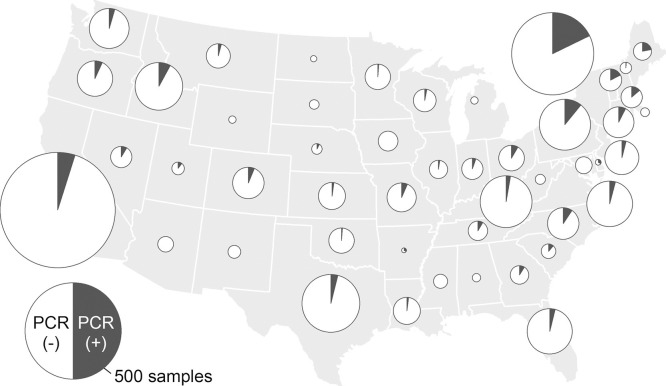
Relative proportion of equine coronavirus real-time quantitative PCR positive (black) and negative (white) samples by states submitted from January 2012 to December 2016 to three commercial veterinary diagnostic laboratories in the USA (IDEXX Laboratories, West Sacramento; Animal Health Diagnostic Center, Cornell University, Ithaca; Real-time PCR Research and Diagnostics Core Facility, University of California, Davis).
Fig. 2
Fig. 2
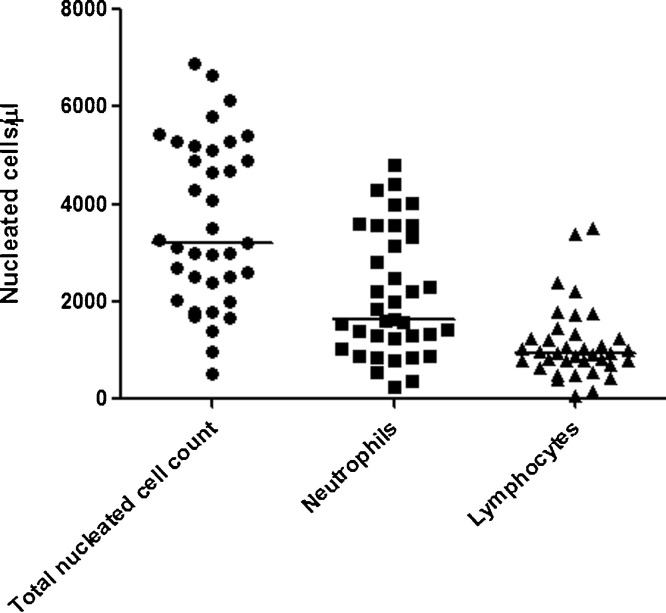
Hematological findings in 37 adult horses with laboratory confirmation of equine coronavirus infection. The results are expressed as individual values, with the median indicated by a horizontal bar.
Fig. 3
Fig. 3
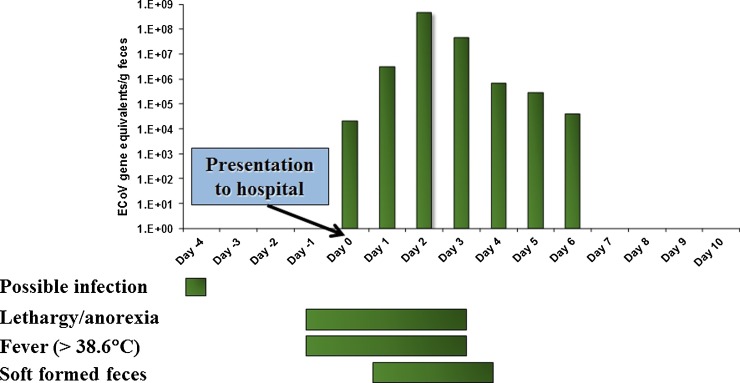
Diagram showing temporal clinical signs and fecal shedding of equine coronavirus (ECoV) in an adult horse presented to a referring hospital because of anorexia, lethargy and fever.
Fig. 4
Fig. 4
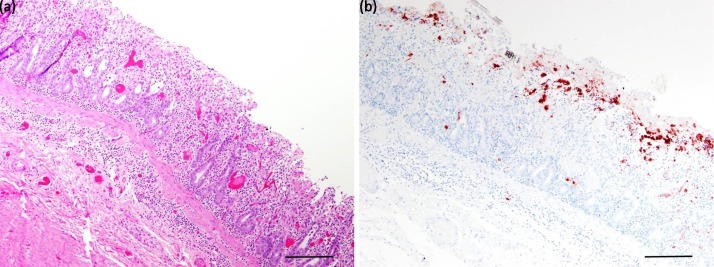
(a) Histological section of jejunum from an adult horse with equine coronavirus (ECoV) infection. There is loss of crypts and the few remaining crypts are dilated, lined by attenuated epithelium and contain sloughed necrotic enterocytes. The lamina propria and superficial submucosa are expanded by inflammatory infiltrates. Capillaries and venules in the mucosa and submucosa are occluded by fibrin thrombi. Haematoxylin and eosin. (b) Immunohistochemistry for bovine coronavirus with hematoxylin counterstain on a histological section of jejunum from an adult horse with ECoV infection. Strong granular/globular immunoreactivity is seen in the cytoplasm of enterocytes deep in the crypts. Scale bar = 200 μm.

References

    1. Brockmeier S.L., Loving C.L., Nicholson T.L., Palmer M.V. Coinfection of pigs with porcine respiratory coronavirus and Bordetella bronchiseptica. Veterinary Microbiology. 2008;128:36–47. - PMC - PubMed
    1. Chang H., Egberink H.F., Halpin R., Spiro D.J., Rottier P.J. Spike protein fusion peptide and feline coronavirus virulence. Emerging Infectious Diseases. 2012;18:1089–1095. - PMC - PubMed
    1. Chen W., Yang J., Lin J.H., Fann C.S., Osyetrov V., King C.C., Chen Y.M., Chang H.L., Kuo H.W., Liao F. Nasopharyngeal shedding of severe acute respiratory syndrome-associated coronavirus is associated with genetic polymorphisms. Clinical Infectious Diseases. 2006;42:1561–1569. - PMC - PubMed
    1. Davis E., Rush B.R., Cox J., DeBey B., Kapil S. Neonatal enterocolitis associated with coronavirus infection in a foal: a case report. Journal of Veterinary Diagnostic Investigation. 2000;12:153–156. - PubMed
    1. Fielding C.L., Higgins J.K., Higgins J.C., McIntosh S., Scott E., Giannitti F., Mete A., Pusterla N. Disease associated with equine coronavirus infection and high case fatality rate. Journal of Veterinary Internal Medicine. 2015;29:307–310. - PMC - PubMed

MeSH terms