


Arteriovenous Fistula Maturation in Prevalent Hemodialysis Patients in the United States: A National Study
- PMID: 29429750
- PMCID: PMC6551206
- DOI: 10.1053/j.ajkd.2017.11.020
Arteriovenous Fistula Maturation in Prevalent Hemodialysis Patients in the United States: A National Study
Erratum in
-
Erratum Regarding "Arteriovenous Fistula Maturation in Prevalent Hemodialysis Patients in the United States: A National Study" (Am J Kidney Dis. 2018;71[6]:793-801).Am J Kidney Dis. 2018 Aug;72(2):314. doi: 10.1053/j.ajkd.2018.06.001. Epub 2018 Jun 28. Am J Kidney Dis. 2018. PMID: 29960796 No abstract available.
Abstract
Background: Arteriovenous fistulas (AVFs) are the preferred form of hemodialysis vascular access, but maturation failures occur frequently, often resulting in prolonged catheter use. We sought to characterize AVF maturation in a national sample of prevalent hemodialysis patients in the United States.
Study design: Nonconcurrent observational cohort study.
Setting & participants: Prevalent hemodialysis patients having had at least 1 new AVF placed during 2013, as identified using Medicare claims data in the US Renal Data System.
Predictors: Demographics, geographic location, dialysis vintage, comorbid conditions.
Outcomes: Successful maturation following placement defined by subsequent use identified using monthly CROWNWeb data.
Measurements: AVF maturation rates were compared across strata of predictors. Patients were followed up until the earliest evidence of death, AVF maturation, or the end of 2014.
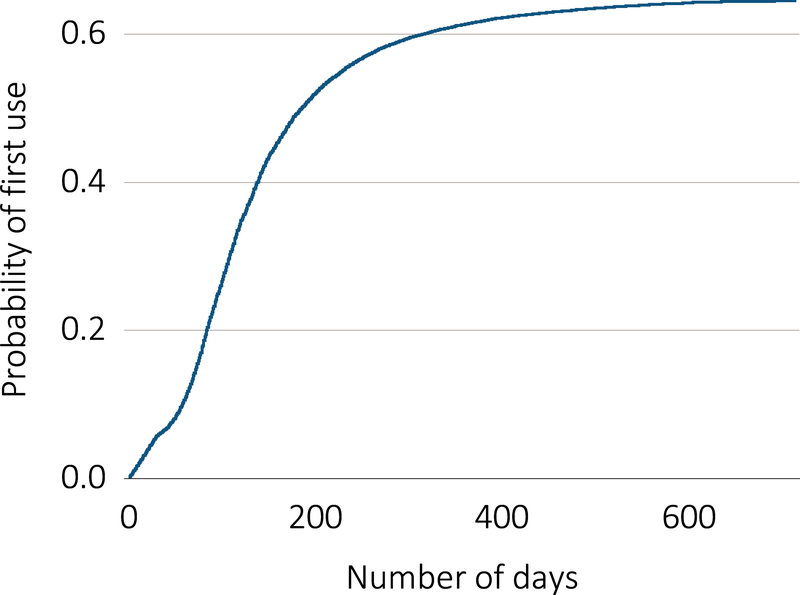
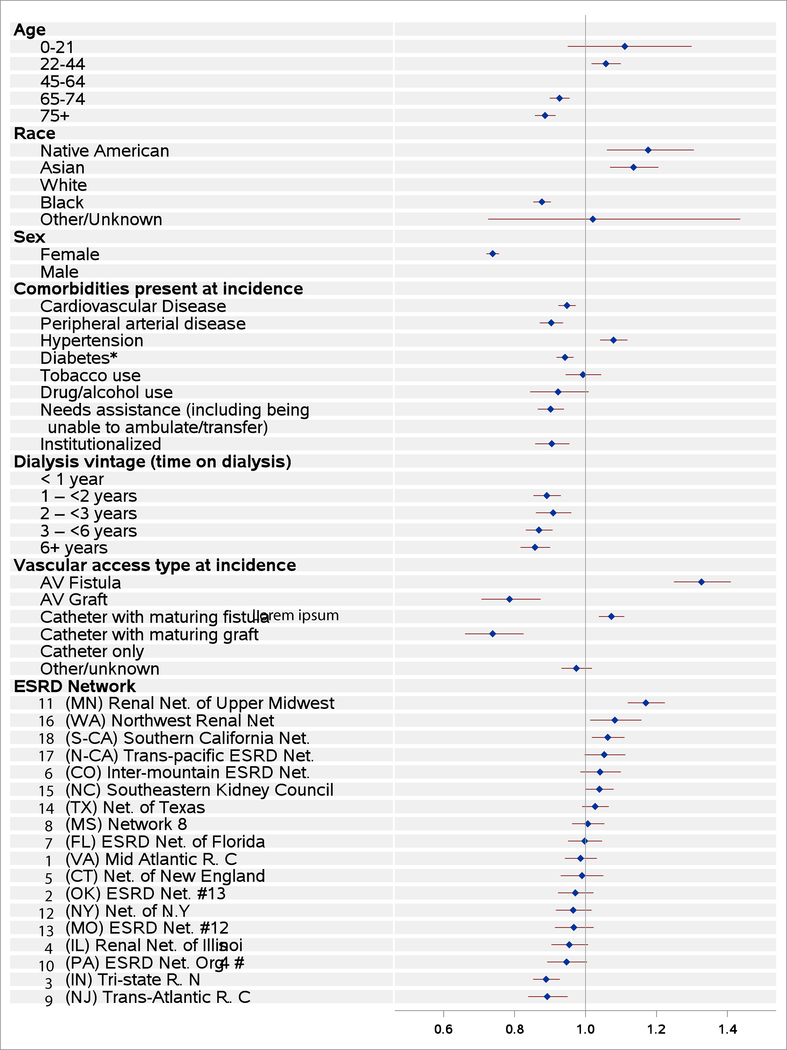
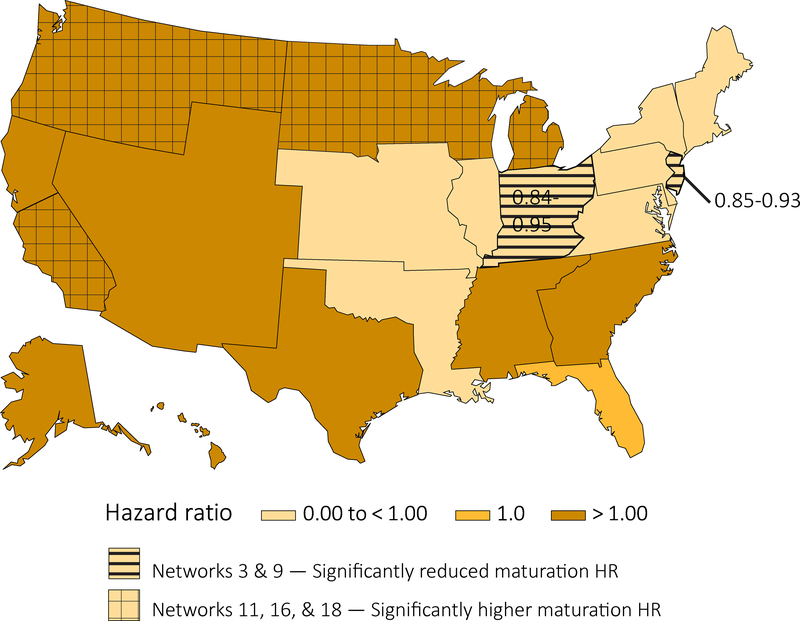
Results: In the study period, 45,087 new AVFs were placed in 39,820 prevalent hemodialysis patients. No evidence of use was identified for 36.2% of AVFs. Only 54.7% of AVFs were used within 4 months of placement, with maturation rates varying considerably across end-stage renal disease (ESRD) networks. Older age was associated with lower AVF maturation rates. Female sex, black race, some comorbid conditions (cardiovascular disease, peripheral artery disease, diabetes, needing assistance, or institutionalized status), dialysis vintage longer than 1 year, and catheter or arteriovenous graft use at ESRD incidence were also associated with lower rates of successful AVF maturation. In contrast, hypertension and prior AVF placement at ESRD incidence were associated with higher rates of successful AVF maturation.
Limitations: This study relies on administrative data, with monthly recording of access use.
Conclusions: We identified numerous associations between AVF maturation and patient-level factors in a recent national sample of US hemodialysis patients. After accounting for these patient factors, we observed substantial differences in AVF maturation across some ESRD networks, indicating a need for additional study of the provider, practice, and regional factors that explain AVF maturation.
Keywords: AVF maturation; Arteriovenous anastomosis; US Renal Data System (USRDS); arteriovenous fistula (AVF); arteriovenous shunt; cannulation; end-stage renal disease (ESRD); fistula first; hemodialysis (HD); registry; renal dialysis; risk factors; vascular access.
Copyright © 2018 National Kidney Foundation, Inc. Published by Elsevier Inc. All rights reserved.
Figures
References
-
- Pisoni RL, Arrington CJ, Albert JM, et al. Facility Hemodialysis Vascular Access Use and Mortality in Countries Participating in DOPPS: An Instrumental Variable Analysis. American Journal of Kidney Diseases. 2009;53(3):475–491. - PubMed
-
- Bradbury BD, Fissell RB, Albert JM, et al. Predictors of early mortality among incident US hemodialysis patients in the Dialysis Outcomes and Practice Patterns Study (DOPPS). Clinical journal of the American Society of Nephrology: CJASN. 2007;2(1):89–99. - PubMed
-
- Malas MB, Canner JK, Hicks CW, et al. Trends in incident hemodialysis access and mortality. JAMA Surg. 2015;150(5):441–448. - PubMed
Publication types
MeSH terms
Grants and funding
LinkOut - more resources
Full Text Sources
Other Literature Sources
Medical
