. 2018 Jan 23:(731):1-53.
doi: 10.3897/zookeys.731.19854. eCollection 2018.

Amphipod family distributions around Iceland

Affiliations

Amphipod family distributions around Iceland

Saskia Brix et al. Zookeys. .

Abstract

Amphipod crustaceans were collected at all 55 stations sampled with an epibenthic sledge during two IceAGE expeditions (Icelandic marine Animals: Genetics and Ecology) in 2011 and 2013. In total, 34 amphipod families and three superfamilies were recorded in the samples. Distribution maps are presented for each taxon along with a summary of the regional taxonomy for the group. Statistical analyses based on presence/absence data revealed a pattern of family distributions that correlated with sampling depth. Clustering according to the geographic location of the stations (northernmost North Atlantic Sea and Arctic Ocean) can also be observed. IceAGE data for the Amphilochidae and Oedicerotidae were analysed on species level; in case of the Amphilochidae they were compared to the findings from a previous Icelandic benthic survey, BIOICE (Benthic Invertebrates of Icelandic waters), which also identified a high abundance of amphipod fauna.

Keywords: Amphipoda; Greenland-Iceland-Faroe Ridge; benthos; deep sea; distribution; subarctic; taxonomy.


Figures
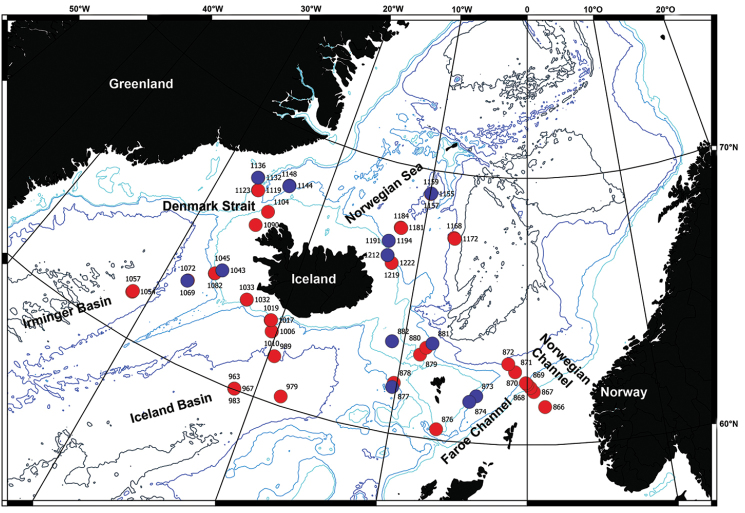
Figure 1.
Figure 1.
Map of all IceAGE EBS stations where amphipods have been found. Red: stations with amphipods determined; Blue: stations where amphipods were not further determined (873, 874, 877, 881, 882, 1043, 1045, 1069, 1136, 1144, 1148, 1191, 1209, 1212, 1157).
Figure 2.
Figure 2.
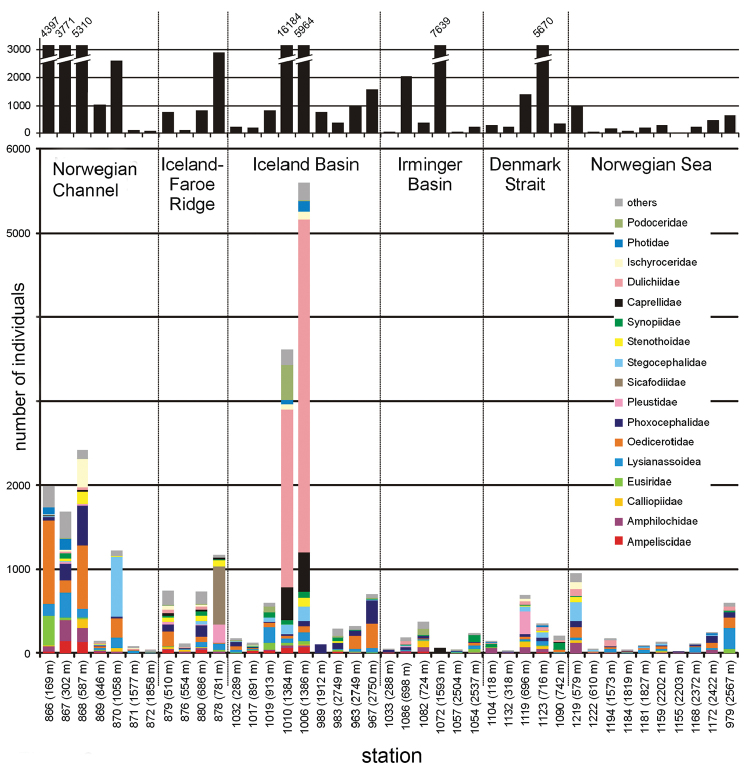
Family distribution at all IceAGE stations ordered by transect. Within each transect (1: Norwegian Channel, 2: Iceland-Faroe Ridge, 3: Iceland Basin, 4: Irmninger Basin, 5: Denmark Strait, 6: Norwegian Sea), stations are ordered by depth. The upper graph (black bars) indicates the absolute number of amphipod individuals per station. The lower graph indicates the amphipods sorted to families per station (legend by colours shown on the right side).
Figure 3.
Figure 3.
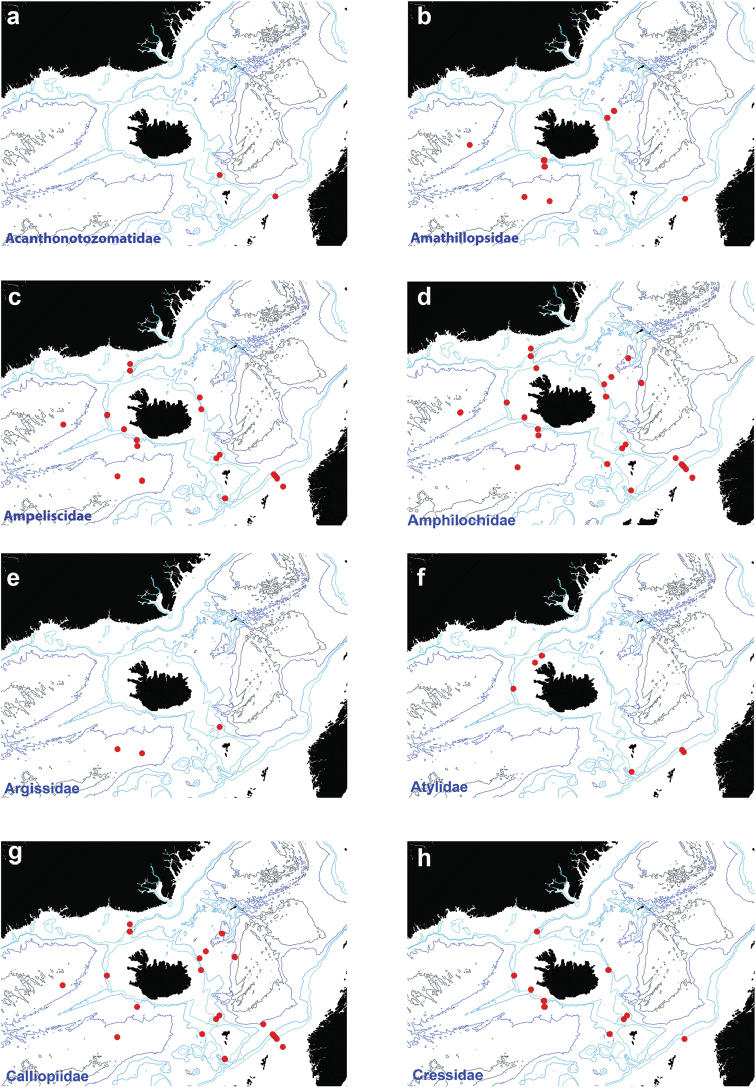
Distribution map for a Acanthonotozomatidae b Amathillopsidae c Ampeliscidae d Amphilochidae e Argissidae f Atylidae g Calliopiidae h Cressidae in sorted IceAGE EBS samples.
Figure 4.
Figure 4.
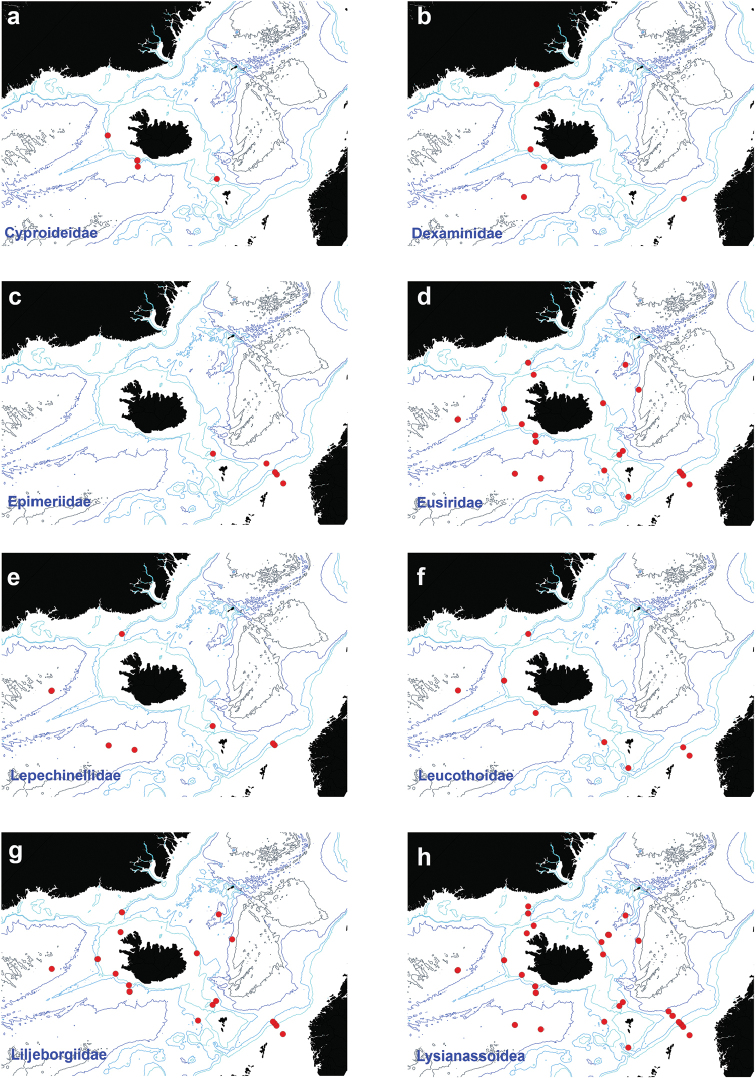
Distribution map for a Cyproideidae b Dexaminidae c Epimeriidae d Eusiridae e Lepechinellidae f Leucothoidae g Liljeborgiidae h Lysianassoidea, in sorted IceAGE EBS samples.
Figure 5.
Figure 5.
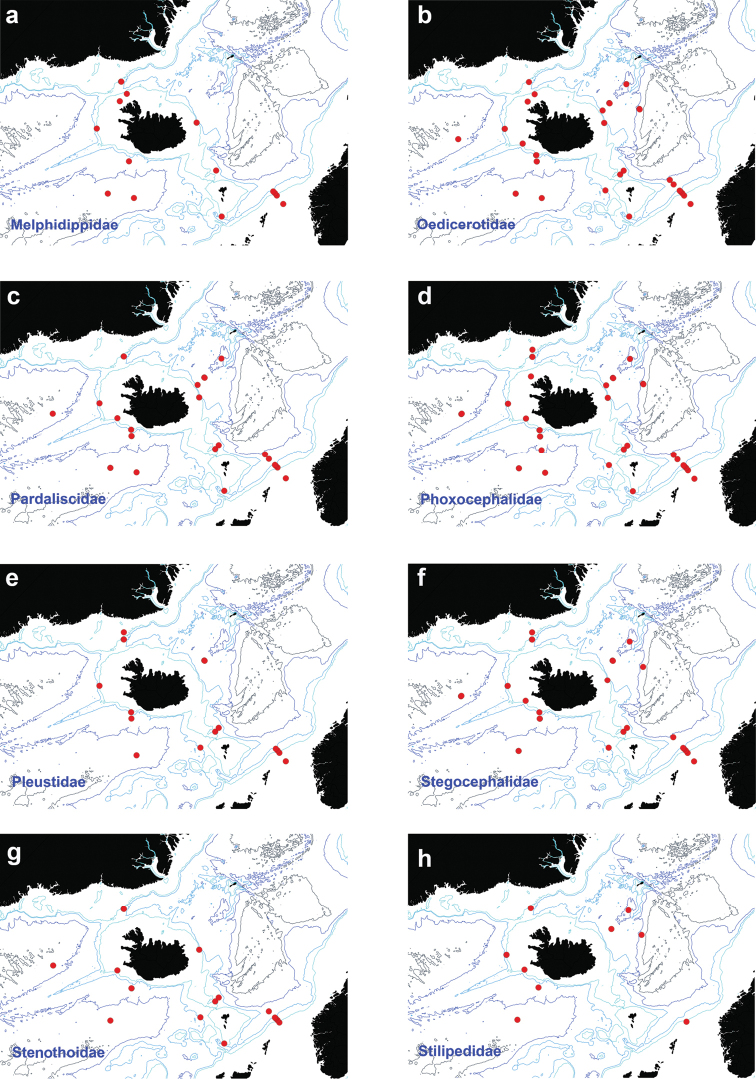
Distribution map for a Melphidippidae b Oedicerotidae c Pardaliscidae d Phoxocephalidae e Pleustidae f Stegocephalidae g Stenothoidae h Stilipedidae, in sorted IceAGE EBS samples.
Figure 6.
Figure 6.
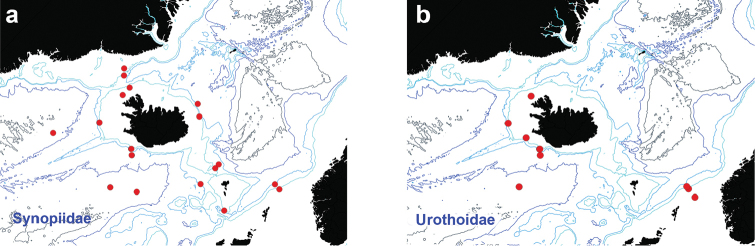
Distribution map for a Synopiidae b Urothoidae, in sorted IceAGE EBS samples.
Figure 7.
Figure 7.
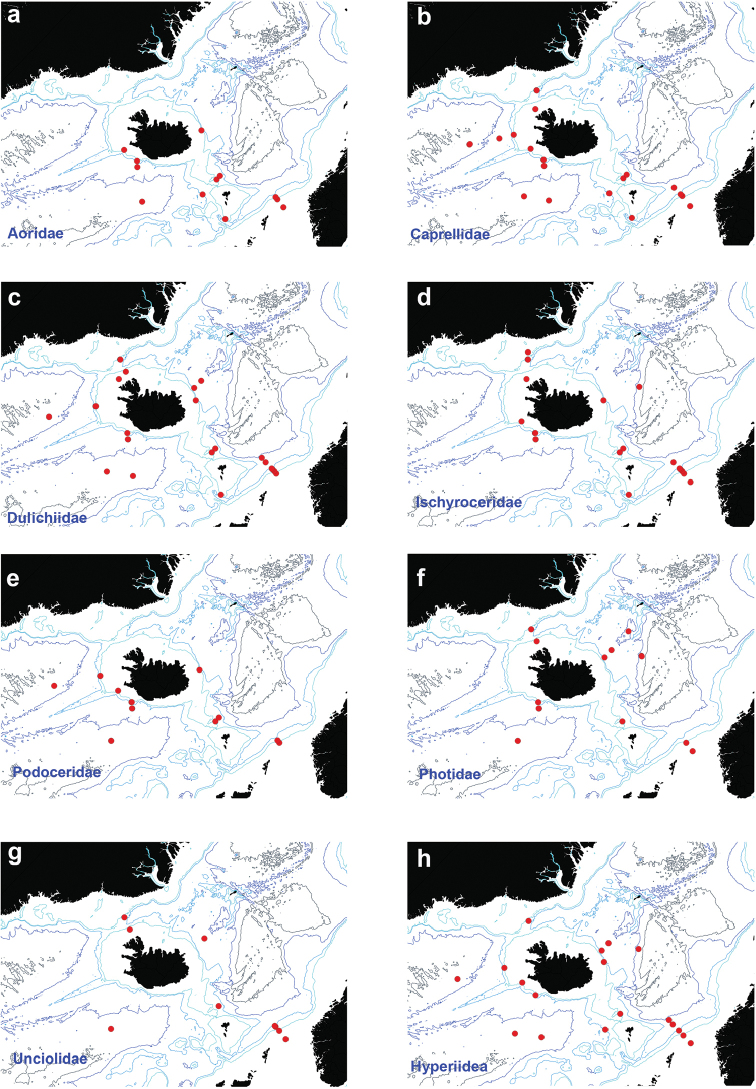
Distribution map for Corophiida a Aoridae b Caprellidae c Dulichiidae d Ischyroceridae e Podoceridae f Photidae g Unciolidae h Hyperiidea, in sorted IceAGE EBS samples.
Figure 8.
Figure 8.
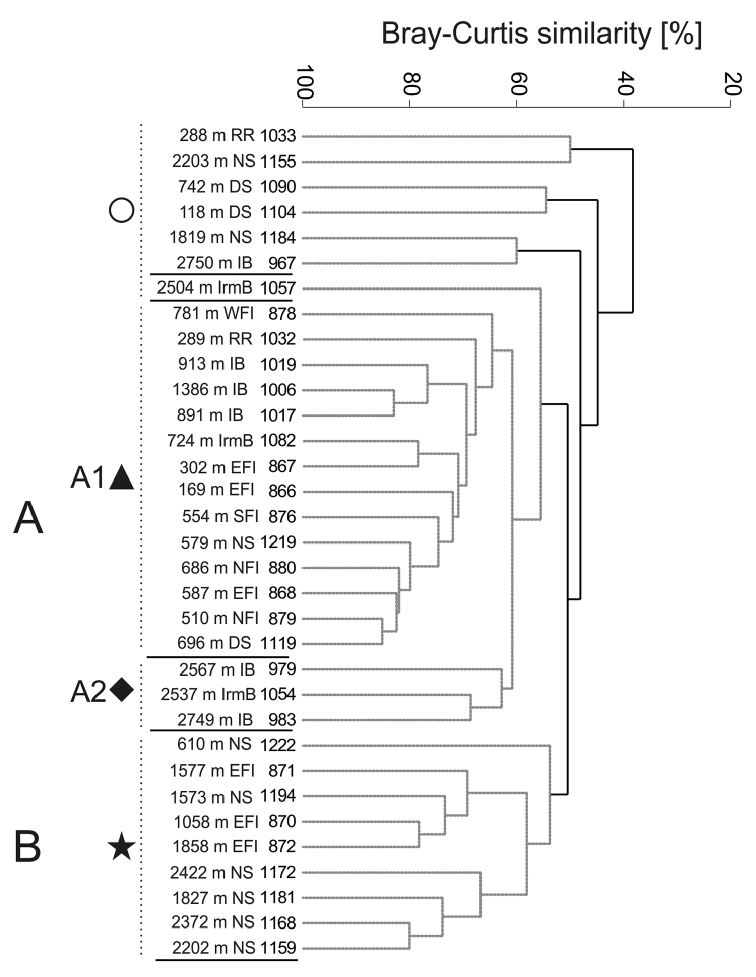
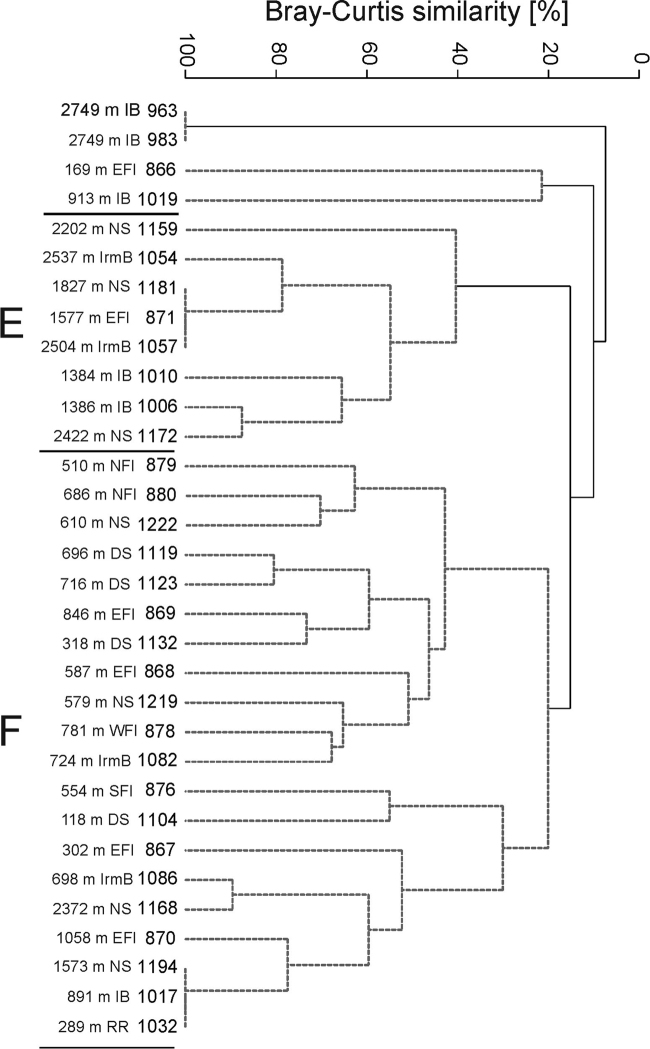
Dendrogram of samples for the family level data (Bray-Curtis similarity, group average grouping method and presence/absence transformed data). Abbreviations: RR - Reykjanes Ridge, NS - Norwegian Sea, DS - Denmark Strait, IB - Iceland Basin, IrmB - Irminger Basin, WFI - west off Faroe Islands, EFI - east off Faroe Islands, SFI - South of Faroe Islands, NFI - North of Faroe Islands. (Grey spotted lines indicate the samples that cannot be significantly differentiated by SIMPROF.) Regions are named based on the habitats defined by Meißner et al. (2014).
Figure 9.
Figure 9.
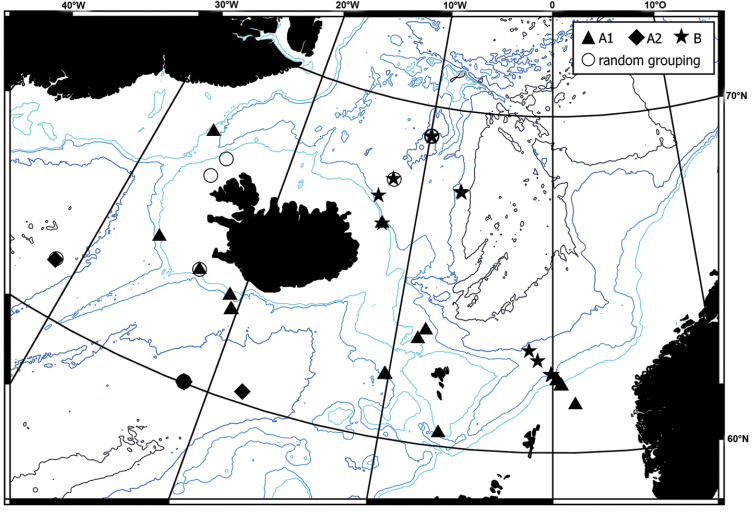
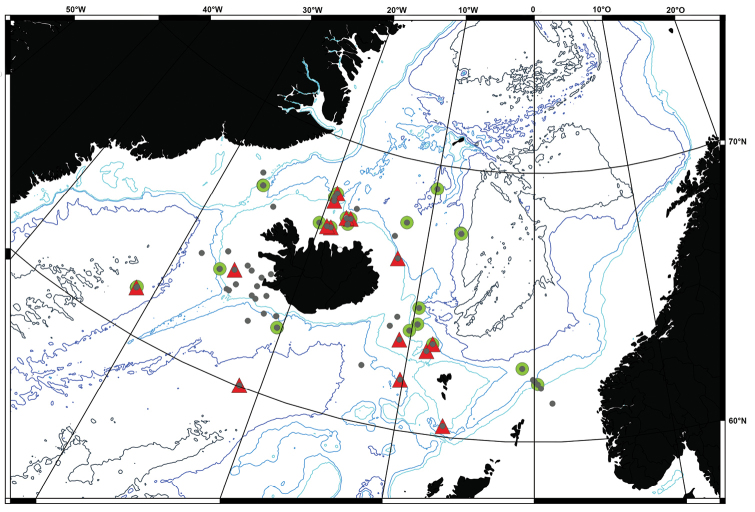
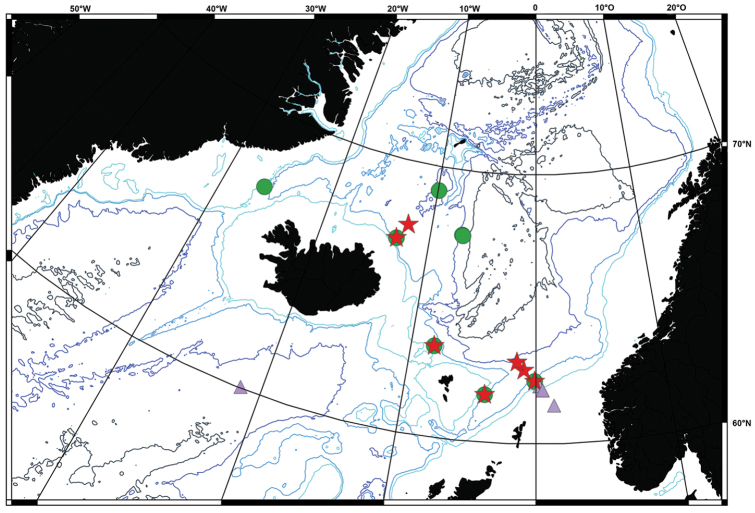
The spatial distribution of the clusters can be associated with the hydrography of the region. Symbols of the clusters from figure 8 are plotted on the station map.
Figure 10.
Figure 10.
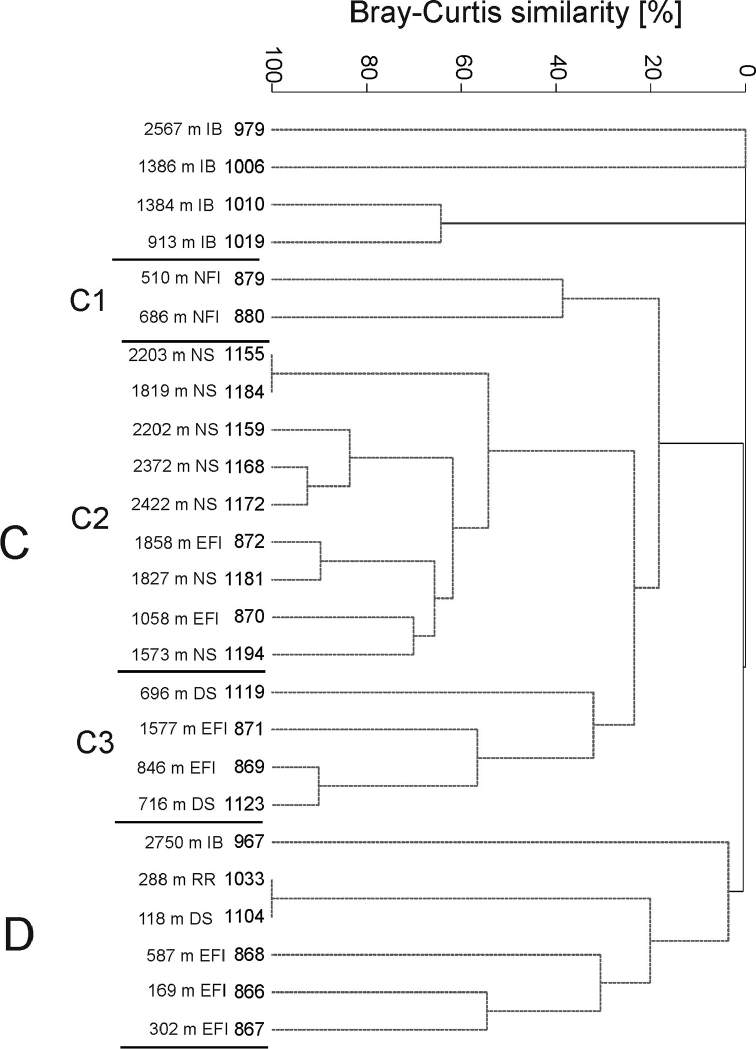
Dendrogram of samples for the Amphilochidae (Bray-Curtis similarity, group average grouping method standardised and square root transformed data). RR - Reykjanes Ridge, NS - Norwegian Sea, DS - Denmark Strait, IB - Iceland Basin, IrmB - Irminger Basin, WFI - west off Faroe Islands, EFI - east off Faroe Islands, SFI - South of Faroe Islands, NFI - North of Faroe Islands. Grey spotted lines indicate the samples that cannot be significantly differentiated by SIMPROF.
Figure 11.
Figure 11.
Amphilochidae BIOICE Dendrogram of samples for the Amphilochidae collected during BIOICE project (Bray-Curtis similarity, group average grouping method standardised and square root transformed data). Grey spotted lines indicate the samples that cannot be significantly differentiated by SIMPROF.
Figure 12.
Figure 12.
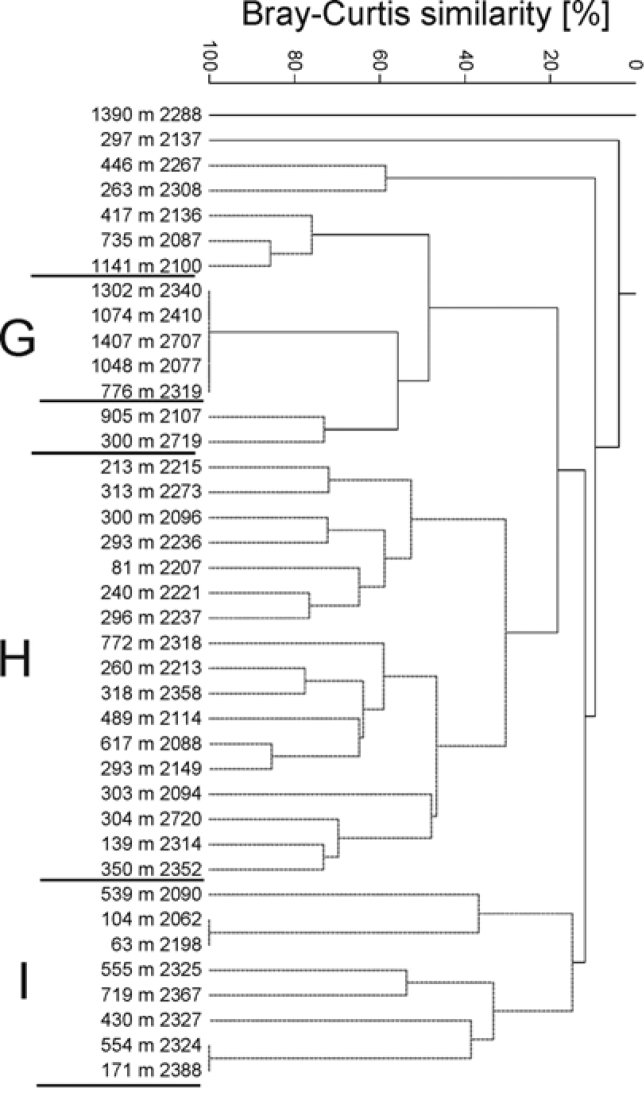
Dendrogram of samples for the Oedicerotidae (Bray-Curtis similarity, group average grouping method standardised and square root transformed data). Abbreviations: RR - Reykjanes Ridge, NS - Norwegian Sea, DS - Denmark Strait, IB - Iceland Basin, IrmB - Irminger Basin, WFI - west off Faroe Islands, EFI - east off Faroe Islands, SFI - South of Faroe Islands, NFI - North of Faroe Islands. Grey spotted lines indicate the samples that cannot be significantly differentiated by SIMPROF.
Figure 13.
Figure 13.
Amphilochidae found at BIOICE and IceAGE stations plotted together (grey circles) with the distribution of Gitana abyssalis (red triangle) and Amphilochus tenuimanus (green circle) at these stations.
Figure 14.
Figure 14.
Distribution of selected Oedicerotidae species showing different distribution patterns: Arrhis phyllonyx (green circle), Synchelidium haplocheles (lilac triangle), Paroediceros curvirostris (red star).

References

    1. Alldredge AL, King JM. (1977) Distribution, abundance, and substrate preferences of demersal reef zooplankton at Lizard Island Lagoon, Great Barrier Reef. Marine Biology 41(4): 317-333. - DOI
    1. Amsler MO, Mclintock JB, Amsler CD, Angus RA, Baker BJ. (2009) An evaluation of sponge-associated amphipods from the Antarctic Peninsula. Antarctic Science 21(6): 579-589. - DOI
    1. Ariyama H. (2016) Five species of the family Cyproideidae (Crustacea: Amphipoda) from Japan, with the description of a new genus and two new species. Zootaxa 4097(3): 301-331. - DOI - PubMed
    1. Azman BAR. (2009) Cyproideidae. In: Lowry JK, Myers AA. (Eds) Benthic Amphipoda (Crustacea: Peracarida) of the Great Barrier Reef, Australia. Zootaxa 2260: 380-392.
    1. Bachelet G, Dauvin JC, Sorbe JC. (2003) An updated check-list of marine and brackish water Amphipoda (Crustacea, Peracarida) of the southern Bay of Biscay. Cahiers de Biologie Marine 44: 121-151.

LinkOut - more resources