


Influence of Bile Acids on Colorectal Cancer Risk: Potential Mechanisms Mediated by Diet - Gut Microbiota Interactions
- PMID: 29430336
- PMCID: PMC5802424
- DOI: 10.1007/s13668-017-0219-5
Influence of Bile Acids on Colorectal Cancer Risk: Potential Mechanisms Mediated by Diet - Gut Microbiota Interactions
Abstract
Purpose of review: To review the evidence for the tumorigenic effects of food-stimulated bile acids on the colon and interaction with the gut microbiota.
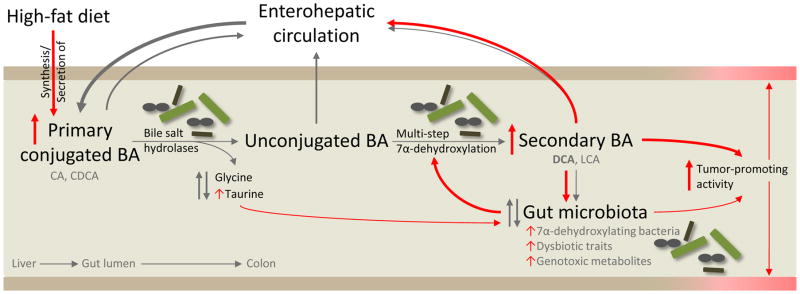
Recent findings: High-fat diets promote the hepatic synthesis of bile acids and increase their delivery to the colonic lumen. Here, they stimulate the growth and activity of 7α-dehydroxylating bacteria, which convert primary into secondary bile acids that show tumorigenic activity, especially deoxycholic acid (DCA). Fecal levels of secondary bile acids correlate with mucosal and metabolic markers of colorectal cancer (CRC) risk in high and low risk adult individuals and can be modified within a few weeks by dietary change. While gut bacteria regulate the bile acid pool via complex microbial biotransformation, bile acids alter the gut microbiota composition due to their antimicrobial properties. This mutual reaction induces altered bile acid pools and dysbiotic compositions of the gut microbiota that may show tumor-promoting activity of bile acids beyond their conversion to DCA.
Summary: Bile acids act as tumor promoters in the colon. Diet and the gut microbiota are most likely the key drivers that mediate and confer bile acid-associated tumorigenic activity. Bacterial conversion of bile acids in the colon has a significant impact on their tumorigenic activity, substantiating the hypothesis that diet affects CRC risk through its effects on colonic microbial metabolism.
Keywords: Colorectal cancer; bile acids; deoxycholic acid; gut microbiota; high-fat diet.
Figures
References
-
- Ferlay J, Soerjomataram I, Dikshit R, Eser S, Mathers C, Rebelo M, Parkin DM, Forman D, Bray F. Cancer incidence and mortality worldwide: sources, methods and major patterns in GLOBOCAN 2012. Int J Cancer. 2015;136:E359–386. - PubMed
-
- Doll R, Peto R. The causes of cancer: quantitative estimates of avoidable risks of cancer in the United States today. J Natl Cancer Inst. 1981;66:1191–1308. - PubMed
-
- World Cancer Research Fund/American Institute for Cancer Research. Food, Nutrition, Physical Activity, and the Prevention of Colorectal Cancer. 2011. Continuous Update Project Report.
-
- Hofmann AF. The Continuing Importance of Bile Acids in Liver and Intestinal Disease. Arch Intern Med. 1999;159:2647–2658. - PubMed
Grants and funding
LinkOut - more resources
Full Text Sources
Other Literature Sources
Research Materials