


Comparison of partially and fully chemically-modified siRNA in conjugate-mediated delivery in vivo
- PMID: 29432571
- PMCID: PMC5861422
- DOI: 10.1093/nar/gky037
Comparison of partially and fully chemically-modified siRNA in conjugate-mediated delivery in vivo
Abstract
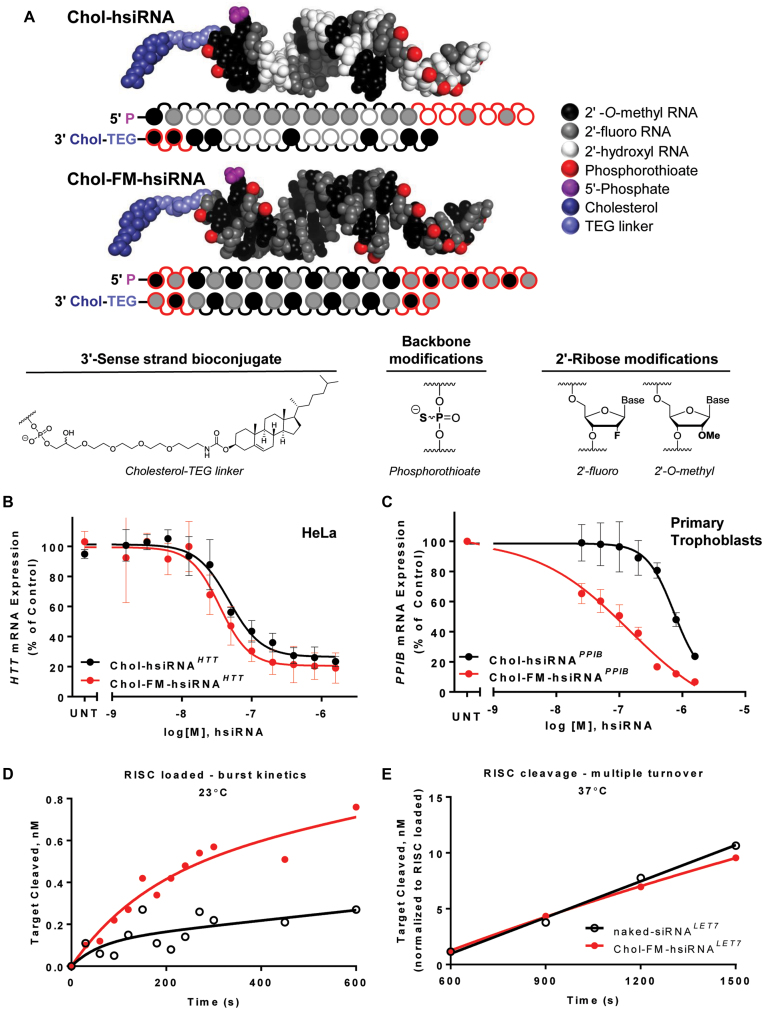
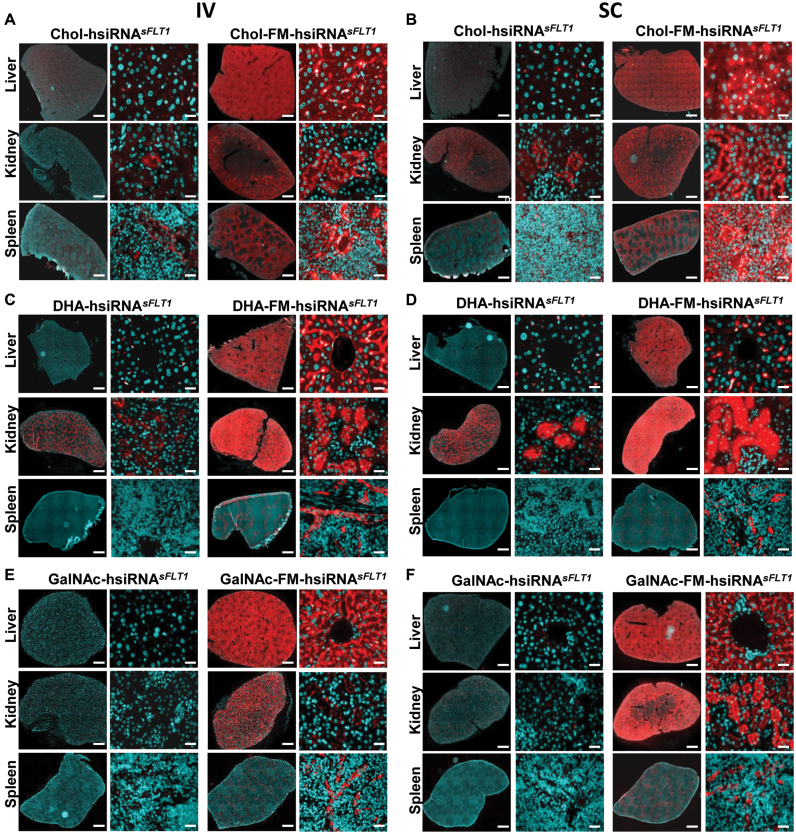
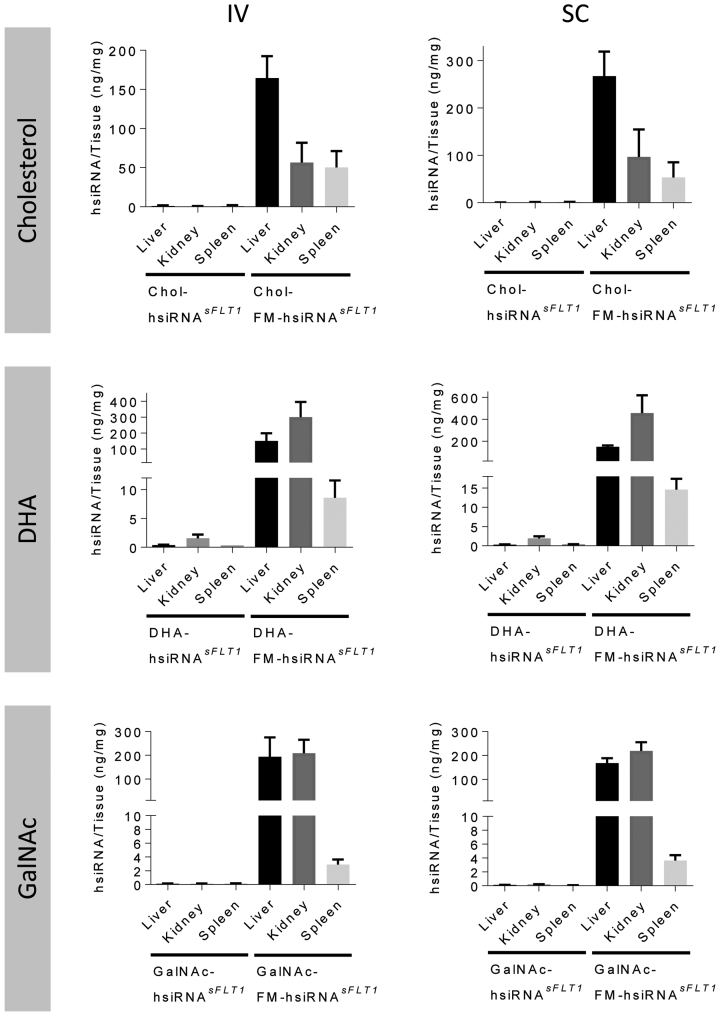
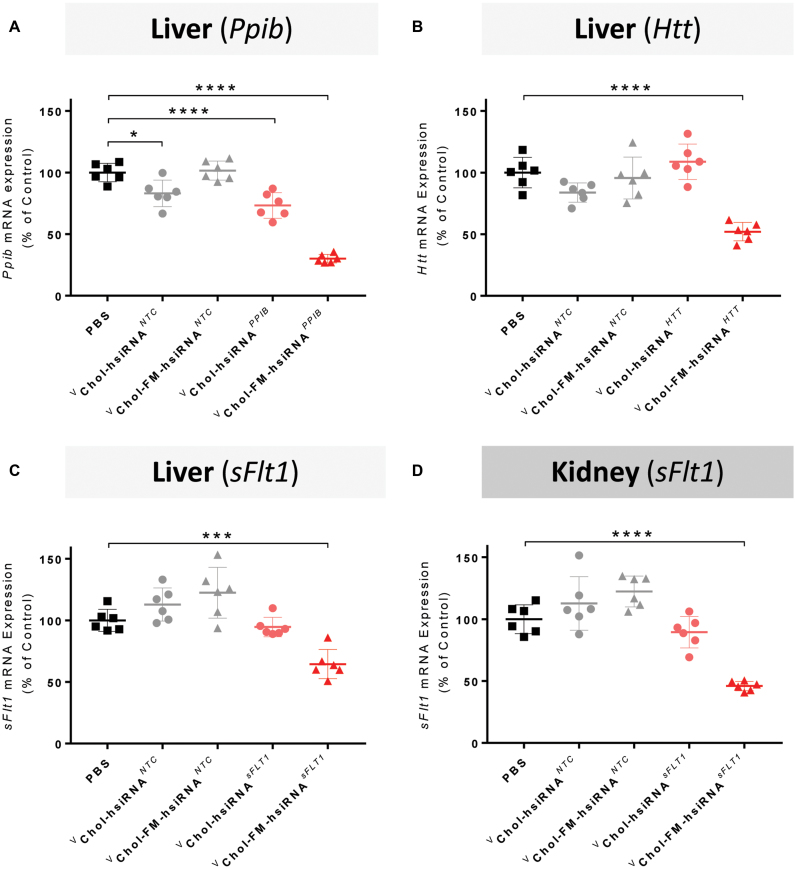
Small interfering RNA (siRNA)-based drugs require chemical modifications or formulation to promote stability, minimize innate immunity, and enable delivery to target tissues. Partially modified siRNAs (up to 70% of the nucleotides) provide significant stabilization in vitro and are commercially available; thus are commonly used to evaluate efficacy of bio-conjugates for in vivo delivery. In contrast, most clinically-advanced non-formulated compounds, using conjugation as a delivery strategy, are fully chemically modified (100% of nucleotides). Here, we compare partially and fully chemically modified siRNAs in conjugate mediated delivery. We show that fully modified siRNAs are retained at 100x greater levels in various tissues, independently of the nature of the conjugate or siRNA sequence, and support productive mRNA silencing. Thus, fully chemically stabilized siRNAs may provide a better platform to identify novel moieties (peptides, aptamers, small molecules) for targeted RNAi delivery.
Figures
References
-
- Allerson C.R., Sioufi N., Jarres R., Prakash T.P., Naik N., Berdeja A., Wanders L., Griffey R.H., Swayze E.E., Bhat B.. Fully 2′-modified oligonucleotide duplexes with improved in vitro potency and stability compared to unmodified small interfering RNA. J. Med. Chem. 2005; 48:901–904. - PubMed
-
- Choung S., Kim Y.J., Kim S., Park H.O., Choi Y.C.. Chemical modification of siRNAs to improve serum stability without loss of efficacy. Biochem. Biophys. Res. Commun. 2006; 342:919–927. - PubMed
Publication types
MeSH terms
Substances
Grants and funding
LinkOut - more resources
Full Text Sources
Other Literature Sources
