


Picosecond Laser Treatment for Tattoos and Benign Cutaneous Pigmented Lesions (Secondary publication)
- PMID: 29434427
- PMCID: PMC5801452
- DOI: 10.5978/islsm.17-RE-02
Picosecond Laser Treatment for Tattoos and Benign Cutaneous Pigmented Lesions (Secondary publication)
Abstract
Background and aims: The selective removal of tattoos and benign cutaneous pigmented lesions with laser energy evolved rapidly with the development of the nanosecond-domain Q-switched laser (ns-laser). Recently, however, a series of picosecond-domain lasers (ps-lasers) with pulsewidths less than 1 ns has become commercially available, enabling more efficient and faster removal of pigmented lesions in the field of dermatologic laser surgery.
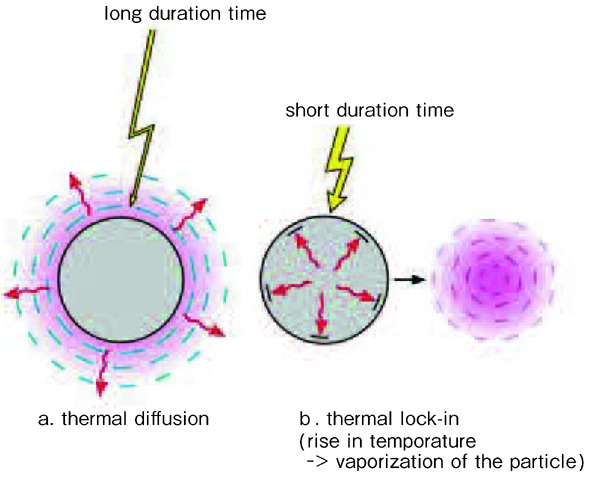
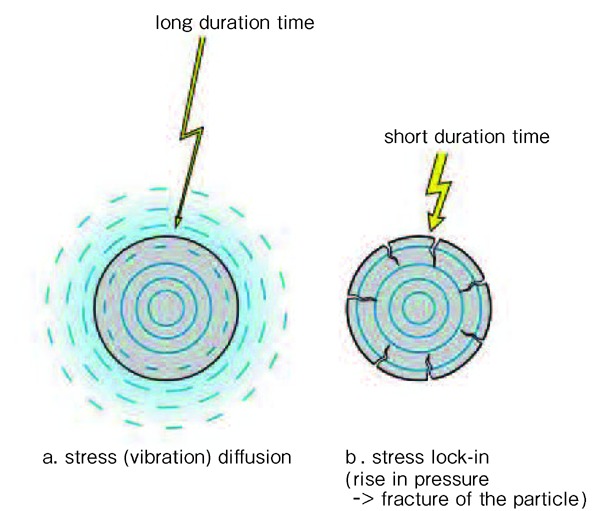
Rationale behind the ps-laser: The efficacy of the ns-laser depended on the theory of selective photothermolysis, whereby an extremely short pulse width was delivered less than the thermal relaxation time (TRT) of a target. At sub-ns pulsewidths, i.e. in the ps-domain, this efficacy is dramatically extended through defeating the stress relaxation time (SRT) of a target allowing for even more effective pigment destruction with even less damage to the surrounding normal tissue. This will be discussed in detail.
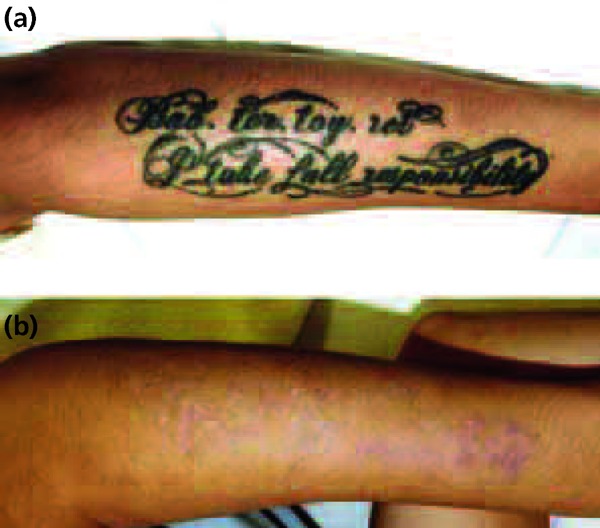
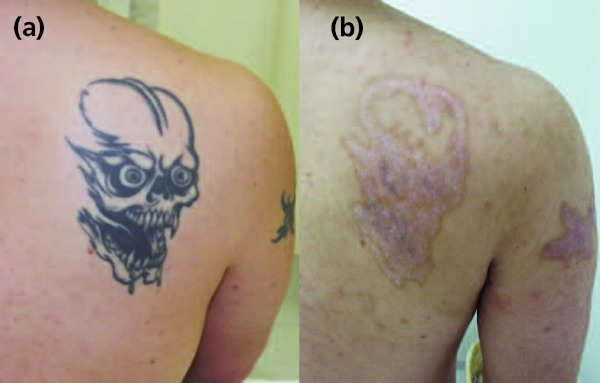
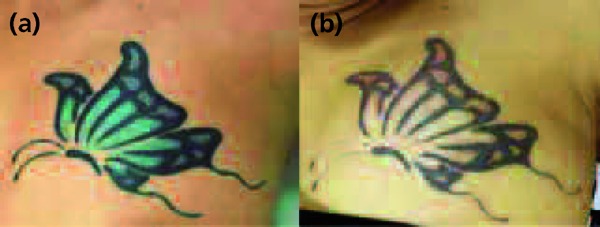
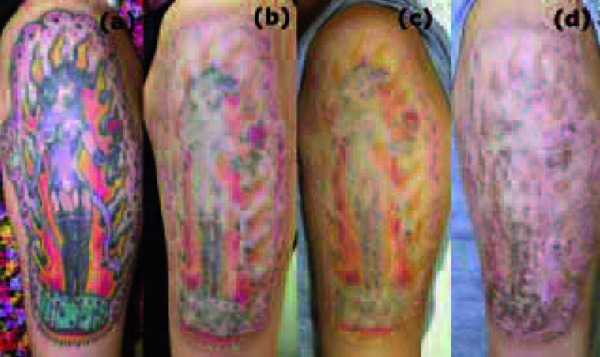
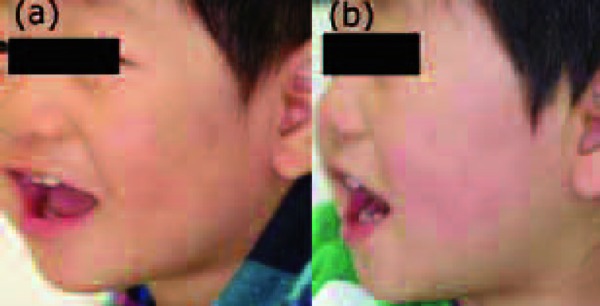
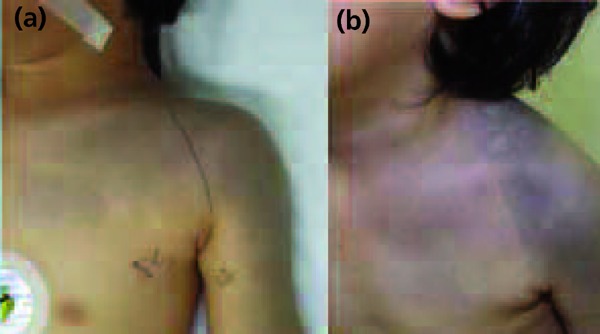
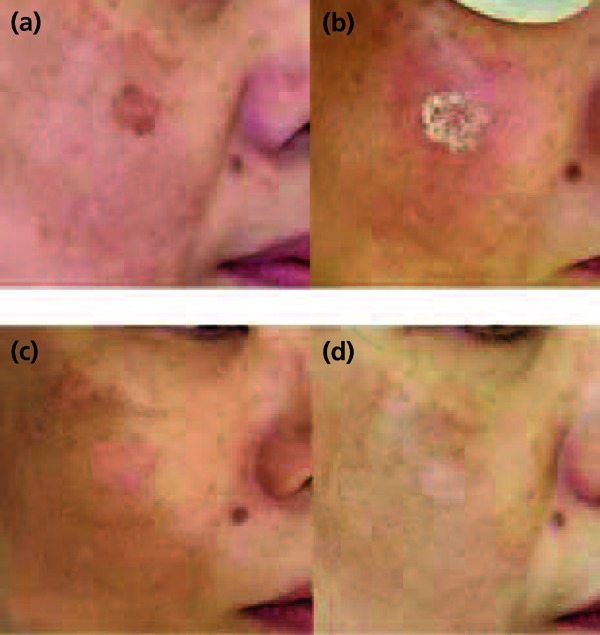
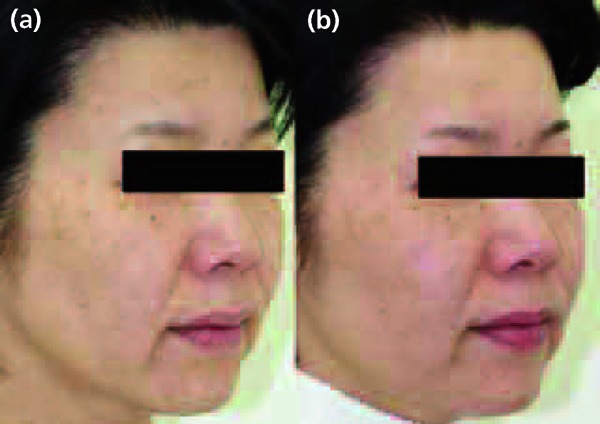
Clinical applications: The ps-laser has been reported as achieving tattoo removal in fewer sessions than the ns-laser, with less in the way of unwanted side effects. Tattoos recalcitrant to ns-laser treatment have responded well to the ps-laser, and although true 'color blindness' is not yet completely achieved with the ps-domain pulses currently available, multicolored tattoos have also responded very favorably. The ability to limit damage precisely to the pigment target gives greater efficacy in treatment of epidermal lesions with less induction of post-inflammatory hyperpigmentation in the PIH-susceptible Asian skin, and dermal melanocytosis also respond very well to ps-laser treatment. Illustrative clinical examples from the author's experience are given.
Conclusions: Current ps-lasers could be a revolutionary advance for laser tattoo removal but may be less effective for some specific aesthetic indications such as melasma and other cosmetic procedures. Manufacturers must make an effort to reduce the current comparatively long ps-domain pulsewidths to deliver a 'true' ps-domain laser, with more basic studies also being required to allow expansion of the safe and effective use of the ps-laser outside of tattoo removal.
Keywords: Q-switched laser; photoacoustic reaction; photothermal reaction; picosecond laser; tattoo.
Figures
References
-
- Anderson RR, Parrish JA. Selective photothermolysis: Precise microsurgery by selective absorption of pulsed radiation. Science 1983;220: 524-27. - PubMed
-
- Scheibner A, Kenny G, et al. A superior method of tattoo removal using the Q-switched ruby laser. J Dermatol Surg Oncol 1990;16: 1091-8. - PubMed
-
- Kilmer SL, Anderson RR. Clinical use of the Q-switched ruby and the Q-switched Nd:YAG (1064nm and 532nm) lasers for treatment of tattoos. J Dermatol Surg Oncol, 1993; 19: 330-88. - PubMed
-
- Fitzpatrick RE, Goldman MP. Tattoo removal using the alexandrite laser. Arch Dermatol 1994; 130: 1508-14. - PubMed
-
- Kasai K. Tattoo. Introduction to Q switched laser treatment. Kasai K. Bunkodo; 2008; 86-97.
Publication types
LinkOut - more resources
Full Text Sources
Other Literature Sources
Miscellaneous