


Antibiotic Prophylaxis for Children With Sickle Cell Anemia
- PMID: 29437860
- PMCID: PMC7252515
- DOI: 10.1542/peds.2017-2182
Antibiotic Prophylaxis for Children With Sickle Cell Anemia
Abstract
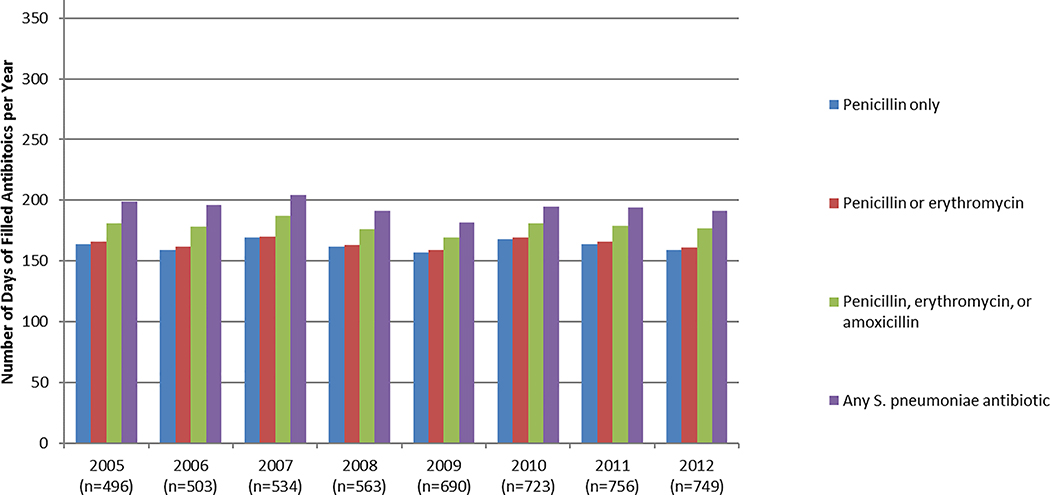
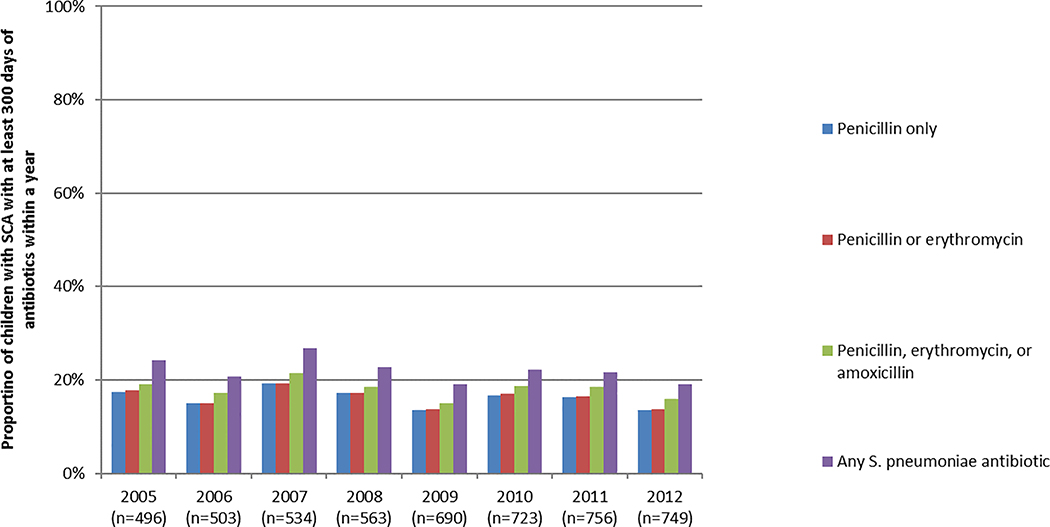
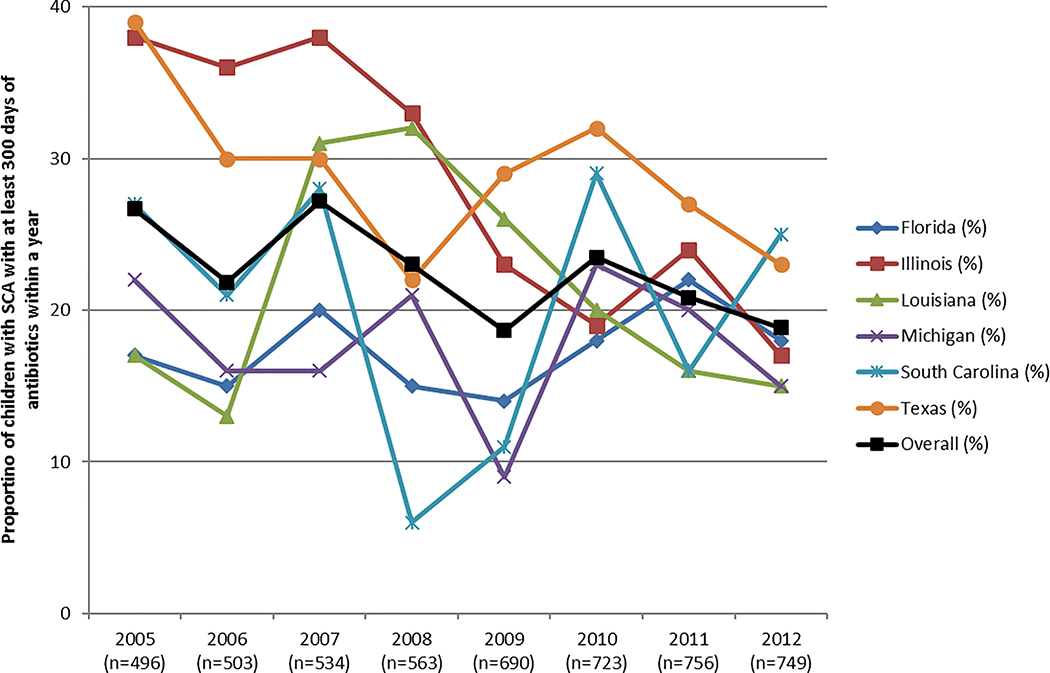
Background: Children with sickle cell anemia (SCA) are at increased risk for invasive pneumococcal disease; antibiotic prophylaxis significantly reduces this risk. We calculated the proportion of children with SCA who received ≥300 days of antibiotic prophylaxis and identified predictors of such receipt.
Methods: Children aged 3 months to 5 years with SCA were identified by the presence of 3 or more Medicaid claims with a diagnosis of SCA within a calendar year (2005-2012) in Florida, Illinois, Louisiana, Michigan, South Carolina, and Texas. Receipt of antibiotics was identified through claims for filled prescriptions. The outcome, receipt of ≥300 days of antibiotics, was assessed annually by using varying classifications of antibiotics. By using logistic regression with generalized estimating equations, we estimated the odds of receiving ≥300 days of antibiotics, with potential predictors of age, sex, year, state, and health services use.
Results: A total of 2821 children contributed 5014 person-years. Overall, only 18% of children received ≥300 days of antibiotics. Each additional sickle cell disease-related outpatient visit (odds ratio = 1.01, 95% confidence interval: 1.01-1.02) and well-child visit (odds ratio = 1.08, 95% confidence interval: 1.02-1.13) was associated with incrementally increased odds of receiving ≥300 days of antibiotics.
Conclusions: Despite national recommendations and proven lifesaving benefit, antibiotic prophylaxis rates are low among children with SCA. Numerous health care encounters may offer an opportunity for intervention; in addition, such interventions likely need to include social factors that may affect the ability for a child to receive and adhere to antibiotic prophylaxis.
Copyright © 2018 by the American Academy of Pediatrics.
Conflict of interest statement
POTENTIAL CONFLICT OF INTEREST: The authors have indicated they have no potential conflicts of interest to disclose.
Figures
References
-
- Hassell KL. Population estimates of sickle cell disease in the U.S. Am J Prev Med. 2010;38(4 Suppl):S512–521. - PubMed
-
- Berg AO. Sickle cell disease: screening, diagnosis, management, and counseling in newborns and infants. The Agency for Health Care Policy and Research. J Am Board Fam Pract. 1994;7(2):134–140. - PubMed
-
- Lorey FW, Arnopp J, Cunningham GC. Distribution of hemoglobinopathy variants by ethnicity in a multiethnic state. Genet Epidemiol. 1996;13(5):501–512. - PubMed
-
- Stuart MJ, Nagel RL. Sickle-cell disease. Lancet. 2004;364(9442):1343–1360. - PubMed
Publication types
MeSH terms
Grants and funding
LinkOut - more resources
Full Text Sources
Other Literature Sources
Medical
