


CPT2 downregulation adapts HCC to lipid-rich environment and promotes carcinogenesis via acylcarnitine accumulation in obesity
- PMID: 29437870
- PMCID: PMC6039238
- DOI: 10.1136/gutjnl-2017-315193
CPT2 downregulation adapts HCC to lipid-rich environment and promotes carcinogenesis via acylcarnitine accumulation in obesity
Abstract
Objective: Metabolic reprogramming of tumour cells that allows for adaptation to their local environment is a hallmark of cancer. Interestingly, obesity-driven and non-alcoholic steatohepatitis (NASH)-driven hepatocellular carcinoma (HCC) mouse models commonly exhibit strong steatosis in tumour cells as seen in human steatohepatitic HCC (SH-HCC), which may reflect a characteristic metabolic alteration.
Design: Non-tumour and HCC tissues obtained from diethylnitrosamine-injected mice fed either a normal or a high-fat diet (HFD) were subjected to comprehensive metabolome analysis, and the significance of obesity-mediated metabolic alteration in hepatocarcinogenesis was evaluated.
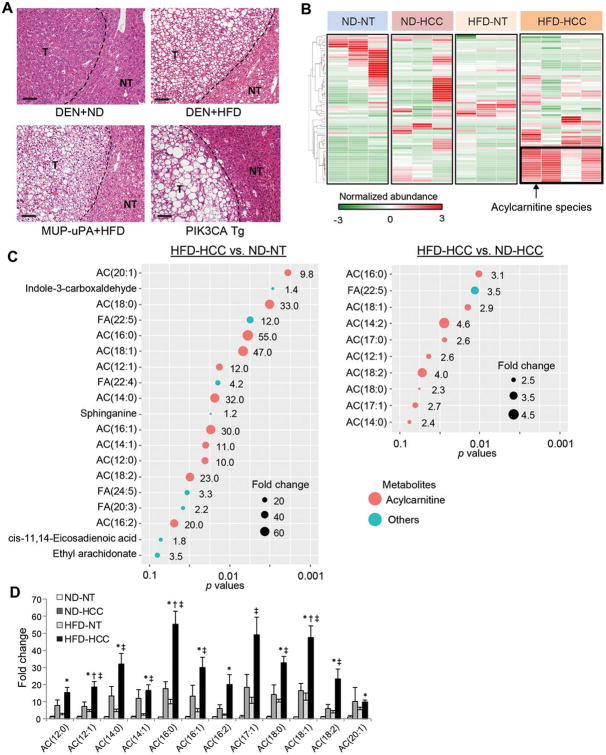
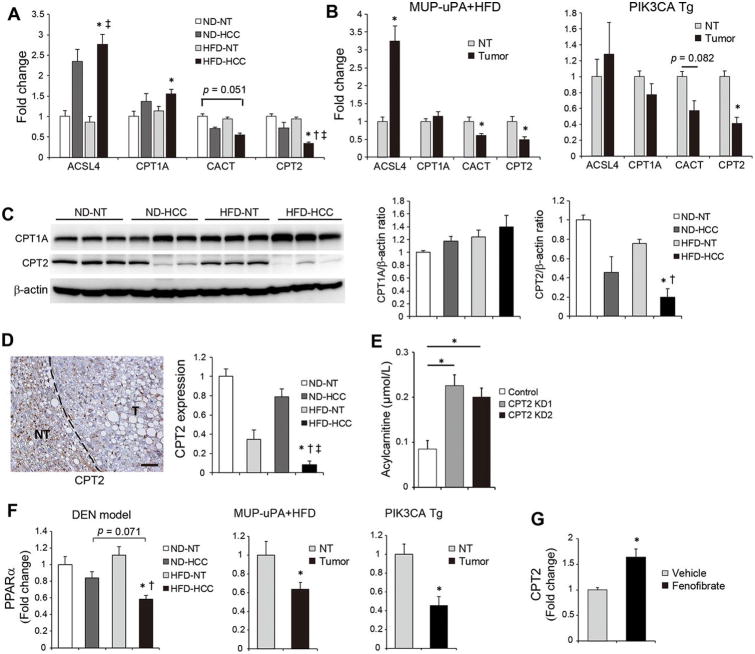
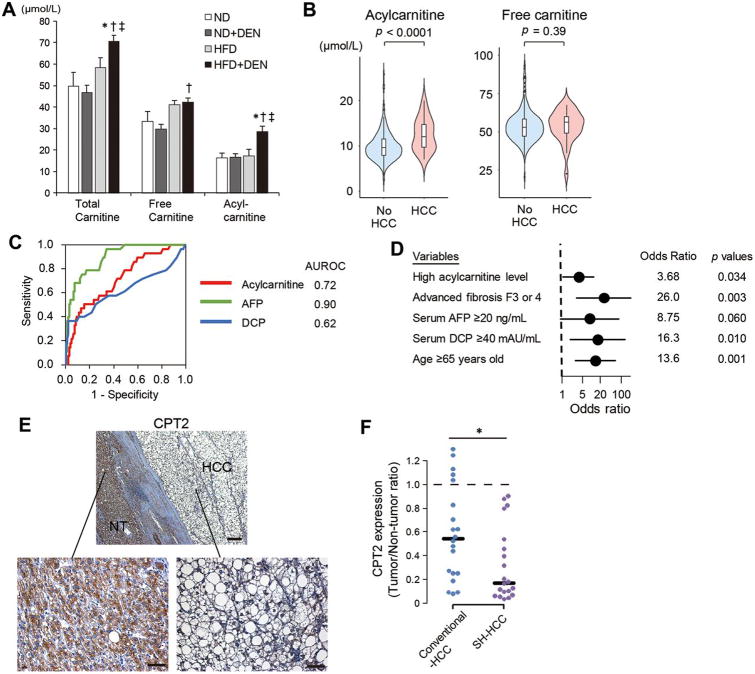
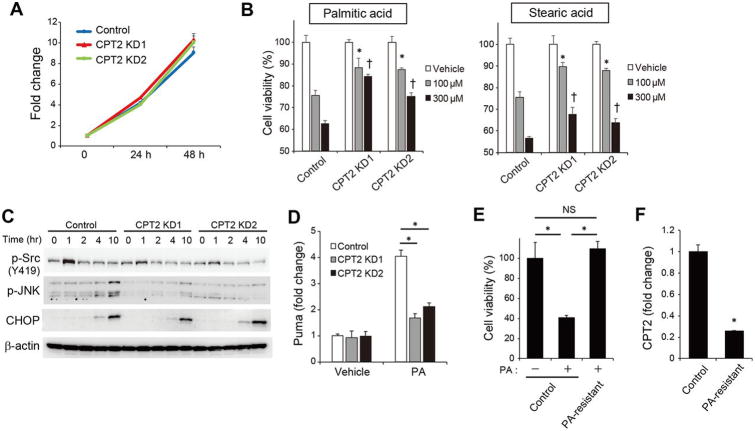
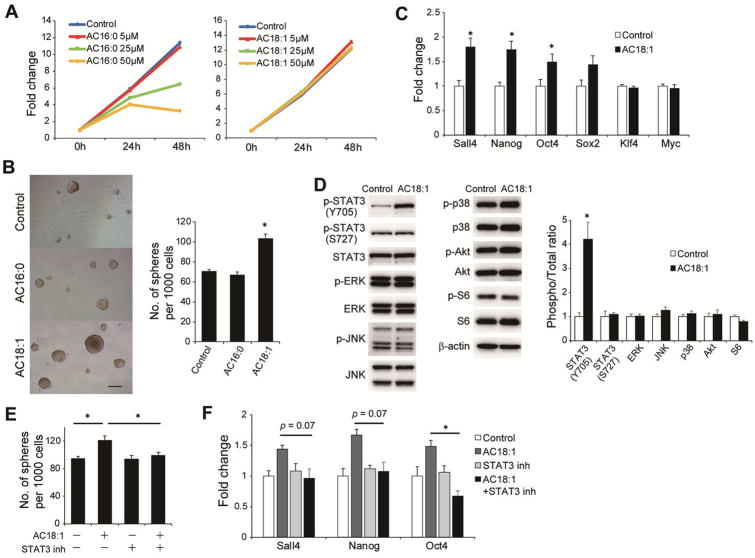
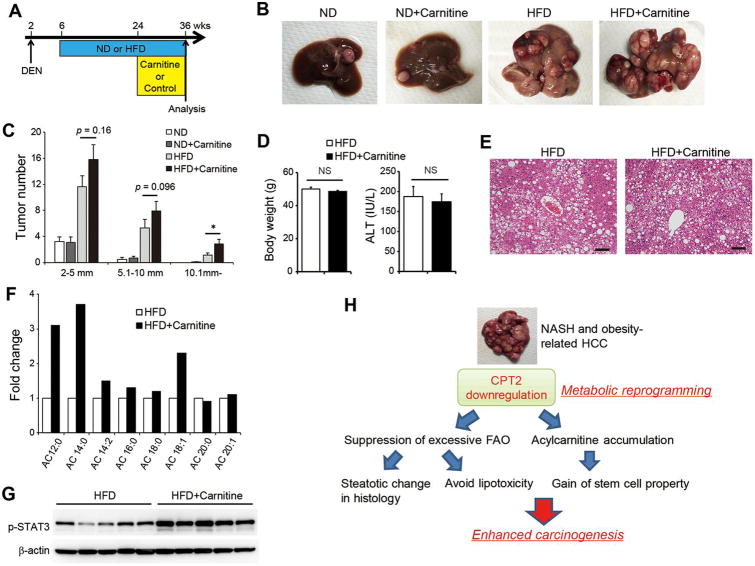
Results: The extensive accumulation of acylcarnitine species was seen in HCC tissues and in the serum of HFD-fed mice. A similar increase was found in the serum of patients with NASH-HCC. The accumulation of acylcarnitine could be attributed to the downregulation of carnitine palmitoyltransferase 2 (CPT2), which was also seen in human SH-HCC. CPT2 downregulation induced the suppression of fatty acid β-oxidation, which would account for the steatotic changes in HCC. CPT2 knockdown in HCC cells resulted in their resistance to lipotoxicity by inhibiting the Src-mediated JNK activation. Additionally, oleoylcarnitine enhanced sphere formation by HCC cells via STAT3 activation, suggesting that acylcarnitine accumulation was a surrogate marker of CPT2 downregulation and directly contributed to hepatocarcinogenesis. HFD feeding and carnitine supplementation synergistically enhanced HCC development accompanied by acylcarnitine accumulation in vivo.
Conclusion: In obesity-driven and NASH-driven HCC, metabolic reprogramming mediated by the downregulation of CPT2 enables HCC cells to escape lipotoxicity and promotes hepatocarcinogenesis.
Keywords: CPT2; acylcarnitine; hepatocellular carcinoma; metabolic reprograming; metabolome.
© Article author(s) (or their employer(s) unless otherwise stated in the text of the article) 2018. All rights reserved. No commercial use is permitted unless otherwise expressly granted.
Conflict of interest statement
Competing interests: None declared.
Figures
Comment in
-
Lipid-rich environment: a key role promoting carcinogenesis in obesity-related non-alcoholic fatty liver disease.Gut. 2018 Aug;67(8):1376-1377. doi: 10.1136/gutjnl-2018-316047. Epub 2018 Mar 14. Gut. 2018. PMID: 29540438 No abstract available.
References
-
- El-Serag HB. Hepatocellular carcinoma. The New England journal of medicine. 2011;365(12):1118–27. - PubMed
-
- Calle EE, Rodriguez C, Walker-Thurmond K, et al. Overweight, obesity, and mortality from cancer in a prospectively studied cohort of U.S. adults. The New England journal of medicine. 2003;348(17):1625–38. - PubMed
-
- Fujiwara N, Nakagawa H, Kudo Y, et al. Sarcopenia, intramuscular fat deposition, and visceral adiposity independently predict the outcomes of hepatocellular carcinoma. J Hepatol. 2015;63(1):131–40. - PubMed
-
- Tilg H, Hotamisligil GS. Nonalcoholic fatty liver disease: Cytokine-adipokine interplay and regulation of insulin resistance. Gastroenterology. 2006;131(3):934–45. - PubMed
Publication types
MeSH terms
Substances
Grants and funding
LinkOut - more resources
Full Text Sources
Other Literature Sources
Medical
Research Materials
Miscellaneous
