


Reduction of Hexavalent Chromium and Detection of Chromate Reductase (ChrR) in Stenotrophomonas maltophilia
- PMID: 29438314
- PMCID: PMC6017488
- DOI: 10.3390/molecules23020406
Reduction of Hexavalent Chromium and Detection of Chromate Reductase (ChrR) in Stenotrophomonas maltophilia
Abstract
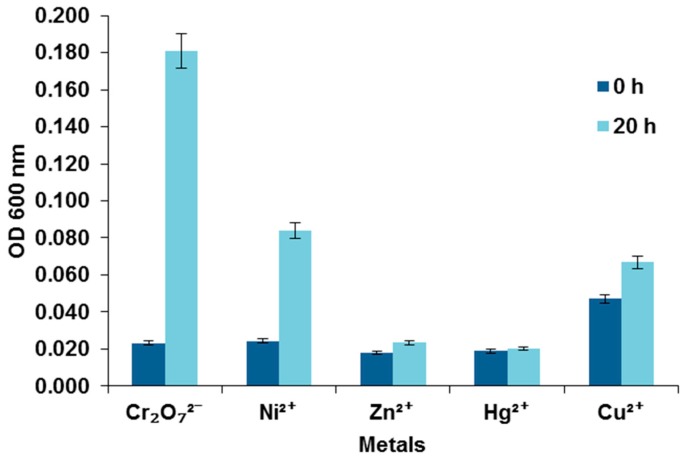
An Gram negative strain of S. maltophilia, indigenous to environments contaminated by Cr(VI) and identified by biochemical methods and 16S rRNA gene analysis, reduced chromate by 100%, 98-99% and 92% at concentrations in the 10-70, 80-300, and 500 mg/L range, respectively at pH 7 and temperature 37 °C. Increasing concentrations of Cr(VI) in the medium lowered the growth rate but could not be directly correlated with the amount of Cr(VI) reduced. The strain also exhibited multiple resistance to antibiotics and tolerance and resistance to various heavy metals (Ni, Zn and Cu), with the exception of Hg. Hexavalent chromium reduction was mainly associated with the soluble fraction of the cell evaluated with crude cell-free extracts. A protein of molecular weight around 25 kDa was detected on SDS-PAGE gel depending on the concentration of hexavalent chromium in the medium (0, 100 and 500 mg/L). In silico analysis in this contribution, revealed the presence of the chromate reductase gene ChrR in S. maltophilia, evidenced through a fragment of around 468 bp obtained experimentally. High Cr(VI) concentration resistance and high Cr(VI) reducing ability of the strain make it a suitable candidate for bioremediation.
Keywords: ChrR; Cr(VI); Stenotrophomonas maltophilia; chromate reductase; heavy metal.
Conflict of interest statement
The authors declare no conflict of interest.
Figures




References
-
- Chattopadhyay B., Utpal S.R., Mukhopadhyay S. Mobility and bioavailability of chromium in the environment: Physico-chemical and microbial oxidation of Cr (III) to Cr (VI) J. Appl. Sci. Environ. Manag. 2010;14:97–101. doi: 10.4314/jasem.v14i2.57873. - DOI
-
- Cheung K.H., Ji-Dong G.U. Mechanism of hexavalent chromium detoxification by microorganisms and bioremediation application potential: A review. Int. Biodeterior. Biodegrad. 2007;59:8–15. doi: 10.1016/j.ibiod.2006.05.002. - DOI
-
- Maqbool Z., Asghar H.N., Shahzad T., Hussain S., Riaz M., Ali S., Maqsood M. Isolating, screening and applying chromium reducing bacteria to promote growth and yield of okra (Hibiscus esculentus L.) in chromium contaminated soils. Ecotoxicol. Environ. Saf. 2015;114:343–349. doi: 10.1016/j.ecoenv.2014.07.007. - DOI - PubMed
MeSH terms
Substances
LinkOut - more resources
Full Text Sources
Other Literature Sources
