Review
. 2018 Feb 13;137(7):725-742.
doi: 10.1161/CIRCULATIONAHA.117.030377.

Developing a Clinical Approach to Air Pollution and Cardiovascular Health

Affiliations
Review

Developing a Clinical Approach to Air Pollution and Cardiovascular Health

Michael B Hadley et al. Circulation. .

Abstract

Nearly 3 billion people are exposed to household air pollution emitted from inefficient cooking and heating stoves, and almost the entire global population is exposed to detectable levels of outdoor air pollution from traffic, industry, and other sources. Over 3 million people die annually of ischemic heart disease or stroke attributed to air pollution, more than from traditional cardiac risk factors such as obesity, diabetes mellitus, or smoking. Clinicians have a role to play in reducing the burden of pollution-attributable cardiovascular disease. However, there currently exists no clear clinical approach to this problem. Here, we provide a blueprint for an evidence-based clinical approach to assessing and mitigating cardiovascular risk from exposure to air pollution. We begin with a discussion of the global burden of pollution-attributable cardiovascular disease, including a review of the mechanisms by which particulate matter air pollution leads to cardiovascular outcomes. Next, we offer a simple patient-screening tool using known risk factors for pollution exposure. We then discuss approaches to quantifying air pollution exposures and cardiovascular risk, including the development of risk maps for clinical catchment areas. We review a collection of interventions for household and outdoor air pollution, which clinicians can tailor to patients and populations at risk. Finally, we identify future research needed to quantify pollution exposures and validate clinical interventions. Overall, we demonstrate that clinicians can be empowered to mitigate the global burden of cardiovascular disease attributable to air pollution.

Keywords: air pollution; cardiovascular diseases; environmental health; global health; myocardial ischemia; particulate matter; stroke.


Conflict of interest statement

Conflict of Interest Disclosures: None

Figures

Figure 1
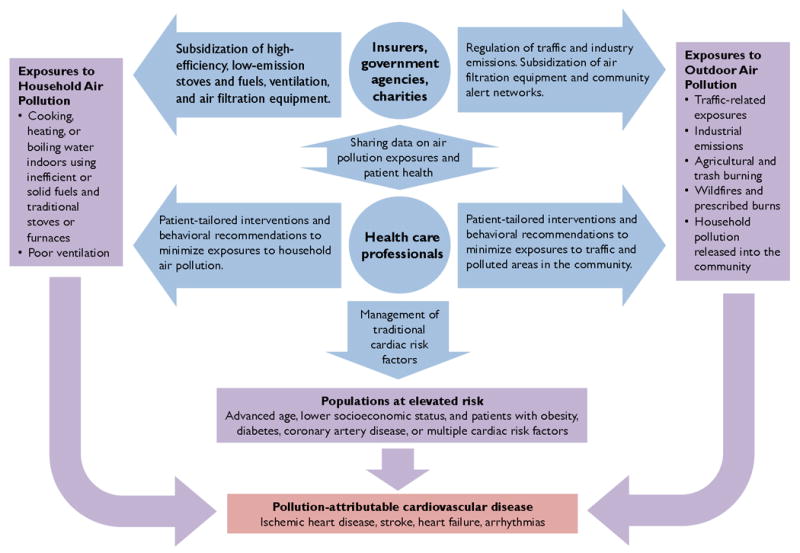
Figure 1. Partnerships in the reduction of pollution-attributable cardiovascular disease
Conceptual diagram illustrating the effects of household air pollution, outdoor air pollution, and traditional risk factors (purple boxes and arrows) contributing to adverse cardiovascular events (red box). Health care professionals and provider organizations in partnership with government agencies, insurers, and charities take a multifaceted approach to improve cardiovascular health through reductions in air pollution exposures and underlying risk factors (blue circles and arrows). Government agencies and charities can provide data on local exposures, which clinicians can use to assess cardiovascular risk in their patients. Clinicians can then recommend patient-tailored interventions to reduce air pollution exposures. Insurance companies, government agencies, and non-governmental organizations can subsidize interventions such as facemasks, air filtration systems, and low-emission stoves and fuels.
Figure 2
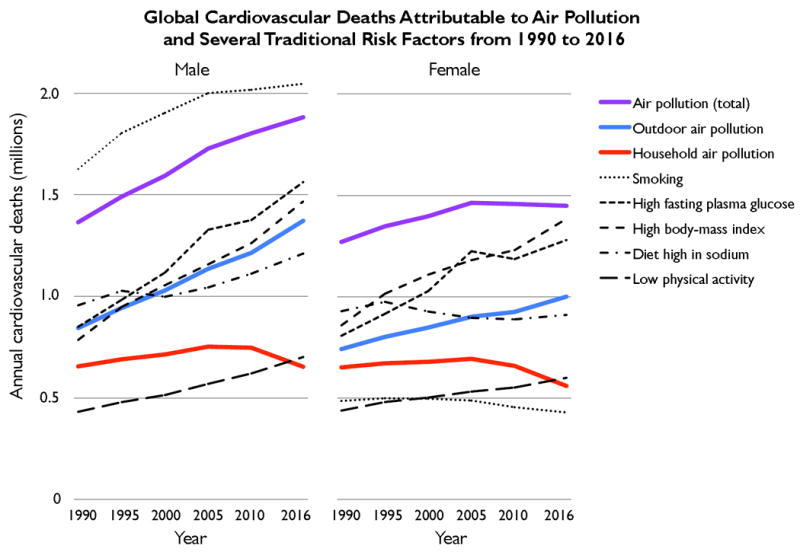
Figure 2. Trends in global cardiovascular deaths attributable to air pollution and several traditional cardiovascular risk factors for men and women from 1990 to 2016
Cardiovascular deaths are from ischemic heart disease, ischemic and hemorrhagic stroke, rheumatic heart disease, hypertensive heart disease, cardiomyopathy, myocarditis, atrial fibrillation and flutter, aortic aneurysm, peripheral vascular disease, endocarditis, and other cardiovascular diseases. “Air pollution (total)” refers to cardiovascular deaths attributed to both outdoor and household sources of particulate matter pollution (PM2.5). Data are from the most recent Global Burden of Diseases, Injuries, and Risk Factors Study.,
Figure 3
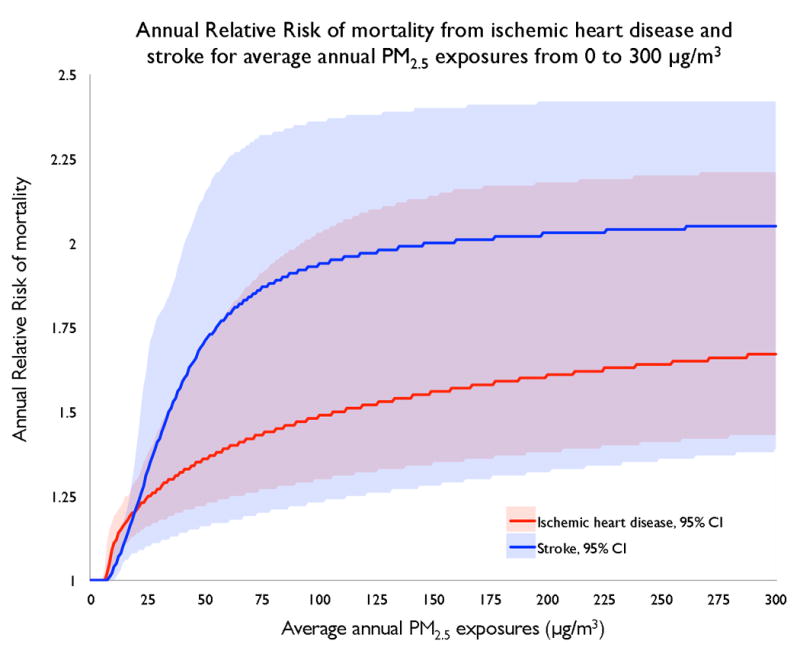
Figure 3. Estimated exposure-response curves for PM2.5-attributable relative risk of mortality for ischemic heart disease and stroke
The model fits population data compiled from multiple studies and meta-analyses on the rates of IHD and stroke mortality at different levels of PM2.5 exposures from outdoor air pollution, secondhand smoke, and active smoking. No studies on household air pollution are included. Low levels of exposure are characterized by a substantial marginal risk per unit change in exposure, with decreasing marginal risk at higher exposure levels. Exposure-response curves are available for specific age groups and countries. Data from the Global Burden of Disease Study., , ,
Figure 4
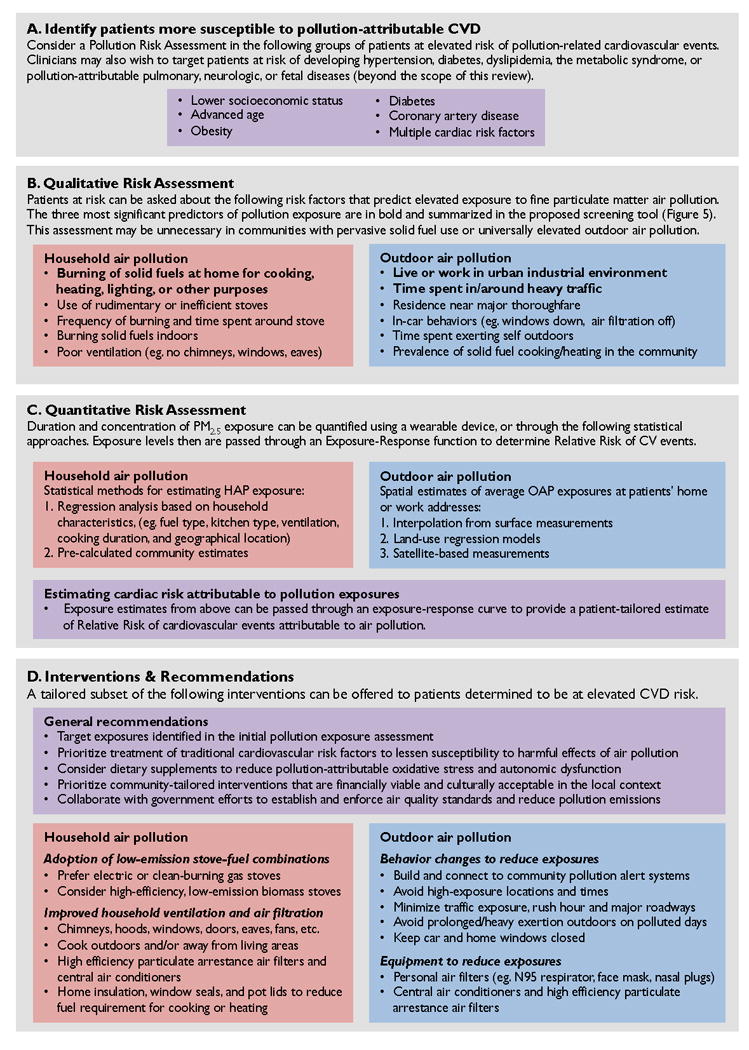
Figure 4. Key elements in a clinical approach to mitigating risks of air pollution and protecting cardiovascular health
Summary of key risk assessment tools and targeted interventions that may be incorporated in a clinical approach to protecting cardiovascular health from the harmful affects of household and outdoor air pollution. (A) Clinicians may screen for patients more susceptible to pollution-attributable cardiovascular disease and therefore more likely to benefit from further assessment and interventions. (B) Clinicians may perform a qualitative assessment to identify individual risk factors that predict elevated exposures to air pollution. (A sample screening tool is provided in Figure 5.) (C) Individual exposure levels may be quantified via a variety of methods, including direct measurement or modeled estimates. Exposure estimates may then be used to estimate relative risk of cardiovascular events. (D) For individuals at elevated risk of pollution-attributable cardiovascular disease, clinicians can offer a variety of tailored recommendations and interventions.
Figure 5
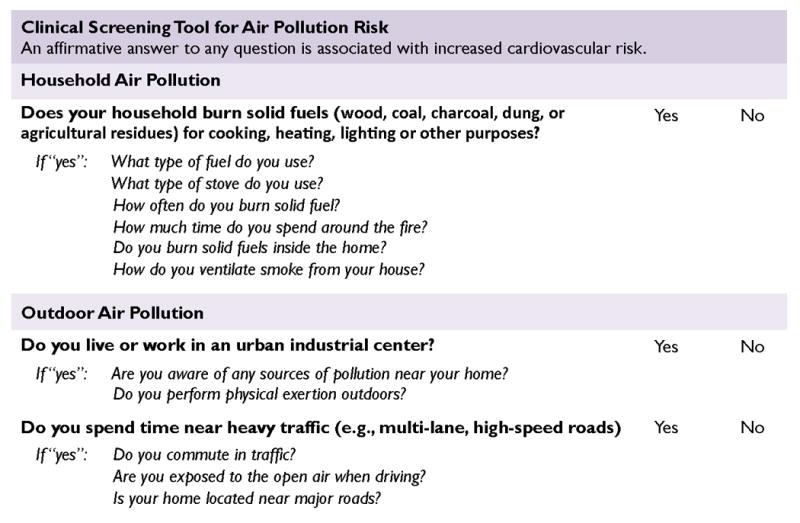
Figure 5. Clinical screening tool for air pollution risk
Novel evidence-based clinical screening tool for identifying patients exposed to hazardous levels of air pollution. The tool contains three questions covering the most established predictors of household and outdoor air pollution exposure. For questions answered in the affirmative, we provide several follow-up questions to help resolve factors that may exacerbate exposures and guide patient-tailored interventions. Although based on existing exposure-response data, this tool is pending validation.
Figure 6
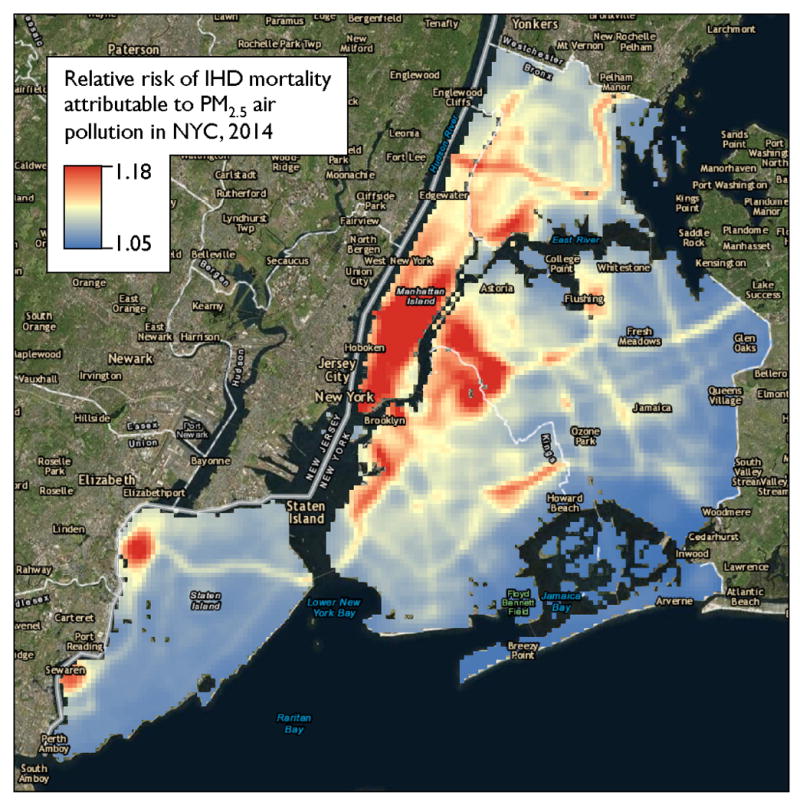
Figure 6. Risk map prototype illustrating estimated relative risk of ischemic heart disease mortality attributable to fine particulate matter air pollution by location in New York City in 2014
This searchable risk map enables clinicians to estimate PM2.5 exposure and attributable risk of ischemic heart disease mortality based on location in New York City. The risk map combines a frequently cited exposure-response curve with annual average PM2.5 concentration estimates based on a land-use regression model., These risk estimates apply to populations and may not be predictive of individual risk. Exposure estimates used with permission from The New York City Department of Health and Mental Hygiene, Queens College Center for the Biology of Natural Systems, and Zev Ross Spatial Analysis.

References

    1. Institute for Health Metrics and Evaluation. [2017];Global Health Data Exchange. 2016 Available at: http://ghdx.healthdata.org/gbd-results-tool.
    1. Collaborators GBDRF. Global, regional, and national comparative risk assessment of 84 behavioural, environmental and occupational, and metabolic risks or clusters of risks, 1990-2016: a systematic analysis for the Global Burden of Disease Study 2016. Lancet. 2017;390:1345–1422. - PMC - PubMed
    1. Brook RD, Rajagopalan S, Pope CA, 3rd, Brook JR, Bhatnagar A, Diez-Roux AV, Holguin F, Hong Y, Luepker RV, Mittleman MA, Peters A, Siscovick D, Smith SC, Jr, Whitsel L, Kaufman JD. American Heart Association Council on E, Prevention CotKiCD, Council on Nutrition PA and Metabolism. Particulate matter air pollution and cardiovascular disease: An update to the scientific statement from the American Heart Association. Circulation. 2010;121:2331–2378. - PubMed
    1. Martin WJ., 2nd On the Global Epidemic of CVD and Why Household Air Pollution Matters. Glob Heart. 2012;7:201–206. - PubMed
    1. Smith KR, Bruce N, Balakrishnan K, Adair-Rohani H, Balmes J, Chafe Z, Dherani M, Hosgood HD, Mehta S, Pope D, Rehfuess E Group HCRE. Millions dead: how do we know and what does it mean? Methods used in the comparative risk assessment of household air pollution. Annu Rev Public Health. 2014;35:185–206. - PubMed

Publication types

MeSH terms