


Choosing Between Unicompartmental and Total Knee Replacement: What Can Economic Evaluations Tell Us? A Systematic Review
- PMID: 29441501
- PMCID: PMC5711745
- DOI: 10.1007/s41669-017-0017-4
Choosing Between Unicompartmental and Total Knee Replacement: What Can Economic Evaluations Tell Us? A Systematic Review
Abstract
Background and objective: Patients with anteromedial arthritis who require a knee replacement could receive either a unicompartmental knee replacement (UKR) or a total knee replacement (TKR). This review has been undertaken to identify economic evaluations comparing UKR and TKR, evaluate the approaches that were taken in the studies, assess the quality of reporting of these evaluations, and consider what they can tell us about the relative value for money of the procedures.
Methods: A search of MEDLINE, EMBASE and the Centre for Reviews and Dissemination National Health Service Economic Evaluation Database was undertaken in January 2016 to identify relevant studies. Study characteristics were described, the quality of reporting and methods assessed using the Consolidated Health Economic Evaluation Reporting Standards (CHEERS) checklist, and study findings summarised.
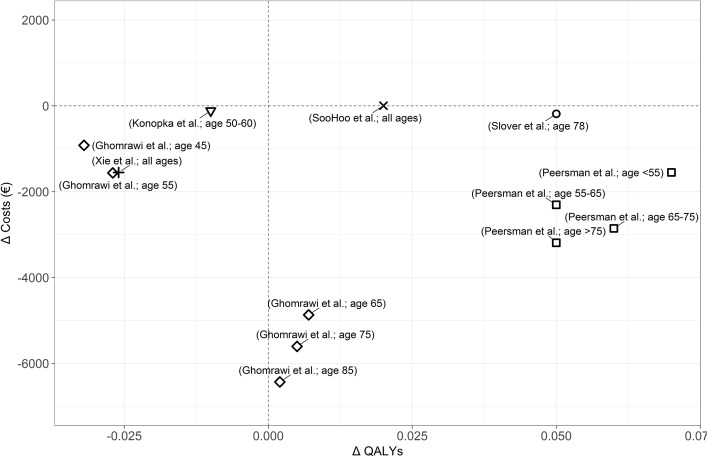
Results: Twelve studies satisfied the inclusion criteria. Five were within-study analyses, while another was based on a literature review. The remaining six studies were model-based analyses. All studies were informed by observational data. While methodological approaches varied, studies generally had either limited follow-up, did not fully account for baseline differences in patient characteristics or relied on previous research that did not. The quality of reporting was generally adequate across studies, except for considerations of the settings to which evaluations applied and the generalisability of the results to other decision-making contexts. In the short-term, UKR was generally associated with better health outcomes and lower costs than TKR. Initial cost savings associated with UKR seem to persist over patients' lifetimes even after accounting for higher rates of revision. For older patients, initial health improvements also appear to be maintained, making UKR the dominant treatment choice. However, for younger patients findings for health outcomes and overall cost effectiveness are mixed, with the difference in health outcomes depending on the lifetime risk of revision and patient outcomes following revision.
Conclusions: UKR appears to be less costly than TKR. For older patients, UKR is also expected to lead to better health outcomes, making it the dominant choice; however, for younger patients health outcomes are more uncertain. Future research should better account for baseline differences in patient characteristics and consider how the relative value of UKR and TKR varies depending on patient and surgical factors.
Conflict of interest statement
Data availability statement
Data sharing is not applicable to this article as no datasets were generated during the study.
Author’s contributions
Edward Burn, Alexander Liddle, Thomas Hamilton, Hemant Pandit, David Murray, and Rafael Pinedo-Villanueva made substantial contributions to the conception and design of the study. Edward Burn, Sunil Pai and Rafael Pinedo-Villanueva identified studies for inclusion in the review. Edward Burn and Rafael Pinedo-Villanueva drafted the manuscript, with Alexander Liddle, Thomas Hamilton, Sunil Pai, Hemant Pandit and David Murray revising it for important intellectual content. All authors read and approved the final manuscript.
Figures
References
Publication types
Grants and funding
LinkOut - more resources
Full Text Sources
Other Literature Sources
